
Complete HIIT Training Guide: Build Muscle and Burn Fat Fast

Want to torch fat and build lean muscle without spending hours in the gym? You’re in the right place. This HIIT training guide breaks down everything you need to know about high-intensity interval training—from the science behind why it works to ready-to-use workout plans that deliver real results. Whether you’re a complete beginner or looking to level up your fitness game, HIIT might just be the most time-efficient approach to transforming your body.
What Is HIIT and Why It Works for Fat Loss and Muscle Building
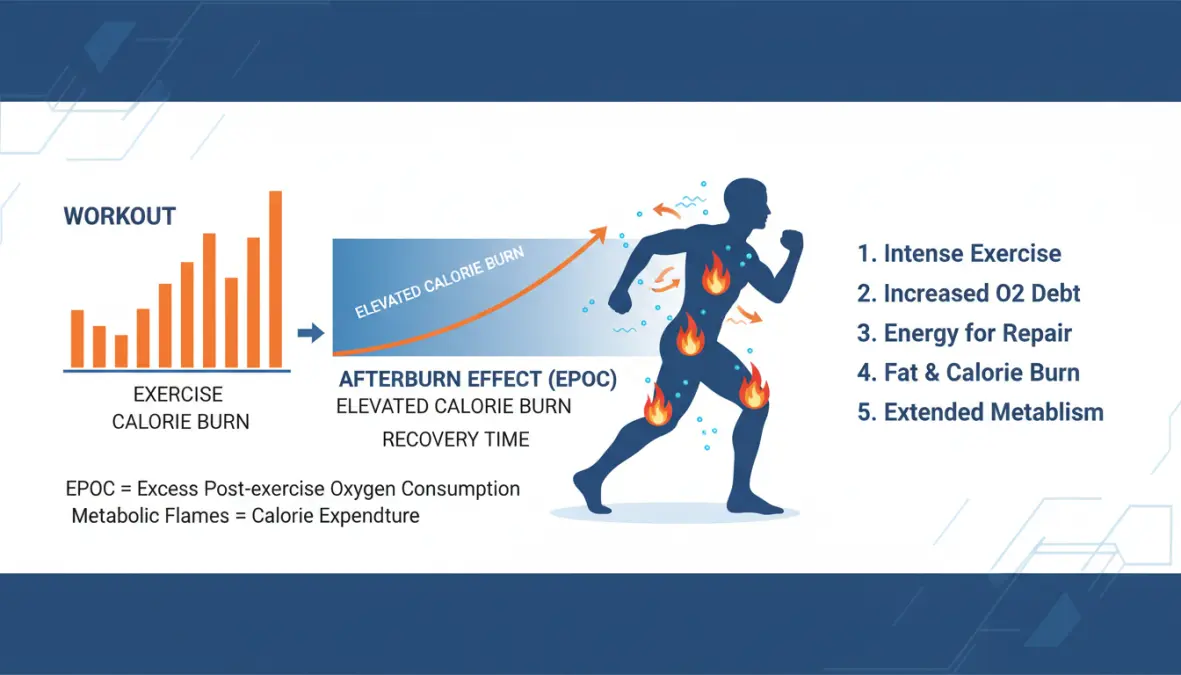
High intensity interval training (HIIT) alternates short bursts of maximum-effort exercise with brief recovery periods. Think 30 seconds of all-out sprinting followed by 30 seconds of walking, repeated for 15-20 minutes. This interval training program approach triggers something called EPOC—Excess Post-Exercise Oxygen Consumption, better known as the afterburn effect.
Here’s where HIIT gets interesting: your body continues burning calories for up to 24 hours after your workout ends. Research published in the Journal of Obesity shows that HIIT burns 25-30% more calories than other forms of exercise in the same time period. Unlike steady-state cardio that primarily burns calories during exercise, HIIT keeps your metabolic furnace cranking long after you’ve hit the shower.
The magic happens because HIIT creates a metabolic disturbance. Your body works harder to restore oxygen levels, repair muscle tissue, and return to homeostasis. This process requires significant energy expenditure. Plus, HIIT preserves muscle mass better than traditional cardio—the intense anaerobic exercise signals your body to maintain lean tissue while preferentially burning fat stores. Studies comparing HIIT versus steady-state cardio show that HIIT participants lost more subcutaneous fat, especially around the midsection, while maintaining muscle mass.
How to Structure Your HIIT Workout Plan
Building an effective HIIT workout plan isn’t about randomly pushing yourself to exhaustion. Success comes from strategic planning that matches your fitness level and allows proper recovery.
The work-to-rest ratio determines your workout intensity and dictates results. Beginners should start with a 1:2 ratio—if you work hard for 20 seconds, rest for 40 seconds. This allows adequate recovery intervals while building cardiovascular fitness. Intermediate athletes can progress to 1:1 ratios (30 seconds work, 30 seconds rest), while advanced trainees might push to 2:1 ratios during Tabata training protocols.
Session duration matters too. The best HIIT workouts for fat loss typically last 15-30 minutes, including warm-up and cool-down. Going longer defeats the purpose—HIIT should be intense and efficient. Frequency-wise, 3-4 sessions weekly provides optimal results without overtraining. Always leave at least one rest day between HIIT sessions, and consider how HIIT fits with your strength training schedule. Many athletes do HIIT on non-lifting days or after shorter strength sessions.
| Level | Work:Rest Ratio | Session Duration | Weekly Frequency |
|---|---|---|---|
| Beginner | 1:2 (20s:40s) | 15-20 minutes | 2-3 times |
| Intermediate | 1:1 (30s:30s) | 20-25 minutes | 3-4 times |
| Advanced | 2:1 or 1:1 (40s:20s) | 25-30 minutes | 3-4 times |

HIIT for Beginners: Starting Your First Week
If you’re new to HIIT for beginners, proper progression prevents injury and burnout. Start every session with a 5-minute dynamic warm-up—arm circles, leg swings, light jogging, and bodyweight squats to increase blood flow and prepare joints.
Your first week should focus on low-impact exercises with conservative work periods. Try this beginner-friendly HIIT workout routine: 20 seconds of marching in place with high knees, 40 seconds rest, repeated for 8 rounds (about 8 minutes). As you adapt, substitute more challenging movements like jumping jacks, bodyweight squats, or modified burpees.
Common beginner mistakes? Going too hard too soon (recipe for injury), skipping warm-ups, holding your breath during work intervals, and doing HIIT every day. Listen to your body. If you’re still sore or fatigued, take an extra rest day. Increase intensity only when you can complete your current routine while maintaining good form throughout all intervals.
Advanced HIIT Workout Routine for Maximum Results
Ready to maximize results? Advanced protocols like Tabata training (20 seconds max effort, 10 seconds rest, 8 rounds) push cardiovascular fitness and fat loss to new levels. EMOM (Every Minute On the Minute) workouts challenge you to complete a set number of reps within 60 seconds, resting whatever time remains. AMRAP (As Many Rounds As Possible) tests endurance by seeing how many circuit rounds you can complete in a set timeframe.
For those wondering how to build muscle with HIIT, combine your HIIT cardio workout with strength training intelligently. Try circuit training that blends resistance exercises with cardio bursts—kettlebell swings, dumbbell thrusters, and battle ropes maintain elevated heart rates while building strength. Schedule HIIT after lifting sessions when muscle-building is your priority, or separate them entirely on different days.
Periodization matters for advanced athletes. Cycle between higher-volume weeks and deload weeks to prevent overtraining and maintain progress. This approach to metabolic conditioning keeps your body adapting without burning out.
Best HIIT Exercises and Sample Workouts
Effective HIIT exercises engage multiple muscle groups and spike your heart rate quickly. Here are the most efficient movements organized by category:
Bodyweight Exercises:
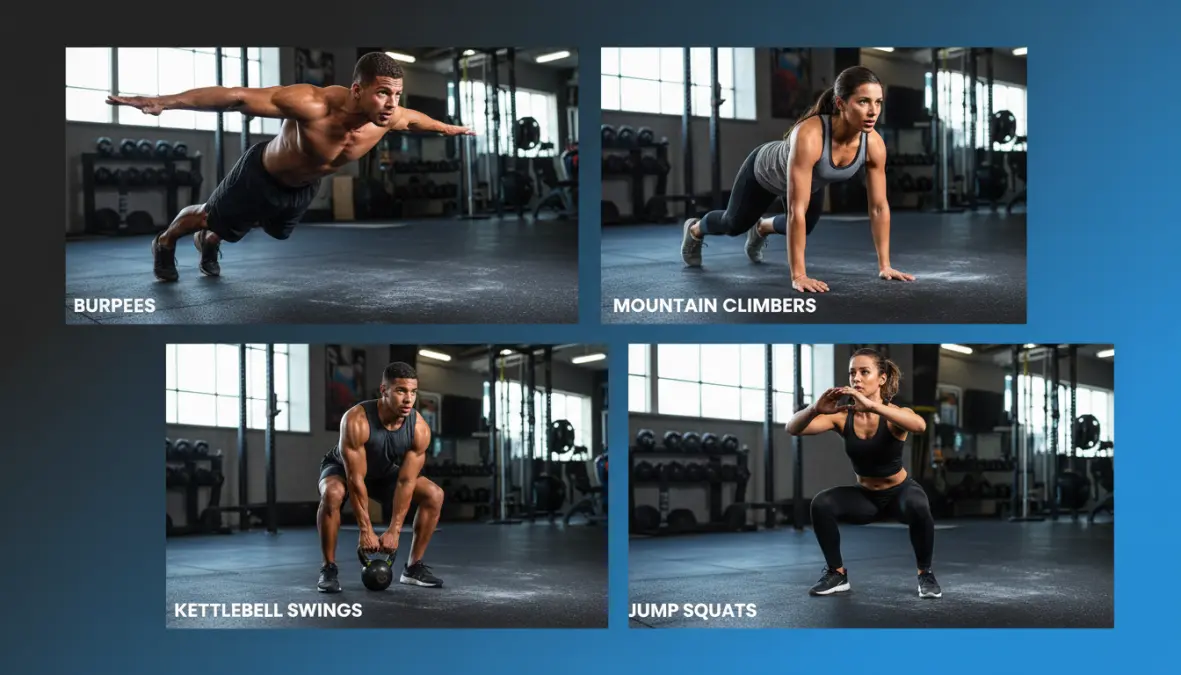
- Burpees—full-body explosive movement
- Mountain climbers—core and cardio combined
- Jump squats—lower body power and fat burning
- High knees—cardio endurance builder
- Plank jacks—core stability with cardio
Cardio Equipment Options:
- Rowing machine sprints—full-body cardio king
- Assault bike intervals—brutal but effective
- Treadmill incline sprints—lower body focused
- Jump rope—coordination and conditioning
Weighted Movements:
- Kettlebell swings—posterior chain power
- Dumbbell thrusters—total body strength-endurance
- Medicine ball slams—core and upper body
Ready for complete workouts? Here’s a 30 minute HIIT workout for fat loss using only bodyweight:
Bodyweight Blaster (20 minutes): 5-min warm-up, then 8 rounds of 40s work/20s rest cycling through: burpees, mountain climbers, jump squats, high knees. Finish with 3-min cool-down.
Cardio Equipment Session (25 minutes): 5-min warm-up, then 10 rounds of 45s sprint/45s recovery on your choice of rower, bike, or treadmill. 5-min cool-down.
Hybrid Strength-Cardio (30 minutes): 5-min warm-up, then 6 rounds of: 30s kettlebell swings, 30s rest, 30s burpees, 30s rest, 30s dumbbell thrusters, 30s rest. Finish with 5-min cool-down.
There you have it—a complete HIIT training program designed to transform your physique efficiently. The beauty of HIIT lies in its flexibility and time-efficiency. Whether you have 15 minutes or 30, whether you’re working out at home or in a fully-equipped gym, you can design HIIT exercises for fat burning and muscle gain that fit your lifestyle. Start conservative, progress intelligently, stay consistent, and watch your body composition transform faster than you thought possible. Now stop reading and start sweating!
