How to Build a Home Gym on a Budget: Essential Equipment Guide for Beginners
Let’s be real – gym memberships are expensive, and commuting to the gym eats up precious time you could be spending on actual workouts. Building a home gym on budget isn’t just possible; it’s actually smarter than you think. You don’t need thousands of dollars or a massive basement to create an effective workout space. With some strategic planning and the right equipment choices, you can set up a functional home gym that delivers results without draining your bank account.
Essential Equipment for Your Budget Home Gym
When building your home gym starter kit, focus on versatile pieces that offer maximum bang for your buck. Here are the must-have items that form the foundation of any budget home gym equipment collection:
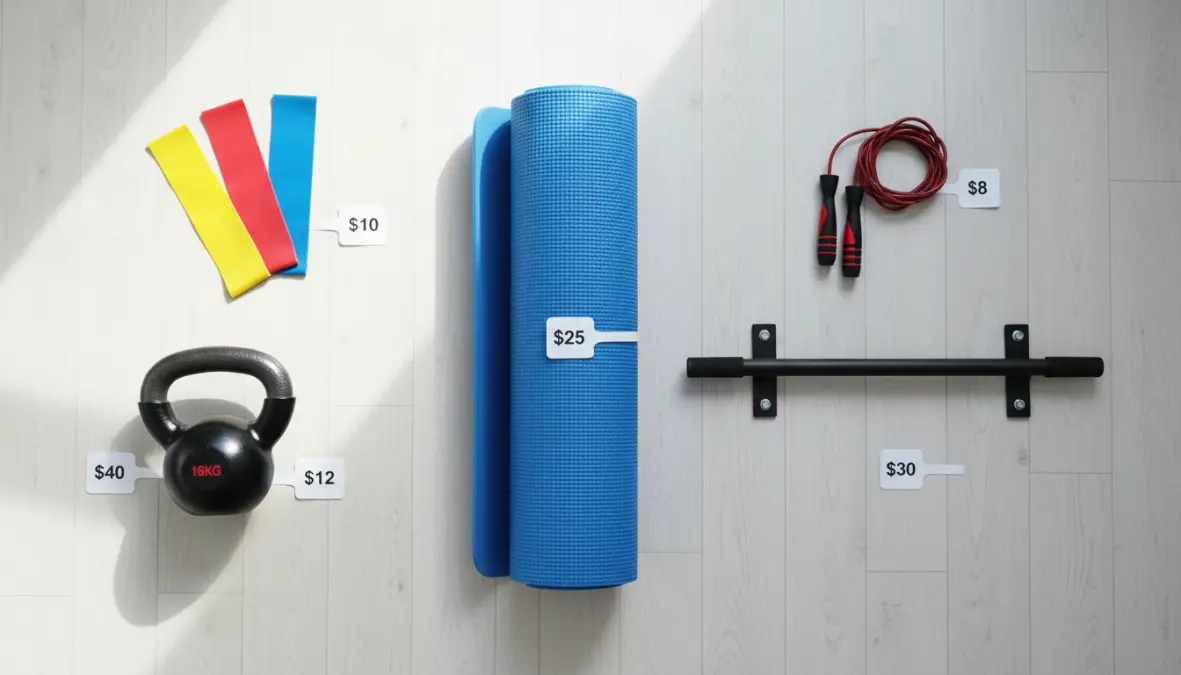
Resistance Bands ($10-30): These elastic powerhouses are incredibly versatile and perfect for strength training, stretching, and rehabilitation exercises. You can target every major muscle group, and they’re ideal for progressive overload by stacking multiple bands. Look for sets with different resistance levels on Amazon or sporting goods stores.
Adjustable Dumbbells ($150-300): While pricier upfront, adjustable dumbbells replace an entire rack of weights, saving you money and space. They’re essential for countless exercises from bicep curls to goblet squats. Consider brands like Bowflex or cheaper alternatives on Facebook Marketplace.
Yoga Mat ($15-40): Don’t underestimate this simple piece of budget workout equipment. A quality exercise mat protects your joints during floor exercises, provides grip for yoga and stretching, and defines your workout space. Thick mats (6mm+) offer better cushioning for intense workouts.
Pull-Up Bar ($20-50): A doorway pull-up bar is one of the cheapest ways to build upper body strength. It enables pull-ups, chin-ups, hanging leg raises, and even serves as an anchor for resistance bands. Most install without drilling.
Jump Rope ($10-20): For cardiovascular conditioning on a budget, nothing beats a simple jump rope. It’s portable, requires minimal space, and delivers intense calorie-burning workouts in minutes.
Kettlebell ($30-60): A single kettlebell opens up hundreds of dynamic exercises. Start with one medium weight (16-24kg for men, 8-16kg for women) and you can perform swings, Turkish get-ups, goblet squats, and more. Check secondhand options for significant savings.
Stability Ball ($15-30): Great for core work, balance training, and as a workout bench alternative. It’s also functional as a desk chair to improve posture throughout the day.
Smart Shopping Strategies to Build Your Affordable Home Gym
Building an affordable home gym requires strategy beyond just picking equipment. Timing your purchases around Black Friday, New Year sales, or end-of-season clearances can save you 30-50% on fitness equipment. Sign up for email lists from retailers like Dick’s Sporting Goods or Academy Sports for exclusive discount codes.
The secondhand market is a goldmine for cheap home gym setup opportunities. Facebook Marketplace, Craigslist, and OfferUp frequently have barely-used equipment from people who gave up their fitness goals. You can often negotiate prices down even further, especially if you’re buying multiple items.
Take a progressive approach to your purchases. Don’t feel pressured to buy everything at once. Here’s a practical budget breakdown:
Under $200 starter setup: Resistance bands ($25), yoga mat ($20), jump rope ($15), pull-up bar ($30), and one kettlebell ($50). This covers cardio, strength, and flexibility work. Add in bodyweight exercises like push-ups, squats, and lunges, and you’ve got a complete program.
$200-500 intermediate setup: Add adjustable dumbbells ($200-250) and a stability ball ($25). This dramatically expands your exercise options for upper body and core work.
$500-1000 advanced setup: Include a weight bench ($100-200), barbell with plates ($200-300), and foam roller ($30). At this level, you’re matching most commercial gym capabilities.
DIY alternatives can slash costs further. Sandbags made from old duffel bags and play sand cost under $20 and work brilliantly for carries, squats, and throws. Milk jugs filled with water or sand become adjustable weights. A sturdy chair substitutes for a workout bench initially.
When buying used, inspect carefully for rust, cracks, or worn cables. Test adjustable equipment to ensure mechanisms work smoothly. For inexpensive home gym building, balance quality with price – spending $50 on dumbbells that last 20 years beats buying $20 ones that break in six months.
What to Avoid When Building Your Budget Home Gym
Steer clear of these common money-wasters. Avoid buying worn resistance bands with visible cracks or fraying – they can snap during use and cause injury. Be skeptical of adjustable dumbbells with plastic components if buying used; metal adjustment mechanisms last longer.
Skip the gimmicky equipment advertised on late-night TV. Ab rollers, shake weights, and single-purpose gadgets gather dust while your wallet stays light. Also avoid buying every supplement or fitness gadget marketed to beginners – focus on equipment first, accessories later.
Don’t buy a full weight set immediately if you’re new to lifting. Start with adjustable options or a limited range and expand as you genuinely need heavier weights. Overspending on equipment you’re not ready for is a beginner’s biggest financial mistake.
Maximizing Your Space and Budget: Setup Tips
Even small apartments can accommodate a functional home gym on budget. A 6×6 foot area is enough for most workouts using the essential equipment listed above. Corners, spare bedrooms, and even living rooms can transform into workout zones with minimal furniture rearrangement.
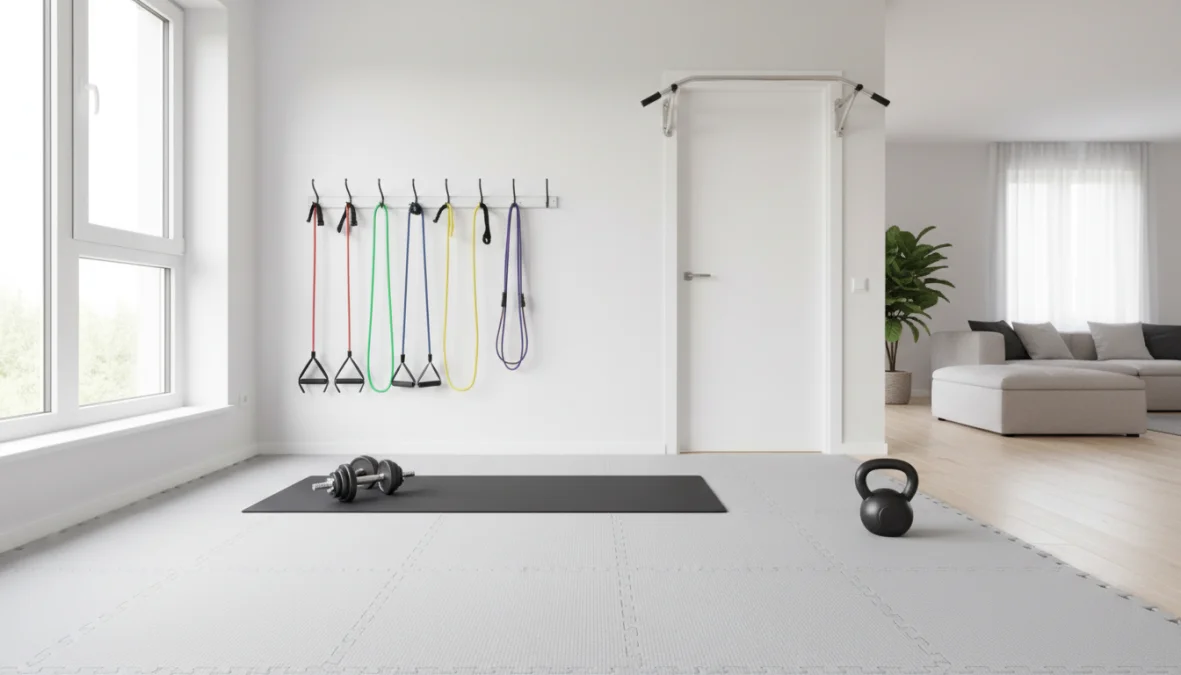
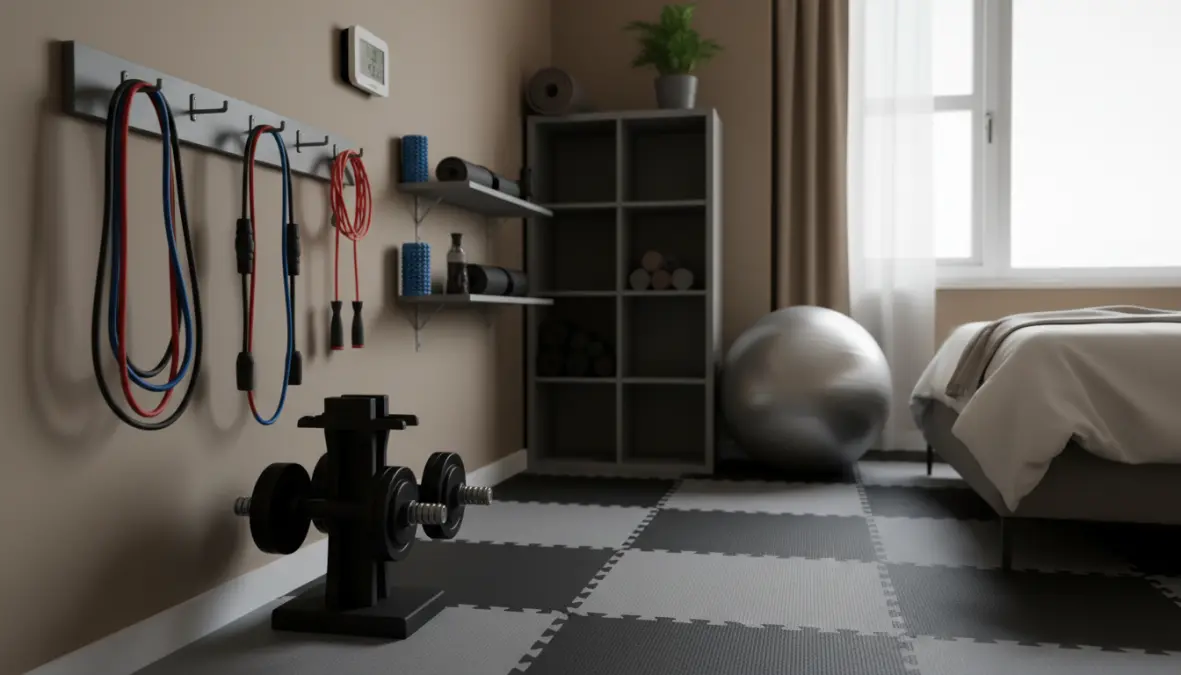
Storage solutions keep your space organized without extra expense. Wall-mounted hooks hold resistance bands and jump ropes ($5 at hardware stores). Stackable bins contain smaller items like yoga blocks or foam rollers. Vertical storage maximizes floor space – mount your pull-up bar when not in use, lean your yoga mat against the wall.
For flooring, interlocking foam puzzle mats cost $20-50 for a 6×6 area and protect floors from dropped weights while cushioning your joints. Horse stall mats from tractor supply stores are an ultra-durable alternative at around $50 per 4×6 mat. Even thick blankets or layered yoga mats work temporarily.
Multifunctional equipment is your friend. A weight bench doubles as a step platform. Resistance bands attach to your pull-up bar for assisted pull-ups or lat pulldowns. Your stability ball becomes a bench for dumbbell presses.
Here’s a simple full-body routine using only the essential equipment: Monday/Wednesday/Friday: Resistance band squats (3×15), push-ups on yoga mat (3×12), pull-ups or assisted pull-ups (3×8), kettlebell swings (3×20), jump rope intervals (5×1 minute). This costs under $150 total and builds strength, cardio, and muscular endurance effectively.
Start minimal and expand gradually. As you outgrow your current equipment or master certain exercises, invest in the next piece that addresses your specific goals. This approach ensures you’re spending money on equipment you’ll actually use, not aspirational purchases that collect dust.
FAQ
How much does it cost to build a basic home gym?
You can build an effective basic home gym for $100-200 with resistance bands, a yoga mat, jump rope, and a pull-up bar. For a more comprehensive setup including adjustable dumbbells and a kettlebell, expect $300-500. This is significantly cheaper than annual gym memberships that average $500-800 per year.
What is the most important equipment for a home gym?
If you can only buy one piece of equipment, choose adjustable dumbbells. They’re the most versatile for strength training, enabling hundreds of exercises for every muscle group. However, resistance bands come close and cost 90% less, making them the best value choice for absolute beginners on tight budgets.
Is it cheaper to build a home gym or pay for a gym membership?
A $500 home gym pays for itself in under a year compared to most gym memberships. After that initial investment, you’re saving money every month. Plus, you save time on commuting and never worry about gym hours or crowds. For budget-conscious fitness enthusiasts, a home gym wins financially.
Can I build an effective home gym for under $200?
Absolutely. Focus on resistance bands ($25), a quality yoga mat ($25), pull-up bar ($30), kettlebell ($50), jump rope ($15), and stability ball ($20). That’s $165 and covers all major fitness components. Combine this equipment with bodyweight exercises for a complete training program that rivals any commercial gym.
What equipment should I buy first for my home gym?
Start with resistance bands and a yoga mat – together under $50. These two items enable dozens of strength and flexibility exercises immediately. Next, add a pull-up bar for upper body work, then a kettlebell for dynamic movements. Save adjustable dumbbells for your fourth or fifth purchase once you’ve established a consistent workout routine.
Building a home gym on budget is one of the smartest fitness investments you’ll make. Start small, shop smart, and focus on versatile equipment that grows with your fitness journey. Your wallet and your health will thank you.