Mental Training for Athletes: The Complete Guide to Building Mental Toughness and Focus
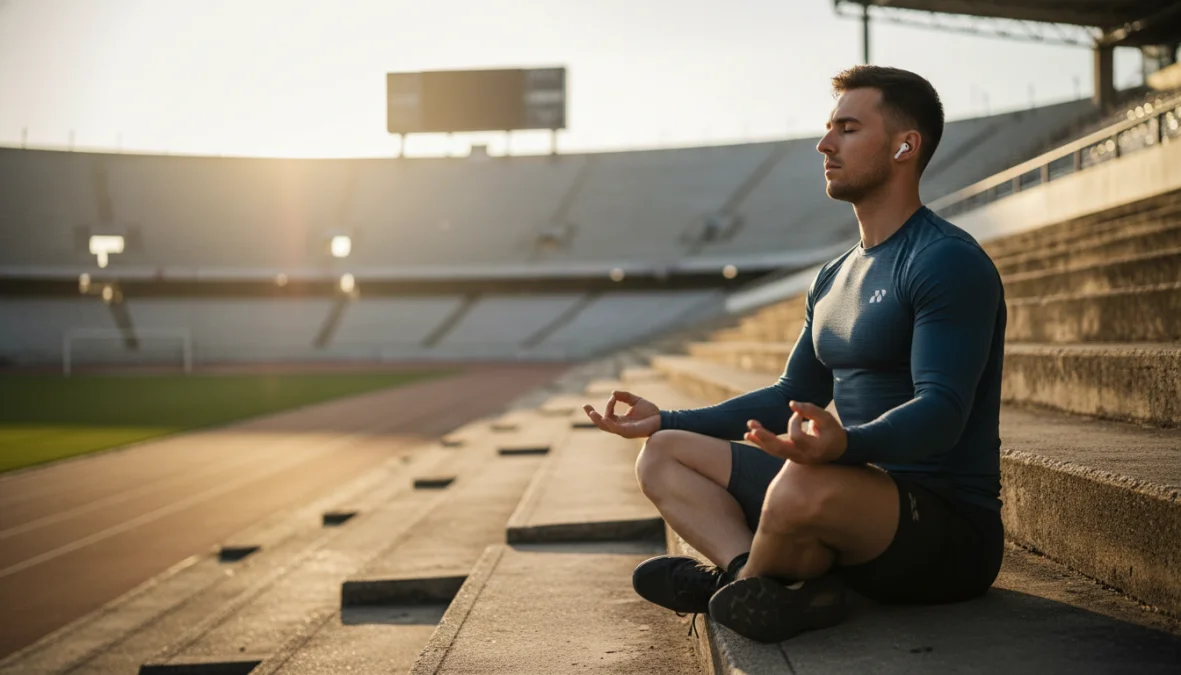
Picture this: two athletes with identical physical abilities step onto the field. Same speed, same strength, same technical skills. Yet one consistently outperforms the other when it counts. What’s the difference? It’s all in their head. Mental training for athletes isn’t some mystical concept reserved for elite professionals—it’s a proven, science-backed approach that separates good athletes from great ones. Whether you’re crushing personal records or choking under pressure often comes down to the mental game you’ve developed off the field.
Understanding Mental Training and Its Impact on Athletic Performance
Mental training for athletes is the systematic practice of psychological techniques designed to enhance athlete mental performance, competitive readiness, and consistency under pressure. Just as you wouldn’t skip leg day and expect to run faster, you can’t neglect your mental conditioning and expect peak performance when the stakes are high.
Research shows that mental factors account for 40-90% of athletic success at elite levels. Think about that—your mindset could be either your greatest advantage or your biggest weakness. Sports psychology techniques help athletes control anxiety, maintain focus during critical moments, recover from mistakes quickly, and perform consistently regardless of external pressures.
Consider Michael Phelps, who credits his mental preparation and visualization routines as crucial to his Olympic dominance. Or take Novak Djokovic, who transformed his career after incorporating mindfulness and mental resilience practices. The difference between athletes who integrate mental training versus those who don’t? The former show significantly better performance under pressure, faster recovery from setbacks, and longer competitive careers.
The foundation of effective mental training athletes use rests on three pillars: mental toughness (staying strong when things get difficult), focus (maintaining concentration on what matters), and resilience (bouncing back from failures and adversity).

Core Psychological Skills and Techniques for Athletes
Now let’s get practical. Psychological skills training encompasses several evidence-based techniques that you can start implementing today. These aren’t abstract concepts—they’re actionable strategies that create measurable improvements in mental toughness training and competitive performance.
Visualization and Mental Imagery
Visualization is arguably the most powerful weapon in your mental training arsenal. Here’s why: your brain doesn’t distinguish much between vividly imagined experiences and real ones. When you mentally rehearse a perfect free throw, the same neural pathways activate as when you physically shoot the ball.
To practice visualization techniques for athletic performance correctly, find a quiet space and close your eyes. Engage all senses—don’t just see yourself executing the skill, but feel the equipment in your hands, hear the crowd, smell the grass or gym floor. Make it vivid and specific. A basketball player should visualize the texture of the ball, the arc of their shot, the swish of the net.
Optimal frequency? Practice 10-15 minutes daily, ideally right before sleep when your brain is most receptive. Before competition, spend 5-10 minutes visualizing yourself handling various scenarios successfully—including mistakes and how you’ll respond to them.
Goal Setting and Self-Talk Strategies
Effective goal setting for athletes follows the SMART framework but with a sports twist. Set Specific performance targets (“reduce my 5K time by 30 seconds”), make them Measurable, ensure they’re Achievable yet challenging, keep them Relevant to your sport objectives, and Time-bound with clear deadlines.
Break big goals into micro-goals. Want to make varsity? Your weekly goal might be improving one technical aspect. This creates momentum and builds confidence through consistent small wins.
Self-talk strategies can make or break your performance. That voice in your head during competition? It needs training too. Replace “Don’t miss this shot” with “Smooth follow-through, just like practice.” Negative self-talk activates threat responses; positive, instructional self-talk keeps you in performance mode.
Create a personal library of power phrases for critical moments: “I’m ready for this,” “One point at a time,” “I’ve trained for exactly this situation.” Rehearse them until they become automatic.

Breathing Techniques and Mindfulness for Competition
Mindfulness for athletes isn’t about becoming zen—it’s about staying present when your mind wants to worry about outcomes. Box breathing is your go-to technique: inhale for 4 counts, hold for 4, exhale for 4, hold for 4. Repeat this cycle 3-5 times before competition to activate your parasympathetic nervous system and calm pre-game jitters.
During competition, use tactical breathing between plays or during breaks. A single deep breath can reset your nervous system after a mistake. The key is practicing these techniques during training so they’re accessible when pressure peaks.
Stress management techniques like progressive muscle relaxation—tensing and releasing muscle groups systematically—help you recognize and release physical tension that accompanies mental stress.
Building Mental Resilience and a Competitive Mindset
Mental resilience in athletes isn’t built during competition—it’s forged during the countless hours of training and through how you process setbacks. Every failure is data, not a verdict on your worth. This is the essence of a growth mindset versus a fixed mindset.
Athletes with fixed mindsets believe talent is static: “I’m not clutch” becomes their identity. Growth mindset athletes see abilities as developable: “I haven’t mastered pressure situations yet, but I’m working on it.” This single shift transforms how you approach competitive mindset training.
To build mental toughness in sports, create challenges deliberately. Practice under pressure conditions—have teammates distract you, practice when fatigued, or create simulated high-stakes scenarios. Your brain adapts to whatever you expose it to consistently.
Develop pre-competition routines that signal your brain it’s performance time. This might include specific warm-up sequences, listening to particular music, or reviewing your game plan in a set order. Consistency builds confidence and creates psychological anchors.
A practical weekly mental training schedule might look like: Monday – 15 minutes visualization; Tuesday – goal review and adjustment; Wednesday – self-talk practice during training; Thursday – mindfulness session; Friday – pre-competition routine rehearsal; Saturday – competition day (apply all skills); Sunday – reflection and journaling.
When should you work with a sports psychologist? If you’re consistently underperforming relative to practice, experiencing severe competition anxiety, or dealing with mental blocks that self-practice hasn’t resolved, professional guidance can accelerate your progress significantly.
FAQ
How long does it take to see results from mental training?
Most athletes notice improvements in focus and concentration in sports within 2-4 weeks of consistent practice. Significant changes in mental toughness and competitive performance typically emerge after 8-12 weeks. Like physical training, consistency matters more than intensity.
Can mental training replace physical practice?
Absolutely not. Mental training complements physical practice—it doesn’t substitute for it. Think of it as sharpening the blade rather than building muscle. Optimal performance requires both physical preparation and psychological readiness.
What’s the difference between mental toughness and mental resilience?
Mental toughness is performing well under pressure and adversity. Mental resilience is bouncing back from setbacks and failures. You need toughness during competition and resilience between competitions.
How do professional athletes practice mental training?
Elite athletes typically dedicate 15-30 minutes daily to specific psychological skills—visualization, mindfulness, breathing exercises. Many work with sports psychologists regularly and integrate mental rehearsal into their physical training sessions.
Is mental training only for elite athletes?
Not at all! Mental toughness strategies for young athletes are equally valuable at every level. In fact, developing these skills early creates competitive advantages that compound over time. Weekend warriors to olympians all benefit from stronger mental skills.
How often should athletes practice psychological skills?
Daily practice is ideal, even if just 10-15 minutes. For mental strength in sports, consistency trumps duration. Three 10-minute sessions weekly beat one 45-minute monthly session every time.
Your physical training has a ceiling—there’s only so much stronger, faster, or more skilled you can become. But your mental game? That’s where unlimited potential lives. Start integrating these techniques today, and you’ll discover what your body was capable of all along. Your mind just needed the right training to unlock it.