
Sodium Loading for Endurance Athletes: Evidence-Based Protocol and Race Preparation Guide

Ever wondered why some endurance athletes seem to handle heat and long distances better than others? While training and genetics play a role, there’s a lesser-known strategy that can significantly impact performance: sodium loading endurance protocols. This pre-race electrolyte loading strategy involves strategically increasing sodium intake before competition to expand plasma volume, enhance fluid retention, and optimize thermoregulation. Let’s dive into the science-backed approach that could give you an edge on race day.
Understanding Sodium Loading: Why Endurance Athletes Need Pre-Race Salt Strategy
Sodium loading endurance strategies aren’t just about eating extra pretzels the night before your race. This electrolyte loading strategy is a physiological intervention designed to optimize your body’s fluid balance and heat management systems before demanding events. When you increase sodium intake systematically, your body responds by retaining more water, which expands your plasma volume—the liquid portion of your blood.
This plasma volume expansion brings several performance benefits. First, more blood volume means better cardiovascular efficiency: your heart doesn’t have to work as hard to deliver oxygen to working muscles. Second, enhanced fluid retention strategies provide a larger reservoir for sweating, crucial for thermoregulation performance in hot or humid conditions. Third, starting a race with optimized hydration status creates a buffer against the inevitable fluid losses during prolonged exercise.
But when is sodium loading for endurance race preparation actually necessary? This protocol shines for events lasting over two hours, particularly in challenging environmental conditions. Marathon runners, Ironman triathletes, ultra-endurance cyclists, and athletes competing in heat and humidity benefit most. If you’re a heavy sweater (visible salt stains on clothing, gritty residue on skin), you’re losing significant sodium and are an ideal candidate for this approach. For shorter events or cool conditions, standard hydration strategies may suffice.
The difference between sodium loading and regular hydration is timing and intentionality. While normal hydration focuses on drinking to thirst and maintaining balance, hyperhydration endurance protocols involve strategic overloading to create a physiological advantage before the starting gun fires.
Evidence-Based Sodium Loading Protocol for Race Preparation
So how much sodium to take before endurance race events? The sodium loading protocol varies based on your timeline and race demands, but here’s a comprehensive, evidence-based approach to pre-race sodium intake:
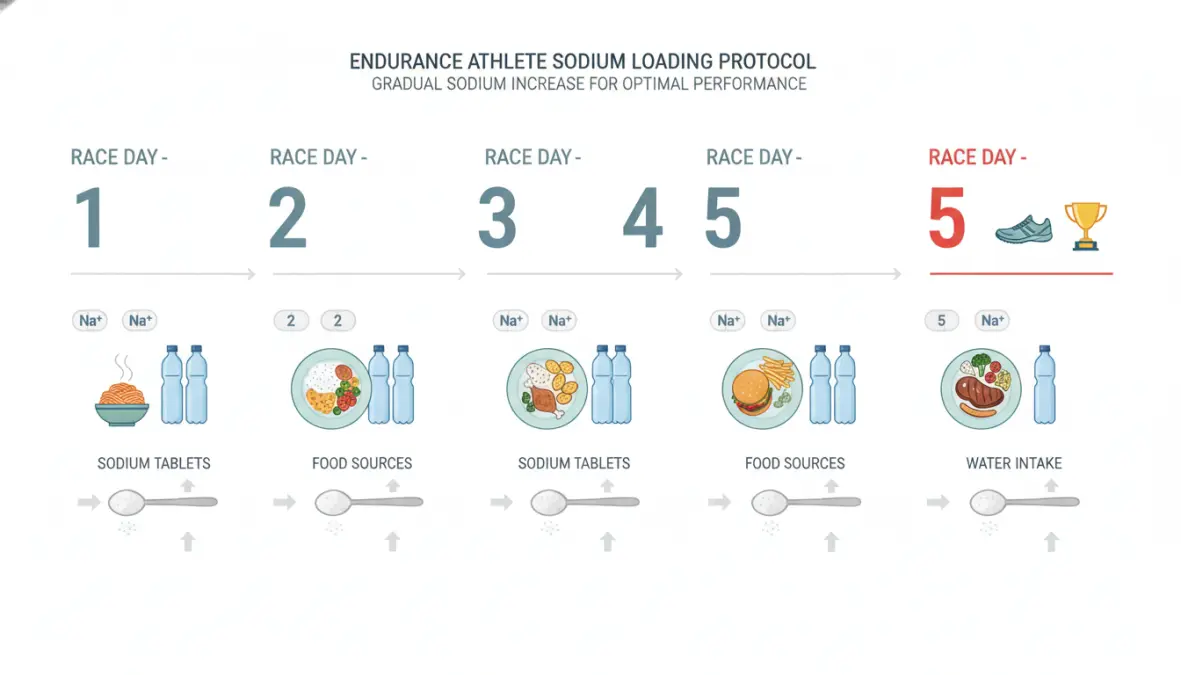
Extended Protocol (3-5 days before race):
- Days 5-3 before race: Increase sodium intake to 4,000-5,000mg daily (roughly double typical intake)
- Days 2-1 before race: Increase to 6,000-8,000mg daily
- Consume sodium throughout the day with meals and snacks
- Pair with adequate water intake (approximately 3-4 liters daily)
- Monitor body weight and urine color to ensure proper balance
Short Protocol (24-48 hours before):
- 48 hours out: Begin increasing to 5,000-6,000mg sodium
- 24 hours out: Consume 8,000-10,000mg sodium
- Distribute intake evenly across meals
- Increase fluid consumption proportionally
Race Morning Acute Loading (Race Day Sodium Protocol):
- 2-3 hours before start: Consume 1,000-1,500mg sodium with 500-750ml water
- 30-60 minutes before: Additional 500mg sodium with 250-500ml fluid
- This acute dose helps maximize plasma volume at race start
Regarding delivery methods for sodium supplementation athletes, you have several options. Salt tablets endurance athletes commonly use provide precise dosing (typically 200-400mg per tablet). You can also add table salt to meals (1 teaspoon = approximately 2,300mg sodium), consume salty foods (pretzels, pickles, broth), or use electrolyte supplements specifically formulated for preloading hydration status.
The key difference between extended and short protocols? Longer protocols allow for more gradual adaptation and may produce more stable plasma volume expansion, while short protocols are more convenient and still effective for many athletes. Test both during training sessions to determine which works for your physiology.
Sodium Bicarbonate vs Sodium Chloride: Choosing the Right Form
When discussing sodium bicarbonate endurance protocols, it’s important to distinguish between sodium forms. Sodium chloride (table salt) is the standard for plasma volume expansion and fluid retention. However, sodium bicarbonate serves a dual purpose: it provides sodium while also acting as a buffering agent against lactic acid accumulation during high-intensity efforts.
For events with sustained high-intensity components (criterium racing, hilly marathons, Olympic-distance triathlons), consider 300mg per kilogram body weight of sodium bicarbonate 60-90 minutes before the start. Be warned: sodium bicarbonate commonly causes gastrointestinal distress. Always test during training, start with lower doses, and consider split dosing (half at 90 minutes, half at 60 minutes pre-race). For pure endurance events without significant lactate concerns, stick with sodium chloride for your loading protocol.
Safety Considerations and Common Mistakes in Sodium Loading
While sodium supplementation athletes use can be performance-enhancing, it’s not without risks or contraindications. Anyone with hypertension, kidney disease, heart conditions, or taking medications affecting fluid balance should consult a physician before attempting hyperhydration endurance protocols. Even healthy athletes can experience complications from improper execution.
The most critical rule: never try sodium loading for the first time on race day. Your endurance race preparation should include at least 2-3 practice runs during long training sessions that simulate race conditions. This allows you to assess tolerance, optimize dosing, and identify potential issues in a low-stakes environment.
Common mistakes include excessive sodium without proportional water intake (risking hypernatremia), loading too close to race start (causing bloating and discomfort), ignoring dietary sodium already consumed (overshooting targets), and continuing aggressive loading during the race when maintenance dosing is appropriate. Additionally, some athletes who ask “does sodium loading improve endurance performance” expect dramatic results without addressing fundamental aspects like proper training intensity or strength work.
Monitor your response by tracking morning body weight (expect 1-2kg increase from fluid retention), urine color (pale yellow indicates good hydration), and how you feel (mild fullness is normal; severe bloating or headaches signal problems). If you experience persistent headaches, extreme bloating, unusual swelling, or confusion, discontinue the protocol and seek medical advice.

FAQ: Sodium Loading for Endurance Performance
How much sodium should I load before a marathon or Ironman?
For marathons, target 6,000-8,000mg in the 24 hours before race day, with an acute dose of 1,000-1,500mg 2-3 hours before start. For Ironman triathlons and ultra-distance events, consider the extended 3-5 day protocol reaching up to 10,000mg on the day before, as these longer races increase dehydration and electrolyte loss risks significantly.
When should I start sodium loading before race day?
Most athletes benefit from beginning 24-48 hours before the race using the short protocol. However, if you’re competing in extreme heat, are a heavy sweater, or racing an ultra-endurance event, start 3-5 days out. The race morning acute dose 2-3 hours before start is crucial regardless of which pre-race protocol you choose.
Can sodium loading cause bloating or weight gain?
Yes, temporary fluid retention is expected and actually desired—it’s the mechanism behind performance benefits. Expect 1-2kg weight increase from plasma volume expansion. Mild abdominal fullness is normal, but severe bloating indicates excessive intake or insufficient practice. This weight is quickly lost through sweat during racing and shouldn’t impact performance negatively.
Is sodium loading safe for all endurance athletes?
No. Athletes with hypertension, kidney disease, heart conditions, or those on medications affecting sodium or fluid balance should avoid sodium loading or only proceed under medical supervision. Even healthy athletes should start conservatively, test protocols in training, and monitor responses carefully. When in doubt, consult a sports dietitian or physician familiar with endurance sports.
Sodium loading endurance protocols represent a scientifically-supported strategy that can meaningfully impact your race day performance, particularly in demanding conditions. Like any performance intervention—from altitude training to concurrent training programs—success lies in individualization, careful testing, and thoughtful implementation. Start conservatively, practice during training, monitor your body’s responses, and refine your approach. With the right sodium loading protocol tailored to your needs, you’ll toe the start line with optimized plasma volume and a physiological advantage that could make those final miles just a bit more manageable.