Sandbag Training for Athletes: Build Functional Strength for Peak Performance
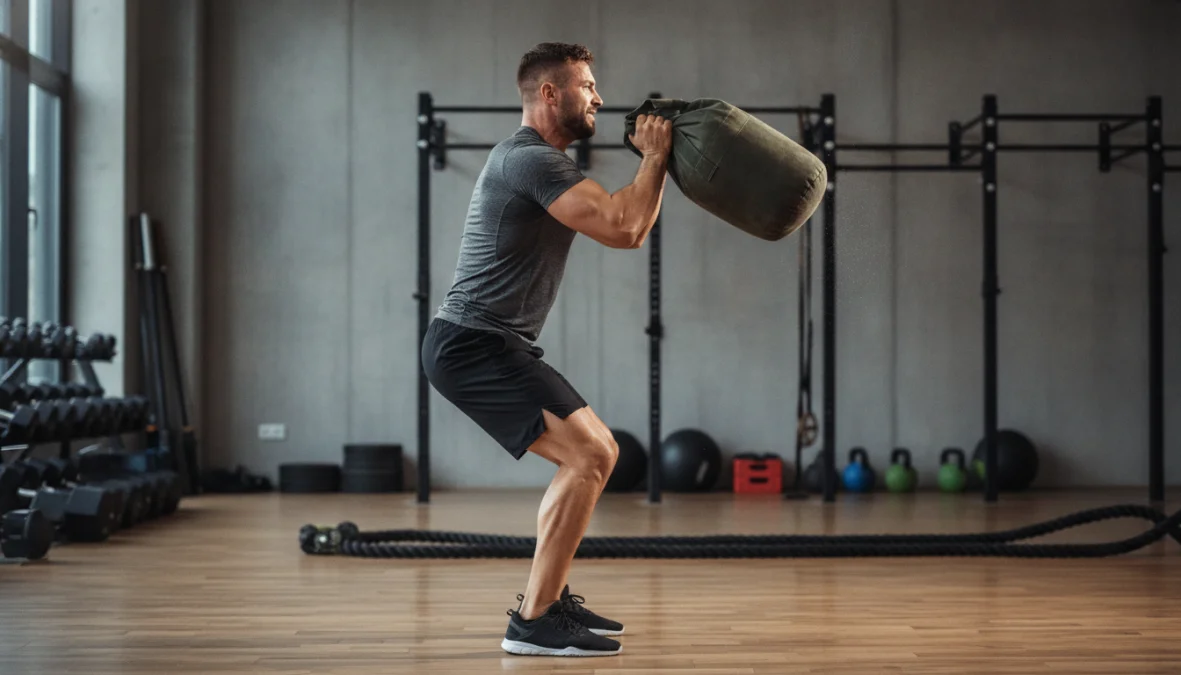
Picture this: you’re grinding through another set of perfectly balanced barbell squats when a thought hits you—when was the last time a real opponent, a ball, or a game situation stayed perfectly balanced? Exactly. That’s where sandbag training athletes are finding their edge. The shifting, unpredictable nature of sandbag workouts mirrors the chaos of actual competition better than any chrome-plated equipment ever could. If you’re serious about translating gym strength into on-field dominance, it’s time to embrace the bag.
Why Sandbag Training Benefits Athletes More Than Traditional Strength Training
The magic of sandbag training benefits athletes in ways traditional equipment simply can’t match. Unlike barbells that distribute weight evenly across your body, sandbags create unstable load training that forces constant micro-adjustments. Every rep becomes a lesson in proprioception and balance—skills that translate directly to athletic performance.
Think about functional strength training in practical terms. When you hoist a sandbag onto your shoulder, the sand shifts unpredictably, engaging stabilizer muscles that rarely get recruited during standard lifts. Your grip has to work overtime to control the floppy, uncooperative bag, building grip strength development that pays dividends when you’re grappling an opponent or maintaining control of equipment in your sport.
The athletic sandbag training advantage extends to injury prevention too. Because sandbags force you to move through multiple planes of motion while maintaining control, you’re essentially bulletproofing your joints and connective tissues. The constant core engagement required to stabilize an awkward, shifting load builds the kind of real-world strength that keeps you healthy when competition gets physical. Plus, the forgiving nature of sandbags—you can literally drop them without destroying your floor or your toes—makes them safer for explosive movements and metabolic conditioning work that would be risky with rigid equipment.
Traditional strength training definitely has its place, but it creates strength in predictable patterns. Sandbag workout athletes develop adaptability—the ability to generate force and maintain control when nothing goes according to plan. Just like in sports.

Essential Sandbag Exercises for Sports Performance
Let’s break down the best sandbag exercises for athletes that should form the foundation of your training. Starting with lower body movements, sandbag squats (particularly the bear hug variation where you clutch the bag against your chest) absolutely torch your quads while forcing serious core stability. The forward load position challenges your entire posterior chain to keep you upright. Sandbag lunges take this further by adding a single-leg stability component that mimics cutting, pivoting, and decelerating in sports.
For explosive power training, sandbag cleans are your best friend. The technique mirrors Olympic lifting but the shifting load demands you generate force more aggressively to complete the movement. Shouldering—explosively hoisting the bag from ground to shoulder—develops the kind of unilateral power that combat athletes and football players need for tackles and throws. These movements exemplify sandbag exercises sports performance specialists recommend for developing athletic explosiveness.
Upper body work includes overhead presses with the sandbag, which require far more shoulder stability than dumbbells. The instability trains your rotator cuffs and supporting muscles to fire properly under load. For rotational strength, rotational throws against a wall or to a partner develop the twisting power essential for baseball, golf, tennis, and martial arts.
Don’t sleep on carries. Sandbag carries in various positions (shoulder, bear hug, zercher, overhead) build work capacity and mental toughness while improving core stability exercises through loaded movement. A simple 50-meter bear hug carry will humble even the strongest athletes and build the kind of crushing strength that transfers directly to competition. These sandbag strength conditioning movements create the foundation for sport-specific programming.

Sport-Specific Sandbag Training Programs
Understanding how to use sandbag training for sports requires matching exercises to the demands of your discipline. The beauty of sport-specific sandbag workouts is their versatility—you can tailor intensity, movement patterns, and energy systems to mirror your competitive requirements.
Contact Sports and Combat Athletes
Football, rugby, wrestling, and MMA athletes need to control, move, and dominate opponents who definitely aren’t cooperating. Bear hug carries simulate maintaining control of a struggling opponent while moving them across space. Shouldering drills replicate the explosive hip drive needed for tackles and takedowns. Ground-to-shoulder movements mirror getting opponents off the mat or field. Program these with lower reps (3-6) and higher loads for maximal strength, or higher reps (10-15) with moderate weight for the muscular endurance needed in later rounds or fourth quarters. The dynamic resistance training approach keeps your nervous system primed for the unpredictability of combat. Pairing this work with proper mobility training ensures you maintain the range of motion needed for technique execution.
Endurance and Rotational Sports
Runners, cyclists, baseball players, golfers, and tennis athletes benefit from sandbag workout routine for athletic performance focused on core stability and rotational power. Rotational throws build the explosive twisting strength needed for serves, drives, and swings. Asymmetric carries (single-shoulder or single-arm) fight lateral flexion, strengthening the obliques and deep core muscles that maintain posture during long efforts. Lunges with rotation combine lower body strength with the twisting demands of changing direction. For endurance athletes, higher rep schemes (15-25) with lighter loads build the muscular endurance and proprioception training that prevents form breakdown during fatigue. These athletes should also pay attention to hydration strategies when incorporating intense sandbag conditioning work.
Programming Sandbag Workouts Into Your Athletic Training
Creating a sandbag training program for competitive athletes requires strategic integration with your existing training. During the off-season, you can hit sandbag workout athletes sessions 2-3 times weekly, focusing on building maximal strength and power. Use heavier bags (60-100+ pounds depending on your size) with lower reps (3-8) and longer rest periods (2-3 minutes) to develop strength qualities.
As you move into pre-season and in-season periods, reduce frequency to 1-2 sessions weekly and shift toward maintenance and power expression. The functional strength training emphasis should move from building capacity to maintaining it while managing fatigue. In-season workouts might feature lighter loads with more explosive movements or circuit-style conditioning that builds work capacity without destroying recovery.
A simple progression model: start with 40-50% of what you’d use for barbell equivalents, master the movement patterns, then add 5-10 pounds weekly. For power development, use 4-6 reps with maximum intent and full recovery. For strength endurance, circuit 4-5 exercises for 30-45 seconds each with minimal rest. For maximal strength, work up to heavy triples and doubles with long rest periods.
Recovery matters enormously with sandbag training because the stabilizer demand and eccentric stress can be higher than you’re used to. Ensure adequate sleep optimization and consider anti-inflammatory nutrition to support adaptation. The mental demands are significant too—maintaining focus and intent throughout unstable movements requires the same mental toughness you bring to competition.
The question isn’t whether you should add sandbag training—it’s why athletes should train with sandbags if they want real-world strength that shows up when competition gets messy. The instability, the grip challenge, the core demand—these aren’t bugs, they’re features that build resilient, adaptable athletes. Grab a bag, embrace the chaos, and watch your performance reach new levels.