
Periodized Nutrition: How to Fuel Your Body Across Different Training Phases

You’ve probably noticed how your energy levels, appetite, and performance fluctuate throughout different training blocks. That’s not just coincidence—your body’s nutritional needs change dramatically depending on whether you’re building base fitness, hitting peak volume, or tapering for competition. Yet most athletes eat the same way year-round, missing a crucial opportunity to optimize both performance and body composition. Enter periodized nutrition: the strategic approach to fueling that matches your plate to your training calendar.
What Is Periodized Nutrition and Why It Matters
Periodized nutrition is the systematic planning of nutritional intake to align with different training phases, just as you wouldn’t train the same way year-round. Unlike static nutrition approaches where macronutrient ratios remain constant regardless of training demands, nutrition periodization adjusts calories, macronutrients, and timing based on your current training objectives and intensity levels.
Think of it this way: your training is already periodized—you have base phases, build phases, competition periods, and recovery blocks. Your nutrition should follow the same logic. Research shows that this approach enhances training adaptation, improves body composition management, and optimizes performance outcomes through strategic metabolic adaptation.
Elite athletes have been using sports nutrition periodization for years. Studies demonstrate that matching energy availability and macronutrient distribution to training demands can improve glycogen storage efficiency by up to 20% while simultaneously supporting lean mass gains during strength phases. The key benefit? You’re giving your body exactly what it needs, when it needs it—no more, no less. This precision prevents the metabolic sluggishness that comes from chronic under-fueling or the unnecessary fat gain from over-fueling during lower-intensity periods.

Nutrition Strategies for Different Training Phases
Understanding training phase nutrition means recognizing that your athlete fueling strategy isn’t one-size-fits-all across the training calendar. Different performance nutrition phases require distinct approaches to macronutrient timing and overall intake. Let’s break down the primary phases of cyclic nutrition planning and how to fuel each effectively.
Base and Build Phases: Fueling Volume Training
During base and build phases, training volume typically peaks while intensity remains moderate. This is when you’re logging long endurance sessions, high-rep strength work, or accumulating significant weekly mileage. Your nutritional priority? Supporting workout quality and recovery nutrition while facilitating positive training adaptations.
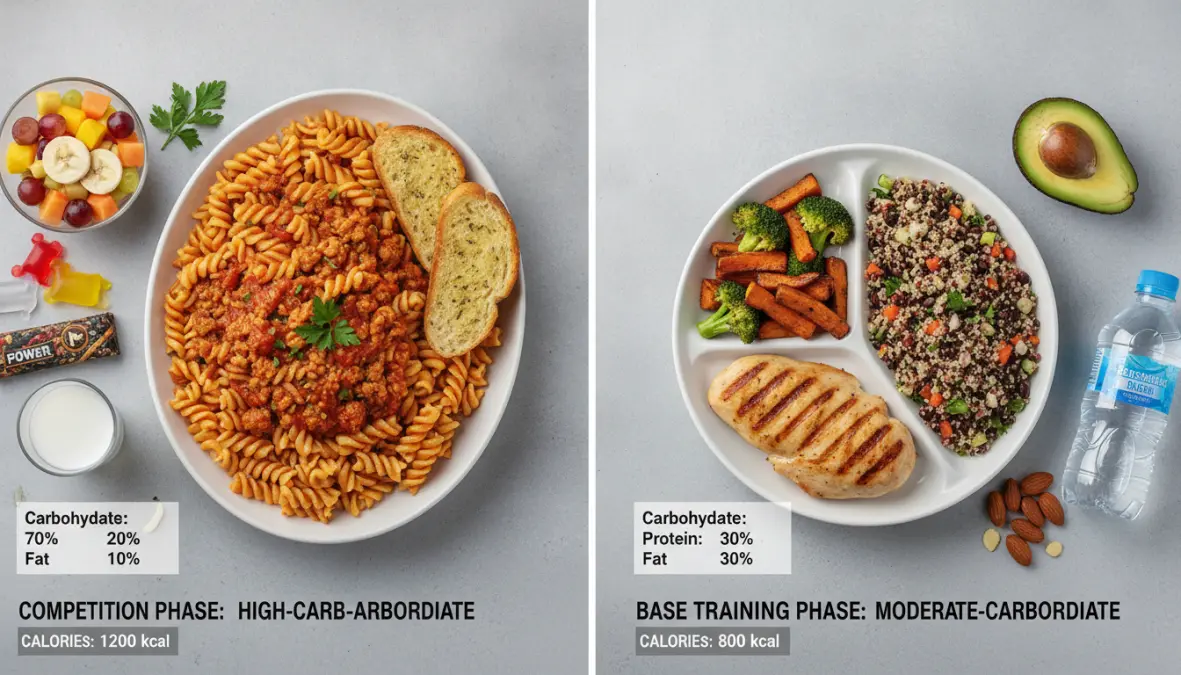
This phase demands moderate-to-high carbohydrate intake to fuel volume work and replenish glycogen stores between sessions. A periodized nutrition plan for strength training during this phase might include 4-6g of carbohydrates per kilogram of body weight daily, with strategic timing around workouts. Focus on pre-workout nutrition to fuel training sessions and post-workout meals to capitalize on metabolic windows.
Protein should remain consistently elevated (1.6-2.2g/kg) to support muscle repair and adaptation, while fats can be moderate (20-30% of total calories). The key is learning how to adjust calories during training cycles—as volume increases week-to-week, so should your energy intake to prevent the accumulated fatigue that comes from chronic energy deficits. This is also prime time for working on body composition, as the high training stimulus allows for simultaneous fat loss and performance gains when nutrition is dialed in correctly.
Competition and Peak Phases: Optimizing Performance
As you approach competition or peak performance periods, training volume typically decreases while intensity increases. This taper phase requires a shift in your fueling approach—the best fueling approach for competition phase focuses on maximizing glycogen stores while maintaining energy levels despite reduced training volume.
This is where carbohydrate periodization becomes crucial. During taper weeks, many athletes mistakenly cut calories proportionally to reduced training volume, leading to suboptimal glycogen storage. Instead, maintain or even slightly increase carbohydrate intake (6-8g/kg for endurance athletes, or as part of a specific carb-loading protocol) while reducing training stress. This strategic glycogen manipulation ensures your muscles are fully fueled for peak performance.
For periodized nutrition for endurance athletes, the final 2-3 days before competition might involve aggressive carb-loading protocols, while strength athletes might focus on optimal hydration and sodium balance. Consider hydration strategies as equally important during this phase. Protein can be maintained or slightly reduced as training stimulus decreases, and timing becomes increasingly important—front-loading calories earlier in the day can help manage pre-competition nerves that often suppress appetite.
Implementing Your Periodized Nutrition Plan
Understanding the theory of nutrition periodization is one thing; putting it into practice is another. Start by mapping your training calendar and identifying distinct phases—most athletes work in 4-12 week mesocycles, making it easier to implement nutrition timing across training mesocycles.
Begin with a baseline assessment: track your current intake for at least a week during a typical training period. Use apps or food logs to establish your starting point for calories and macronutrient ratios. From there, make adjustments based on upcoming phase demands. A common framework is calculating nutritional needs as multiples of body weight, then adjusting as phases change. For example, carbohydrates might range from 3g/kg during recovery weeks to 7g/kg during peak volume or competition prep.
One of the most critical aspects of successful athlete fueling strategy is avoiding common pitfalls. Don’t make drastic changes overnight—transition between phases gradually over 3-7 days to allow metabolic adjustment. Pay attention to biofeedback: persistent fatigue, poor sleep quality (explore sleep optimization strategies), training plateaus, or irregular menstrual cycles (for female athletes) signal inadequate energy availability.
Individual factors matter enormously. Nutrition strategies for different training phases vary based on sport type—a cyclist’s needs differ from a runner’s or a triathlete’s (check out triathlon training fundamentals). Age, gender, training history, and metabolic health all influence optimal approaches. Don’t forget the off-season or transition phase: this period isn’t about unrestricted eating, but rather about maintaining base nutrition while allowing both physical and mental recovery.
Finally, tracking matters. Whether you use fitness trackers to monitor training load or simple spreadsheets to track nutrition patterns, having objective data helps you make informed adjustments. When in doubt, or if you’re training at a high level, consult with a sports nutritionist who can provide personalized periodization strategies based on your specific goals and responses.
Periodized nutrition isn’t about perfection—it’s about strategic flexibility and aligning your fueling with your training reality. By matching your nutrition to your training phases, you’ll not only perform better when it counts but also recover faster and build a more sustainable relationship with food throughout your athletic journey.