Pre-Workout Nutrition: What to Eat Before Training for Maximum Performance

Ever wonder why some days you crush your workout while others you barely make it through the warm-up? The secret often lies in what you ate (or didn’t eat) before hitting the gym. Pre workout nutrition isn’t just about avoiding an empty stomach—it’s about strategically fueling your body to maximize performance, build muscle, and crush your fitness goals. Whether you’re lifting heavy, running miles, or taking a HIIT class, the right pre-training fuel can make the difference between an average session and a personal record.
Why Pre-Workout Nutrition Matters for Performance
Think of your body like a car—you wouldn’t expect it to run without gas, right? Pre workout nutrition provides the essential workout fuel your muscles need to perform at their peak. When you eat before training, you’re primarily loading up your glycogen stores, which are your muscles’ preferred energy source during intense exercise.
Here’s the science: carbohydrates you consume get broken down into glucose, which is then stored in your muscles and liver as glycogen. During exercise, especially high-intensity training, your body taps into these glycogen reserves for quick energy. When these stores run low, fatigue kicks in fast, and your performance tanks. Research shows that proper pre training nutrition can improve workout capacity by up to 20%, enhance strength output, and delay the onset of fatigue.
Beyond energy, eating before exercise helps prevent muscle catabolism—the breakdown of muscle tissue for energy. When you train on an empty stomach, especially during longer or intense sessions, your body may start breaking down muscle protein for fuel. A well-timed pre-exercise meal with adequate protein helps preserve muscle mass while supporting recovery and growth. Additionally, stable blood sugar levels from proper pre-workout eating help maintain focus, coordination, and mental clarity throughout your session.

What to Eat Before the Gym: Macronutrients and Timing
Understanding what to eat before gym sessions comes down to two critical factors: the right macronutrients and proper pre workout meal timing. Not all nutrients are created equal when it comes to fueling exercise, and when you eat matters just as much as what you eat.
The general rule? The closer you are to your workout, the simpler and lighter your meal should be. A full meal 3 hours before training gives your body plenty of digestion time, while a snack 30 minutes out needs to be quick-digesting to avoid stomach discomfort. Let’s break down each macronutrient and how to time them for optimal athletic performance.
Carbohydrates: Your Primary Fuel Source
Carbs are the MVP of best pre workout foods. They’re your body’s preferred energy source during moderate to high-intensity exercise, making them non-negotiable for serious training. The key is choosing the right type based on your timing.
Complex carbohydrates like oatmeal, brown rice, sweet potatoes, and whole grain bread provide sustained energy and are perfect for meals 2-3 hours before training. These digest slowly, providing a steady release of glucose to maintain energy levels throughout your workout. They’re ideal for best pre workout meal for muscle gain or longer endurance sessions.
Simple carbohydrates like bananas, white rice, honey, or dried fruit digest quickly and are your go-to when asking what to eat 30 minutes before workout. These provide rapid energy without sitting heavy in your stomach. A banana is often called nature’s energy bar for good reason—it’s packed with easily digestible carbs and potassium to prevent cramping.
For portion guidance: aim for 0.5-1 gram of carbs per pound of body weight 3-4 hours before training, or 0.25-0.5 grams per pound 30-60 minutes before. Someone weighing 150 pounds might have 75 grams of carbs (about a cup of oatmeal with a banana) 3 hours out, or 40 grams (a large banana and some crackers) 30 minutes before.
Protein and Fats: Supporting Roles
While carbs steal the spotlight, protein plays a crucial supporting role in pre exercise meal planning. Including 15-25 grams of protein before training helps jumpstart protein synthesis, reduces muscle breakdown during exercise, and primes your body for recovery. Greek yogurt, protein powder, egg whites, or lean chicken are excellent choices that won’t weigh you down.
Fats, however, should be limited in your immediate pre-workout window. While healthy fats are essential for overall nutrition, they slow digestion significantly, which can cause discomfort and bloating during training. That avocado toast might be Instagram-worthy, but save it for post-workout or meals at least 3 hours before training. If you’re eating closer to workout time, keep fats minimal—a small amount of nut butter is fine, but skip the heavy meals with lots of oils, cheese, or fatty meats.
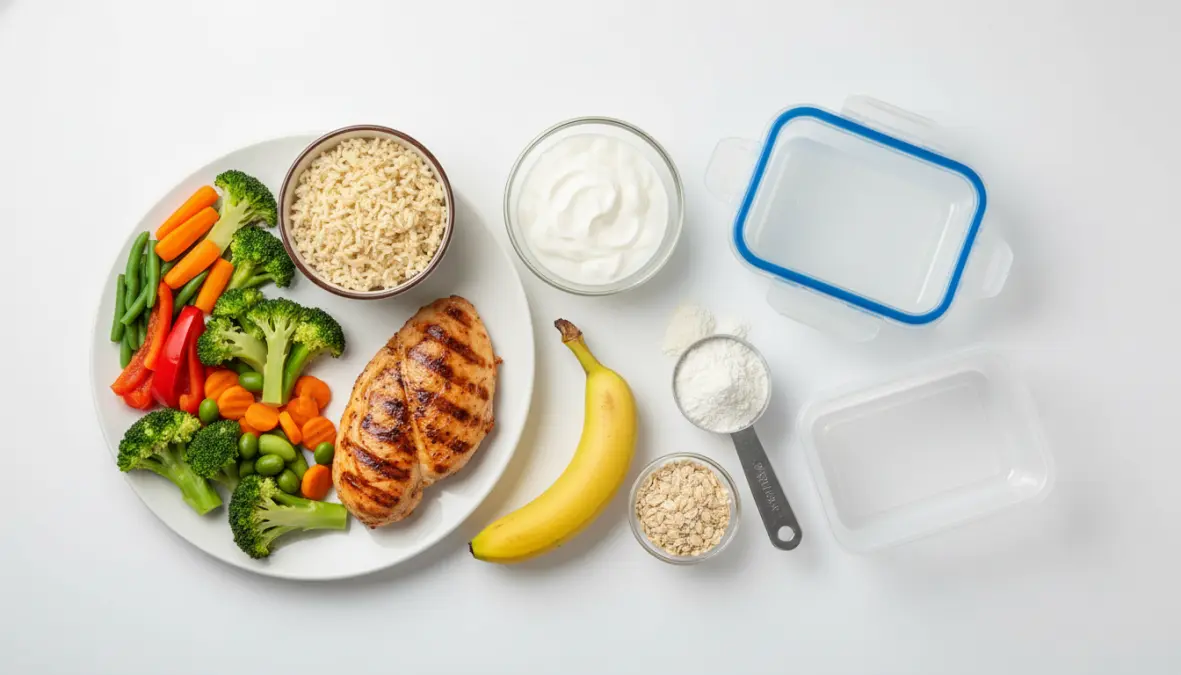
Pre-Workout Meal Ideas Based on Training Time
Theory is great, but let’s get practical. Here are proven pre workout snacks and meals organized by how much time you have before training. These examples work whether you’re focused on pre workout nutrition for weight loss, muscle gain, or endurance performance.
2-3 Hours Before: Complete Pre-Workout Meals
When you have a few hours to digest, you can enjoy a proper balanced meal. This is ideal for what to eat before morning workout sessions if you wake up early enough, or afternoon training after lunch. These complete meals provide sustained energy, stabilize blood sugar, and support muscle performance throughout your session.
Option 1: Grilled chicken breast (4-5 oz) with one cup of brown rice and steamed vegetables. This provides about 50g carbs, 35g protein, and minimal fat—perfect macros for intense training.
Option 2: Oatmeal bowl with protein powder, berries, and a tablespoon of almond butter. Mix ½ cup oats with water or milk, stir in a scoop of protein powder, top with ½ cup berries. This delivers around 45g carbs and 30g protein.
Option 3: Whole grain toast (2 slices) with natural peanut butter, banana slices, and a side of Greek yogurt. This combination offers quick and sustained energy from the best carbs before workout plus protein for muscle support.
30-60 Minutes Before: Quick Pre-Workout Snacks
Short on time? These fast-digesting options provide immediate energy without stomach discomfort. They’re perfect as pre workout food for energy when you need a quick boost.
The Classic Banana: Simple, portable, and effective. One medium banana provides about 27g of fast-acting carbs and potassium. Add a small handful of pretzels if you need more fuel.
Smoothie: Blend one banana, half cup berries, scoop of protein powder, and water or almond milk. Liquid form means faster digestion and absorption.
Rice cakes with honey: Two rice cakes drizzled with honey offer quick carbs without any fat to slow digestion. Great for pre workout meal for endurance training when you need pure fuel.
Dates or dried fruit: 3-4 medjool dates provide concentrated carbs (about 25g) that hit your bloodstream fast. Perfect for immediate pre-workout energy.
Energy bar: Choose bars with minimal fiber, low fat, and 20-30g carbs. Read labels carefully—many bars are too high in fiber or fat for optimal pre-workout digestion.

Common Pre-Workout Nutrition Mistakes to Avoid
Even with the best intentions, it’s easy to sabotage your performance with poor pre training nutrition choices. Here are the most common mistakes that can turn your workout from hero to zero:
Eating too close to training time: That heavy meal 20 minutes before your workout? Recipe for disaster. Blood rushes to your digestive system instead of your muscles, causing cramps, nausea, and sluggish performance. Respect digestion time.
Overloading on fats and fiber: While healthy for regular meals, high-fat foods and excessive fiber slow digestion significantly and can cause GI distress during exercise. Save the high-fiber salad for post-workout.
Training completely fasted for intense sessions: While fasted cardio has its place, attempting a heavy lifting session or HIIT workout without fuel compromises performance and risks muscle loss. Your glycogen stores matter.
Neglecting hydration: Dehydration can decrease performance by up to 30%. Start sipping water 2-3 hours before training and consume 8-16 oz in the 30 minutes leading up to your session.
Experimenting on game day: Never try new foods before important workouts or competitions. Stick with tested meals that you know your stomach tolerates well. Save experimentation for regular training days.
Mastering your pre workout nutrition is one of the simplest ways to elevate your training results. By understanding the role of carbohydrates, timing your meals appropriately, and avoiding common pitfalls, you’ll show up to every workout fully fueled and ready to perform. Remember, consistency matters—make pre-workout nutrition a habit, not an afterthought. Your stronger, fitter future self will thank you for the extra energy and better results. Now get out there and fuel those gains!