How to Climb Out of the Saddle: Master Standing Climbing Technique
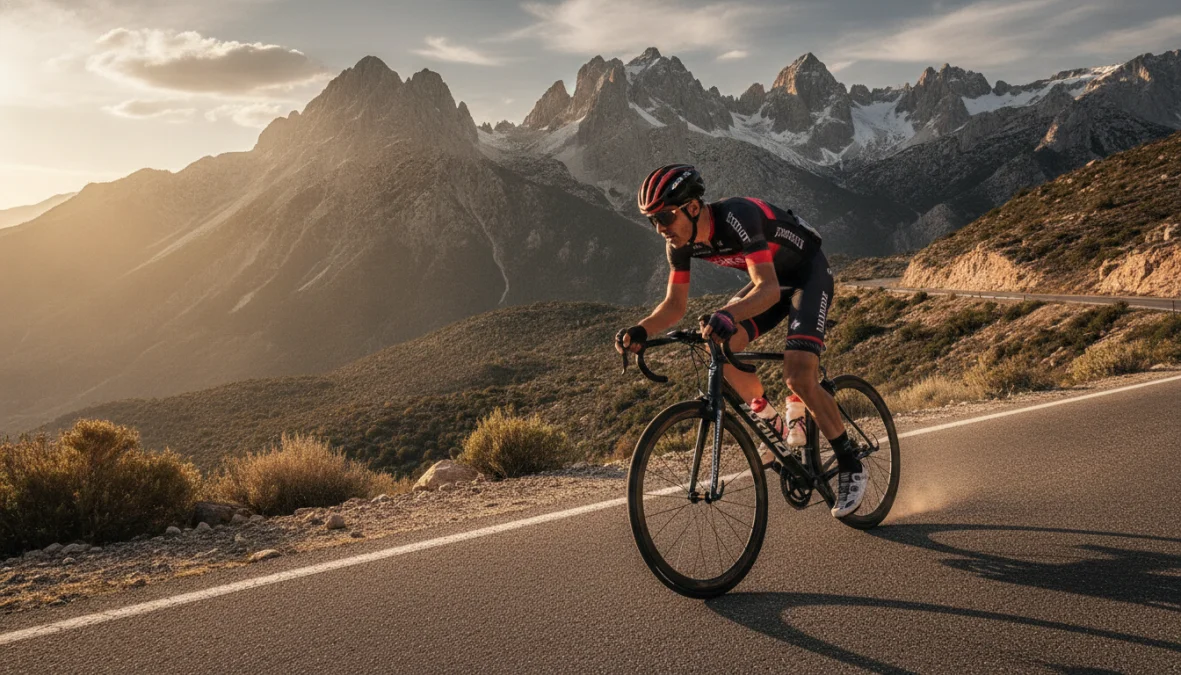
There’s nothing quite like the moment when a steep climb forces you to rise from the saddle. Your legs take over, your bike sways beneath you, and suddenly you’re dancing up the hill with a rhythm all your own. But if you’ve ever felt wobbly, wasted energy, or wondered why some cyclists make climbing out of saddle look effortless while you’re struggling, you’re not alone. Mastering the standing climbing technique isn’t just about getting out of the seat—it’s about body position, power transfer, and knowing exactly when to make the move.
What Is Out of Saddle Climbing and When Should You Use It
Out of saddle climbing is exactly what it sounds like: standing on your pedals while climbing instead of remaining seated. This standing climbing technique shifts how you generate power, engage muscles, and distribute weight across your bike. While seated climbing relies primarily on your quadriceps and hip flexors with a consistent cadence, standing recruits your glutes, hamstrings, and core more aggressively while allowing you to leverage your body weight.
The debate of standing vs seated climbing isn’t about which is universally better—it’s about choosing the right tool for the situation. Standing becomes particularly valuable on steep gradients (typically above 8-10%), during accelerations or attacks, when you need to change your muscle recruitment pattern to relieve fatigue, or when you want to inject a surge of power. Professional cyclists frequently alternate between positions during long climbs to distribute muscular stress differently and maintain freshness.
However, climbing out of saddle does have trade-offs. It typically increases your heart rate by 5-10 beats per minute compared to seated climbing at the same speed, and it’s generally less aerodynamically efficient. For sustained, moderate climbs where pacing matters more than power surges, staying seated often proves more economical. The key is understanding when the benefits—immediate power boost, muscular relief, tactical positioning—outweigh the increased energy expenditure.

Proper Standing Climbing Technique: Step-by-Step Guide
Mastering how to climb standing on a bike requires attention to several interconnected elements. Poor climbing technique cycling wastes watts, creates instability, and turns what should be a powerful surge into an exhausting wobble. Let’s break down the essential components of effective pedaling out of saddle.
Body Position and Bike Movement
Your hand position matters more than you might think. Most riders find the hoods provide the best balance of control and comfort for standing climb bike efforts, though some prefer the drops on extremely steep pitches for better weight distribution and leverage. Your elbows should remain slightly bent, acting as shock absorbers that allow the bike to move naturally beneath you.
Here’s where many beginners go wrong: they fight the bike’s natural oscillation. When executed properly, your bike should sway gently side to side—roughly 10-15 degrees from vertical—in rhythm with your pedal strokes. This movement isn’t wasted energy; it’s actually helping you apply force more effectively. Your body stays relatively centered over the bike while the frame rocks beneath you. Think of it like a pendulum: as your right leg pushes down, the bike tilts slightly right; as your left leg takes over, it shifts left.
Weight distribution between your front and rear wheels changes dramatically when standing. You’ll naturally shift rearward, but avoid the common mistake of sitting too far back, which can cause the front wheel to wander or even lift on very steep sections. Keep your hips positioned roughly over the bottom bracket, with your chest lowered toward the handlebars to maintain front-wheel traction and bike handling.
Power Transfer and Pedaling Rhythm
The magic of standing climbing technique lies in using gravity as your ally. Rather than purely muscular force, you’re dropping your body weight onto each pedal in sequence. Your power output should feel like a controlled falling motion—push down and slightly forward through the pedal stroke, engaging your glutes and hamstrings along with your quads.
Your cadence will naturally drop when standing—typically to 60-70 RPM compared to 75-90 RPM when seated. This slower rhythm isn’t inefficient; it matches the biomechanics of standing and allows for maximum force application per stroke. The key is maintaining smoothness. Avoid the dead spot at the top and bottom of each stroke by thinking about scraping through the bottom and pulling through the back of the stroke.
Core engagement acts as the crucial link between your upper and lower body. A strong, stable core prevents energy leaks and allows efficient power transfer from your legs through the pedals. Engage your abdominals and lower back muscles to create a solid platform—imagine your core as a rigid frame connecting your pulling arms to your pushing legs. This is why developing core strength off the bike translates directly to better hill climbing performance.
Standing vs Seated Climbing: When to Transition
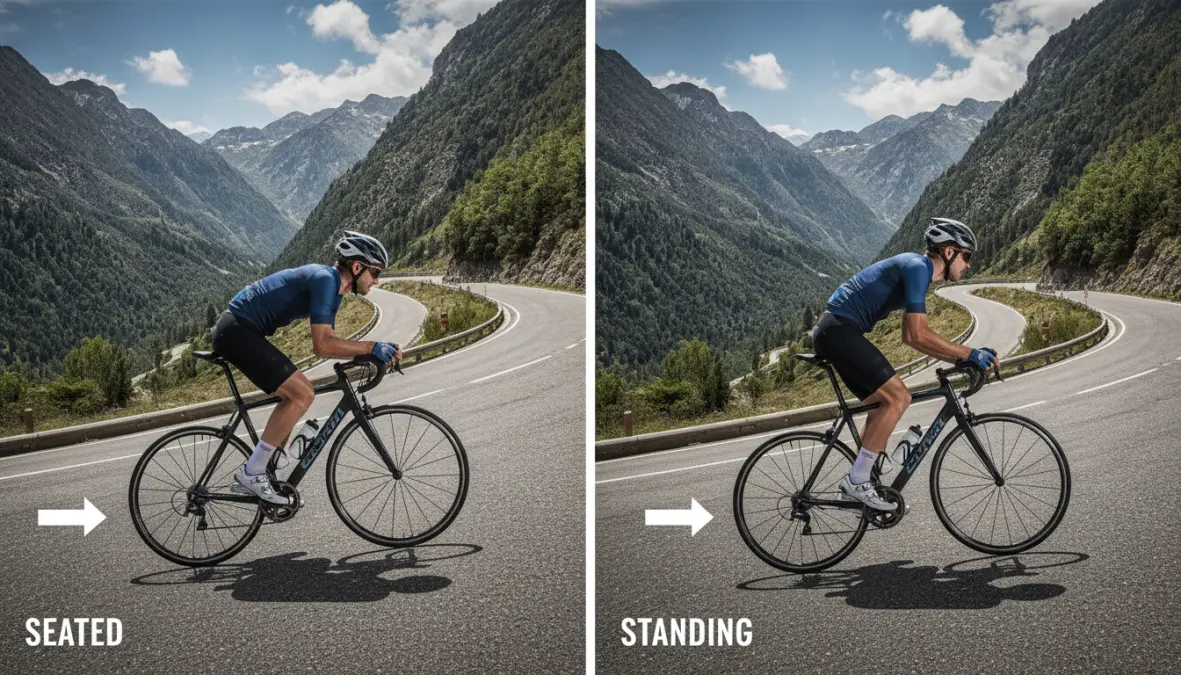
Understanding the standing vs seated climbing dynamic goes beyond technique—it’s about strategy. Research shows that standing typically requires 5-10% more energy for the same speed, but delivers 10-20% more immediate power when you need it. This makes standing ideal for short, punchy climbs or tactical accelerations, while seated climbing excels on sustained efforts.
The gradient heavily influences your choice. On climbs below 6%, most riders stay seated except for brief surges. Between 6-10%, alternating becomes valuable—stand for 20-30 seconds every few minutes to redistribute muscular load. Above 10%, standing might become necessary simply to generate sufficient force, especially on climbs lasting under two minutes.
Executing smooth transitions between positions is an art form. As you rise from the saddle, shift up one or two gears to maintain your momentum—your cadence will drop, so you need a harder gear to keep the same speed. Conversely, when sitting back down, shift to an easier gear before your weight settles to prevent that sudden cadence spike that wastes energy.
Professional cyclists often stand for 15-30 second intervals during long climbs, using these moments strategically. They might stand approaching a switchback where balance and power help navigate the turn, or rise when the gradient kicks up momentarily, or simply stand every few minutes to stretch different muscle groups. For more comprehensive strategies on conquering climbs, check out our guide on best hill climbing techniques for cyclists.
Your bike setup also matters. A bike with a more aggressive, forward position (common on road bikes) makes standing easier, while more upright positions (like some gravel setups) can feel less natural. If you’re curious about how bike geometry affects climbing, our comparison of gravel bikes vs road bikes provides valuable insights.
FAQ
Is it better to climb in or out of the saddle?
Neither is universally better—it depends on the situation. Seated climbing is more energy-efficient for sustained efforts and moderate gradients, while standing provides more immediate power for steep sections, accelerations, or muscular relief during long climbs.
Why do pro cyclists stand when climbing?
Professionals stand strategically to apply maximum power during attacks, navigate steep gradient changes, relieve muscular fatigue by recruiting different muscle groups, and maintain tactical positioning in races where surges matter more than steady-state efficiency.
Does standing climbing use more energy?
Yes, standing typically requires 5-10% more energy than seated climbing at the same speed due to increased heart rate and less aerodynamic efficiency. However, it allows for higher instantaneous power output when needed.
How do I improve my standing climbing technique?
Focus on controlled bike sway, maintain a smooth cadence around 60-70 RPM, engage your core for stability, practice weight distribution with hips over the bottom bracket, and incorporate standing intervals during training rides to build specific strength and coordination.
When should I stay seated vs stand while climbing?
Stay seated on gradients below 6% and during sustained pacing efforts. Stand on steep sections above 8-10%, during accelerations or attacks, when navigating switchbacks, or periodically during long climbs to redistribute muscular load and prevent fatigue in specific muscle groups.
Mastering climbing out of saddle transforms challenging ascents from suffering sessions into opportunities to showcase power and finesse. Like learning to descend confidently—which you can explore in our descending techniques guide—standing climbing becomes second nature with deliberate practice. Start by incorporating 20-30 second standing intervals on your regular climbs, focusing on one technical element at a time. Soon you’ll find yourself rising from the saddle with confidence, ready to tackle any gradient the road throws your way.