Cycling Saddle Selection Guide: How to Find the Perfect Saddle for Your Anatomy
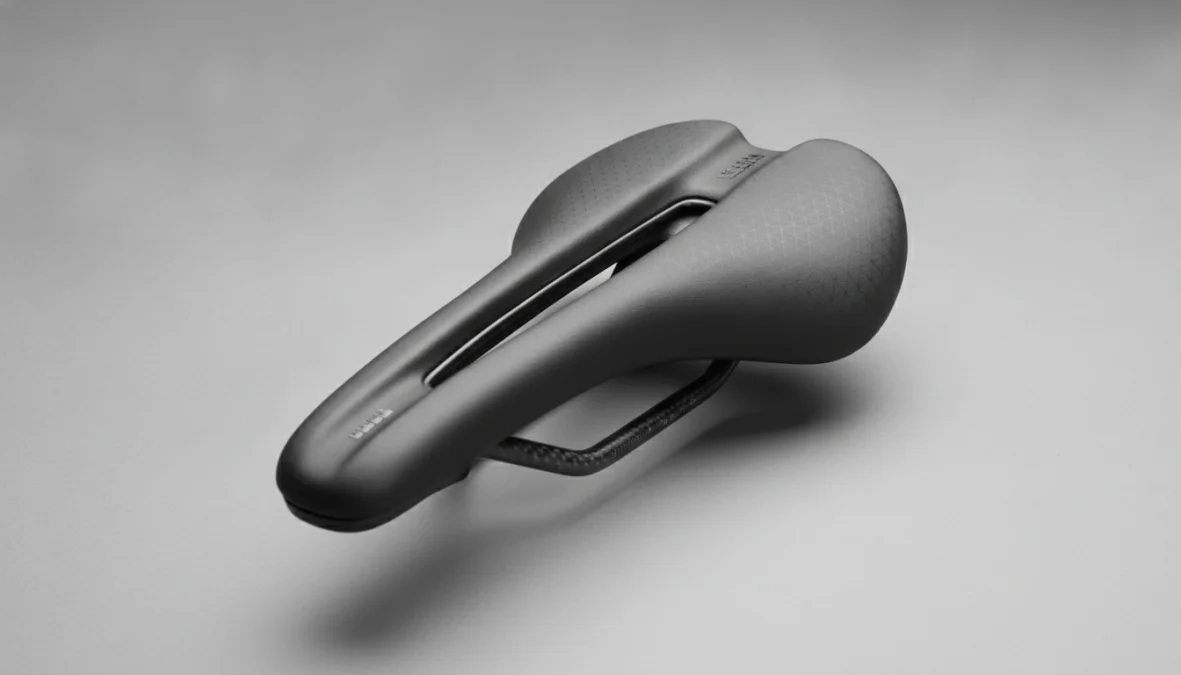
Let’s be honest—your saddle can make or break your cycling experience. You could have the most expensive bike with top-tier components, but if your saddle doesn’t fit your anatomy properly, every ride becomes a battle against discomfort. Whether you’re dealing with numbness, pressure points, or that dreaded saddle soreness, the right cycling saddle selection can transform your time on the bike from painful to pleasurable. Finding the perfect saddle isn’t about picking the one with the most cushioning or the coolest design—it’s about understanding your body and matching it with a saddle engineered for your specific needs.
Understanding Saddle Anatomy and Why Fit Matters
Before diving into cycling saddle selection, let’s break down what you’re actually sitting on. A bike saddle consists of several key components: the nose (the front narrow section), the saddle rails (metal bars underneath that attach to your seatpost), the padding (foam or gel layers), the shell (structural base), and sometimes a cutout or channel running down the center for pressure relief.
Your body makes contact with the saddle primarily through your ischial tuberosity—those two bony protrusions at the bottom of your pelvis, commonly called sit bones. When properly positioned, these bones should bear most of your weight. Problems arise when your saddle doesn’t properly support these contact points, causing weight to shift onto soft tissue, which leads to numbness, chafing, and perineal pressure that can affect circulation and nerve function.
Here’s the critical truth: anatomical differences between riders mean there’s no universal saddle. Men and women have different pelvic structures, with women typically having wider-set sit bones and requiring different saddle pressure relief designs. Men’s vs women’s cycling saddle differences extend beyond width to include cutout placement and overall shape. A saddle that works perfectly for your riding buddy might be completely wrong for you, which is why understanding proper cycling saddle fit is essential for bike saddle comfort.
How to Measure and Choose the Right Saddle Width
The foundation of proper saddle width sizing starts with one crucial measurement: the distance between your sit bones. This isn’t something you can eyeball—you need actual measurements to guide your cycling saddle selection.
Measuring Your Sit Bones at Home
If you’re wondering how to measure sit bones for saddle selection, you have several DIY options. The corrugated cardboard method is the most popular: place a piece of cardboard on a hard surface, sit on it in your typical riding posture for about 30 seconds, then stand up and examine the two deepest impressions left behind. Measure the distance between the center points of these impressions—that’s your sit bone measurement.
Alternatively, you can use memory foam or a specialized gel pad for more defined impressions. Some bike shops offer professional measurement systems with pressure-sensing pads that provide digital readouts. Whatever method you use, measure twice to ensure accuracy.
Common mistakes include measuring while standing (your pelvis rotates differently when seated), measuring in street clothes on soft surfaces, or failing to account for pelvic rotation that occurs in different riding positions. Once you have your measurement (typically ranging from 70mm to 160mm), most saddle manufacturers recommend adding 20-30mm to determine your ideal saddle width.
Matching Saddle Width to Your Riding Position
Your riding posture dramatically influences how to choose the right saddle width. When you’re upright on a comfort bike, your pelvis sits nearly vertical, and your sit bones spread wider. In an aggressive road cycling position with a dropped torso, your pelvis rotates forward, narrowing the effective distance between sit bones.
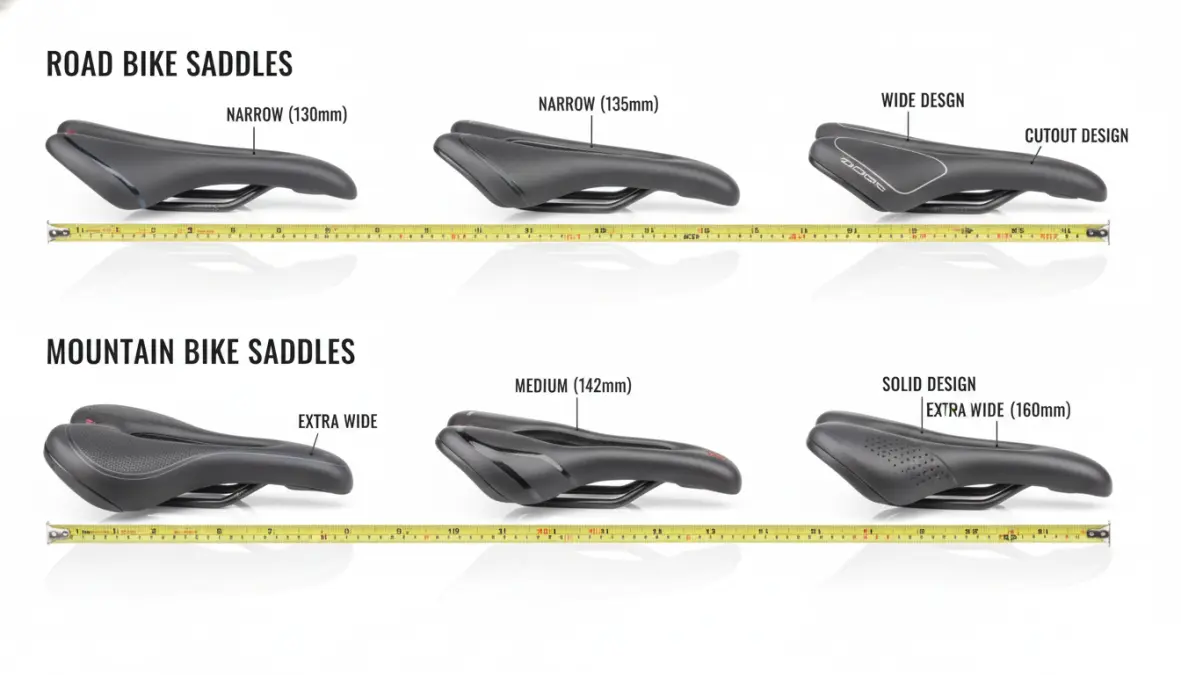
This is why saddle selection based on riding position matters so much. A road bike saddle for aggressive positions typically runs narrower (130-143mm) than a mountain bike saddle for more upright trail riding (143-155mm). Touring and gravel riders who maintain moderate positions often fall somewhere in between.
Here’s a general guideline: for aggressive road positions (hands in drops), subtract 0-10mm from your sit bone measurement plus the standard addition. For moderate positions (hoods or flat bars), use the standard calculation. For upright positions (comfort bikes, cruisers), add an extra 10-20mm. Just as you’d optimize your cycling cadence for efficiency, matching saddle width to position ensures optimal power transfer and comfort.
Key Features for Saddle Comfort and Pressure Relief
Beyond width, several design features dramatically impact bike saddle comfort and can help prevent saddle soreness. Understanding these elements helps you identify the best saddle for long distance cycling and your specific needs.
Cutouts and center channels address soft tissue pressure by creating space that reduces compression on sensitive areas. The saddle cutout benefits for cyclists include improved blood flow, reduced numbness, and decreased risk of long-term health issues. However, not everyone needs a cutout—riders who properly support their weight on sit bones may find solid saddles perfectly comfortable.
Padding is where many riders make mistakes. More isn’t better. Excessive chamois padding can actually create pressure points as it compresses unevenly. Firm, minimal padding often provides better support for your sit bones, while your cycling shorts provide the necessary cushioning between you and the saddle. Road bike saddles typically feature less padding than mountain bike saddles, which need extra cushioning for trail vibrations.
The saddle rails come in various materials—steel for durability and affordability, titanium for a balance of flex and weight savings, or carbon for maximum lightness and compliance. Rail material affects how the saddle flexes under your weight, contributing to overall comfort.
Saddle shape—flat versus curved—influences how your pelvis rocks during pelvic rotation while pedaling. Flat saddles allow more freedom of movement, preferred by many road cyclists. Curved profiles provide more support for upright positions. The saddle tilt angle also matters: most riders start with a level saddle, then make micro-adjustments (typically no more than 5 degrees nose-down) to fine-tune pressure distribution.
When testing a new saddle, give it at least three to five rides before making a final judgment. Minor discomfort during the first few rides is normal as your body adapts. However, numbness, sharp pain, or worsening discomfort are red flags indicating poor fit. Similar to how you’d approach transitioning from indoor to outdoor cycling, saddle adaptation requires patience and gradual adjustment.
FAQ: Common Cycling Saddle Selection Questions
How do I know if my bike saddle is too narrow or too wide?
A too-narrow saddle causes your sit bones to hang off the edges, placing pressure on soft tissue and causing numbness or pain in the perineal area. You might notice excessive pressure on inner thighs or chafing. A too-wide saddle creates friction on your inner thighs during pedaling, leading to chafing and restricting your pedal stroke. Your sit bones should rest fully on the saddle’s widest part with minimal soft tissue contact.
How long does it take to break in a new saddle?
Most modern saddles with synthetic covers require minimal break-in—typically 3-5 rides or about 100-150 miles. Leather saddles need significantly longer, often 500-1,000 miles, as the material molds to your anatomy. Your body also needs adaptation time. If significant discomfort persists beyond two weeks of regular riding, the saddle likely isn’t the right fit rather than needing more break-in time.
Should I get a saddle with a cutout?
Cutouts benefit riders experiencing numbness, tingling, or perineal pressure during or after rides. They’re particularly helpful for aggressive riding positions where more weight shifts forward. However, if you’re comfortable on a solid saddle and properly support your weight on your sit bones, a cutout isn’t necessary. Some riders find cutouts create pressure around the cutout edges, so it’s individual to your anatomy and riding style.
What’s the difference between men’s and women’s saddles?
Women typically have wider-set sit bones, requiring wider saddles overall. Women’s saddles often feature shorter noses to reduce soft tissue pressure, as female anatomy places more sensitive areas closer to the saddle nose. Cutout placement and shape also differ to match anatomical differences. However, some women ride comfortably on “men’s” saddles and vice versa—sit bone measurement matters more than gender-specific marketing.
Can the wrong saddle cause health problems?
Yes, prolonged use of an ill-fitting saddle can lead to serious issues. Chronic perineal pressure may cause temporary or, in rare cases, lasting numbness and nerve damage. Poor saddle fit contributes to saddle sores, skin irritation, and infections. For men, excessive pressure can affect erectile function. For women, it can cause vulvar pain and numbness. These risks underscore why proper saddle selection isn’t just about comfort—it’s about long-term health.
Finding the perfect saddle requires patience, measurement, and sometimes trial and error. But once you discover that ideal match between your anatomy and saddle design, cycling transforms into the comfortable, enjoyable experience it should be. Start with proper sit bone measurements, consider your riding position and discipline, test different options, and don’t be afraid to invest in quality—your body will thank you on every ride. Much like maintaining your bike through a regular maintenance schedule, proper saddle selection is an investment in your cycling longevity and enjoyment.