
Agility Ladder Drills for Athletes: Complete Guide to Speed and Coordination Training
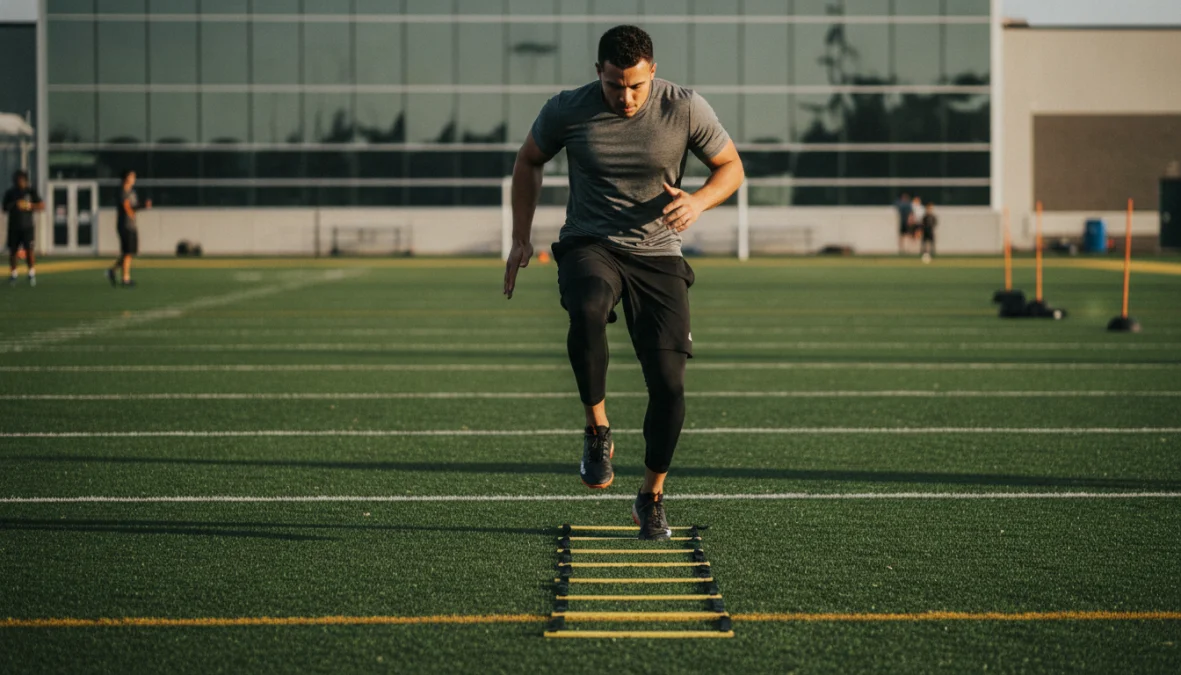
You’ve seen them at the gym, stretched out on the field, or featured in training montages of pro athletes—those flat ladders that seem deceptively simple. Yet agility ladder drills remain one of the most effective tools for developing the kind of lightning-fast footwork and razor-sharp coordination that separates good athletes from great ones. Whether you’re cutting past defenders on the basketball court or changing direction on the soccer field, mastering these drills can transform your athletic performance in ways that traditional cardio simply can’t match.
What Are Agility Ladder Drills and Why They Matter for Athletic Performance
Agility ladder drills are structured footwork patterns performed through a ladder-like apparatus laid flat on the ground, typically 15-20 feet long with evenly spaced rungs. Unlike straight-line sprinting that builds linear speed, these agility training drills develop multidirectional quickness, neuromuscular coordination, and the ability to change direction efficiently—skills crucial for virtually every sport.
The science behind ladder training is fascinating. Research shows these exercises enhance neuromuscular coordination by creating new neural pathways between your brain and muscles, improving how quickly your body responds to movement commands. This translates to better reaction time, enhanced foot speed, and improved proprioception (your body’s awareness of its position in space). Sports like soccer, basketball, tennis, football, and lacrosse benefit enormously because they demand constant directional changes, quick pivots, and explosive lateral movement.
Here’s the key distinction: while a track sprinter focuses on linear velocity, most field and court athletes need agility—the capacity to accelerate, decelerate, and change direction rapidly without losing balance or speed. That’s exactly what athletic performance drills with the ladder develop. Combined with proper mental training, these drills create athletes who think and move faster under pressure.
Essential Agility Ladder Drills to Improve Speed and Coordination
The beauty of speed ladder exercises lies in their scalability. Whether you’re just starting out or you’re an elite athlete, there’s a progression that matches your current level while pushing you toward improvement. Let’s break down the most effective footwork drills and coordination drills for athletes.
Beginner to Intermediate Drills
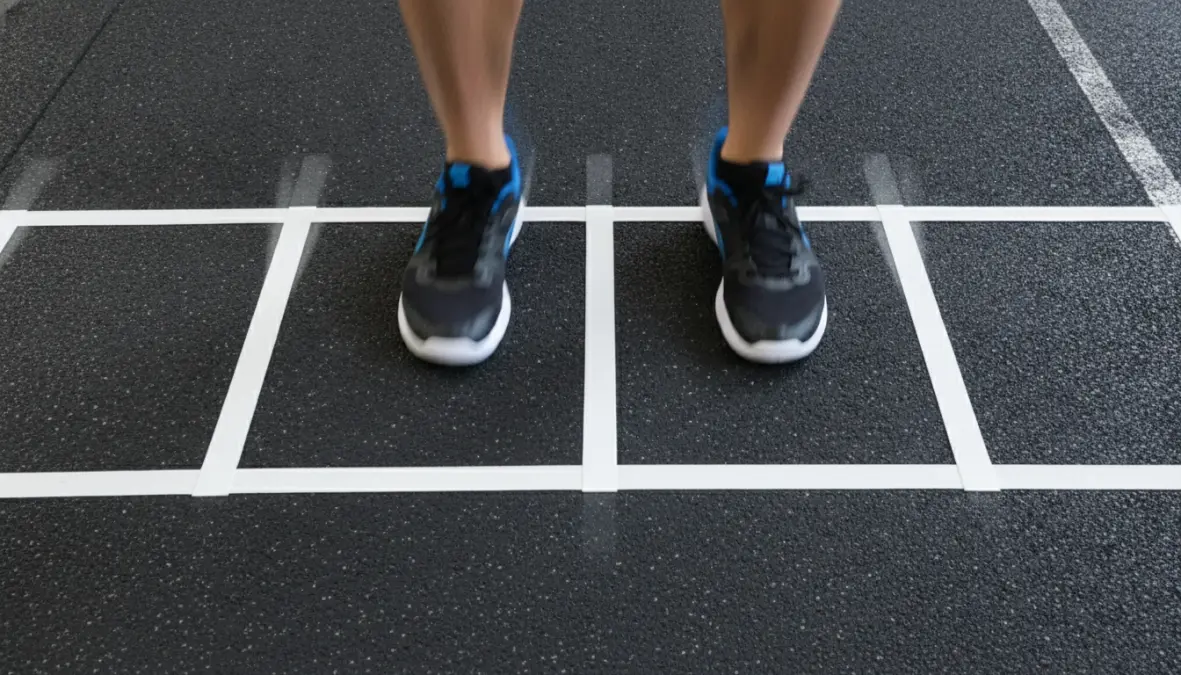
One-Foot in Each Square: The fundamental drill—run through the ladder placing one foot in each square as quickly as possible while maintaining control. Focus on staying on the balls of your feet and keeping your knees slightly bent. Common mistake: looking down constantly instead of keeping your head up. This drill builds basic foot speed and rhythm.
Two Feet in Each Square: Step both feet into each square before advancing. This emphasizes coordination and quick ground contact time. Athletes often make the error of bouncing too high—keep movements low and explosive for maximum benefit.
Lateral Shuffle: Face sideways and move laterally through the ladder, placing both feet in each square. This is one of the best beginner agility ladder drills for developing lateral movement patterns essential in basketball and tennis. Avoid crossing your feet or getting too upright.
In-and-Out Drill: Start on one side of the ladder. Step one foot in the first square, then the other, then step both feet out to the sides. Repeat through the ladder. This drill targets hip mobility and quick direction changes.
Ickey Shuffle: A classic pattern that develops rhythm and coordination. Step in with your right foot, then left foot, then step out with your right foot. Move to the next square and repeat starting with the left foot. The pattern creates a flowing, dance-like movement that enhances neuromuscular coordination remarkably well.
Advanced Athletic Performance Drills
Crossover Steps: Move laterally while crossing your trailing foot over your lead foot, then step into the square. This mimics defensive slides in basketball and develops the lateral quickness needed for agility ladder drills for basketball specifically. The crossover pattern builds hip flexibility and strengthens stabilizer muscles.
Icky Shuffle Variations: Add complexity to the basic Ickey by incorporating higher knee drives or faster tempo. Advanced athletes can add a 180-degree turn at the end of each ladder to simulate game-like directional changes. These variations make excellent advanced agility ladder workout routines.
In-In-Out-Out Pattern: Both feet step into a square, then both step out to the sides before advancing. This challenges cardiovascular conditioning while maintaining precise footwork—perfect for building both quickness training and endurance.
Single-Leg Hops: Hop through the ladder on one leg, landing in each square. This builds explosive power, balance, and ankle stability. It’s particularly valuable for agility ladder drills for soccer players and football players who need unilateral strength.
Combination Drills: Create sequences that combine multiple patterns with direction changes. For example, perform an Ickey shuffle forward, then immediately lateral shuffle back. These complex patterns most closely replicate actual game situations and represent the pinnacle of ladder training exercises.
How to Program Agility Ladder Training for Maximum Results
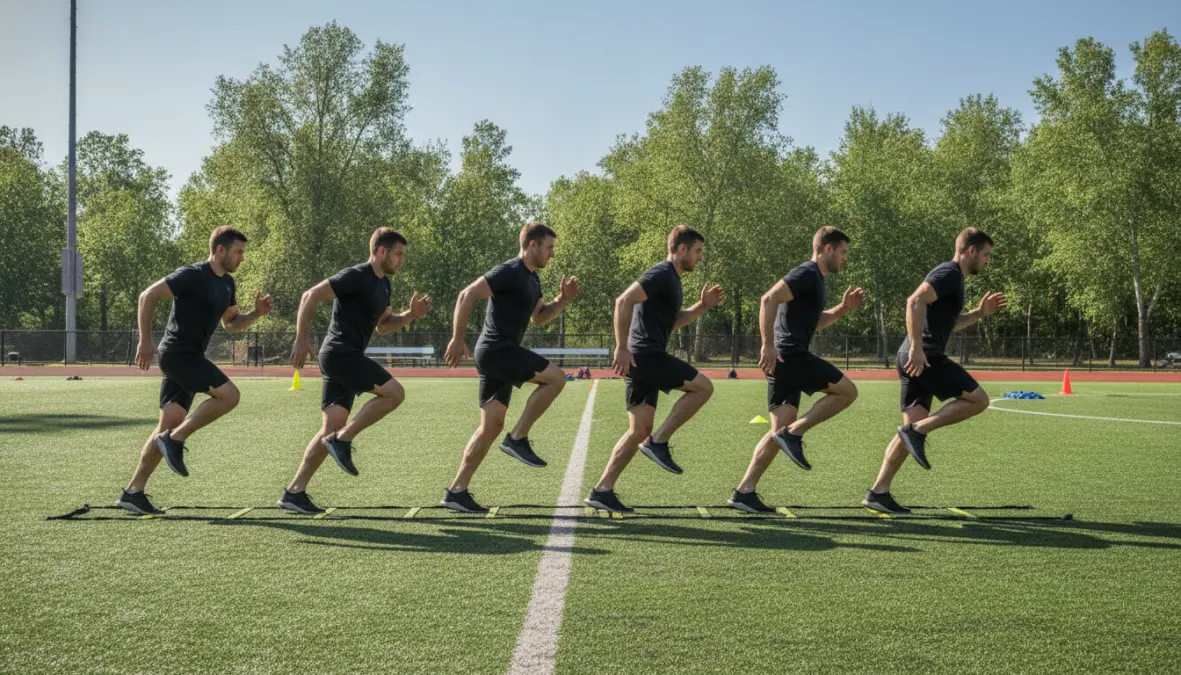
Having the drills is one thing—programming them effectively is where real progress happens. For optimal results, incorporate agility training drills 2-4 times per week, depending on your sport’s demands and overall training volume. Each session should last 10-20 minutes, which is sufficient to challenge your nervous system without causing excessive fatigue.
The timing of your agility workout matters significantly. Many coaches recommend ladder work as part of your warm-up before practice or competition. The high-frequency, low-impact nature primes your nervous system and elevates your heart rate without depleting energy reserves. Alternatively, dedicate specific sessions to agility work when you’re fresh and can maintain maximum intensity and precision.
Here’s a practical template for weekly programming: Monday: 15-minute ladder session (beginner drills, 3 sets each); Wednesday: Warm-up ladder work (5 minutes, mixed drills); Friday: 20-minute dedicated session (advanced patterns, 4-5 sets with 45-second rests). Adjust volume based on your sport-specific training load and recovery capacity.
Progression is key: start with 2-3 basic patterns performed at 70% speed, focusing on perfect technique. As movement quality improves, increase speed to 90-100% while maintaining precision. Track your fastest completion times for standard drills to measure improvement objectively. Common programming mistakes include doing too much volume (quality over quantity), neglecting proper footwear, and not progressing drills as you improve. Just as important as the training itself is adequate recovery—these drills are neurologically demanding, so pairing them with proper nutrition like anti-inflammatory foods supports optimal adaptation.
FAQ
How often should athletes do agility ladder drills?
Most athletes benefit from 2-4 sessions weekly, with each lasting 10-20 minutes. This frequency provides enough stimulus for neuromuscular adaptation without overtraining. Competitive athletes in agility-dependent sports may train 4-5 times weekly during off-season, reducing to 2-3 times during competition phases to maintain freshness.
Can agility ladder drills improve running speed?
While ladder drills primarily develop quickness, coordination, and multidirectional speed rather than maximum linear velocity, they improve ground contact efficiency and neuromuscular coordination that can enhance acceleration and the first 10-20 yards of a sprint. For pure top-end speed, combine ladder work with traditional sprint training.
What’s the best surface for ladder training?
Flat, non-slip surfaces like turf, rubber track surfaces, or sport court flooring work best. Grass is acceptable if level and firm. Avoid concrete due to impact stress, and ensure the surface provides adequate traction. Indoor gym floors work excellently, especially when learning new patterns where slipping could cause injury.
Do agility drills prevent injuries?
Yes, indirectly. By improving neuromuscular coordination, proprioception, and ankle stability, ladder drills can reduce injury risk, particularly ankle sprains and knee injuries caused by poor landing mechanics or unstable directional changes. However, they should complement comprehensive mobility training rather than replace it.
Agility ladder drills offer one of the highest returns on investment for any athlete serious about improving their on-field performance. They’re portable, require minimal equipment, and deliver measurable improvements in the qualities that define athletic excellence. Start with the basics, progress methodically, and watch as your footwork, coordination, and competitive edge reach new levels. Your opponents won’t know what hit them.