Jump Rope Workouts for Athletes: Cardio and Coordination Training Guide

If you’ve ever watched a pro boxer glide through a jump rope routine with lightning speed, you know there’s something special about this deceptively simple tool. What looks like playground nostalgia is actually one of the most effective training methods for serious athletes across virtually every sport. A jump rope workout athletes use isn’t just about breaking a sweat—it’s a precision instrument for building cardiovascular endurance, razor-sharp coordination, and explosive power that translates directly to competitive performance.
Whether you’re a basketball player looking to improve footwork, a soccer athlete building conditioning, or a martial artist sharpening agility, the jump rope delivers results that few other training tools can match. Let’s break down why this compact piece of equipment has earned its place in elite training programs worldwide.
Why Athletes Choose Jump Rope Training
The reasons jump rope training athletes swear by this method go far beyond simple cardio. First, the efficiency is unmatched—studies show that just 10 minutes of jump rope conditioning can provide cardiovascular benefits equivalent to 30 minutes of jogging. For time-pressed athletes juggling multiple training demands, that’s a game-changer.
But the benefits run deeper than time savings. Athlete jump rope exercises develop exceptional footwork and coordination simultaneously while building cardiovascular capacity. Every jump requires precise timing between hands, feet, and eyes—a neuromuscular coordination pattern that directly transfers to sports requiring quick direction changes and reactive movements. Basketball players improve court agility, soccer athletes enhance ball control footwork, and fighters develop the legendary bounce that keeps them light on their feet through 12 rounds.
Professional sports teams have recognized this for decades. Boxing gyms have made rope work mandatory since the early 1900s. NBA teams incorporate jump rope into training camps. MMA fighters use it for conditioning between technique sessions. The portability factor can’t be overstated either—a quality speed rope fits in any gym bag and works anywhere with a few feet of clearance. No treadmill required, no gym membership needed, just you and the rope.
Research published in sports science journals confirms what athletes have known intuitively: regular jump rope training improves bone density, strengthens connective tissues around ankles and knees, and develops the specific type of cardiovascular endurance that matters for interval-based sports. All this from a tool that costs less than a month’s gym membership. If you’re serious about preventing injury and boosting performance, jump rope training checks every box.
Essential Jump Rope Workouts and Drills for Athletic Performance
Now let’s get into the practical stuff—the actual jump rope workout athletes can implement immediately. The beauty of rope training is its scalability. Beginners start with basic two-foot bounces, while advanced athletes incorporate complex patterns that would make your head spin. Here’s how to structure your progression.

Beginner Foundation Routine (10 minutes):
- 2 minutes basic two-foot bounce (moderate pace)
- 30 seconds rest
- 1 minute alternating foot step (like running in place)
- 30 seconds rest
- 1 minute boxer skip (subtle weight shift side to side)
- 30 seconds rest
- Repeat circuit 2x
Intermediate HIIT Protocol (15 minutes):
- 3 minutes warm-up (easy pace basic bounce)
- 30 seconds maximum speed basic bounce
- 30 seconds active recovery (slow pace)
- 30 seconds double unders (rope passes twice per jump)
- 30 seconds recovery
- 30 seconds crossovers
- 30 seconds recovery
- Repeat working intervals 5x
- 2 minutes cool-down
This jump rope cardio workout structure follows proven HIIT workouts principles that maximize both aerobic and anaerobic adaptations. The interval approach mirrors the demands of competitive sports better than steady-state cardio ever could. For athletes focused on coordination training jump rope offers, the key is variety—changing patterns forces your nervous system to adapt and improves overall body control.
Advanced Conditioning Finisher (8 minutes):
- 1 minute side-to-side hops
- 1 minute high knees with rope
- 1 minute criss-cross (alternating crossovers)
- 1 minute double unders
- 30 seconds maximum speed
- 30 seconds rest
- Repeat 1x
Use this as a finisher after your primary training session to build that extra layer of conditioning that separates good athletes from great ones. Just be mindful of overtraining symptoms if you’re stacking high-intensity work.
Speed and Power Drills
For athletes who need explosive power and rapid foot speed—think sprinters, basketball guards, or tennis players—speed rope workout drills are essential. Double unders are the gold standard here: the rope passes under your feet twice in a single jump, requiring explosive calf power and perfect timing. Start with singles, then attempt one double under followed by several singles, gradually increasing the ratio.
Triple unders take this to the extreme—three rope passes per jump. Only the most conditioned athletes can string these together, but even attempting them builds ridiculous calf power. Sprint intervals with the rope (30 seconds maximum turnover speed, 30 seconds rest, repeat 8-10 times) develop the specific muscular endurance that translates to late-game performance when fatigue sets in. These athletic jump rope drills train your fast-twitch muscle fibers in ways traditional cardio simply can’t match.
Coordination and Footwork Techniques
The coordination training jump rope provides might be its most underrated benefit. Crossovers—where you cross your arms in front of your body mid-jump—require precise hand-eye-foot coordination. The criss-cross variation alternates the cross pattern with each jump. Side-to-side movements (hopping laterally while turning the rope) improve lateral agility crucial for defensive players in every sport.
The Ali shuffle—a subtle forward-back weight shift made famous by Muhammad Ali—develops the proprioceptive awareness that keeps fighters balanced while moving. Running in place variations with high knees build hip flexor strength while maintaining rhythm. These aren’t just footwork drills; they’re neuromuscular training that improves your brain’s ability to control your body under fatigue. Combined with proper mental training, these coordination skills become automatic even under competitive pressure.
Programming Jump Rope Into Your Training Routine
So you’re convinced—but how do you actually integrate jump rope conditioning without disrupting your existing program? Most athletes benefit from 3-4 jump rope sessions weekly. Each session can range from 10 minutes (as a dynamic warm-up before lifting or practice) to 30 minutes (as a standalone conditioning workout).
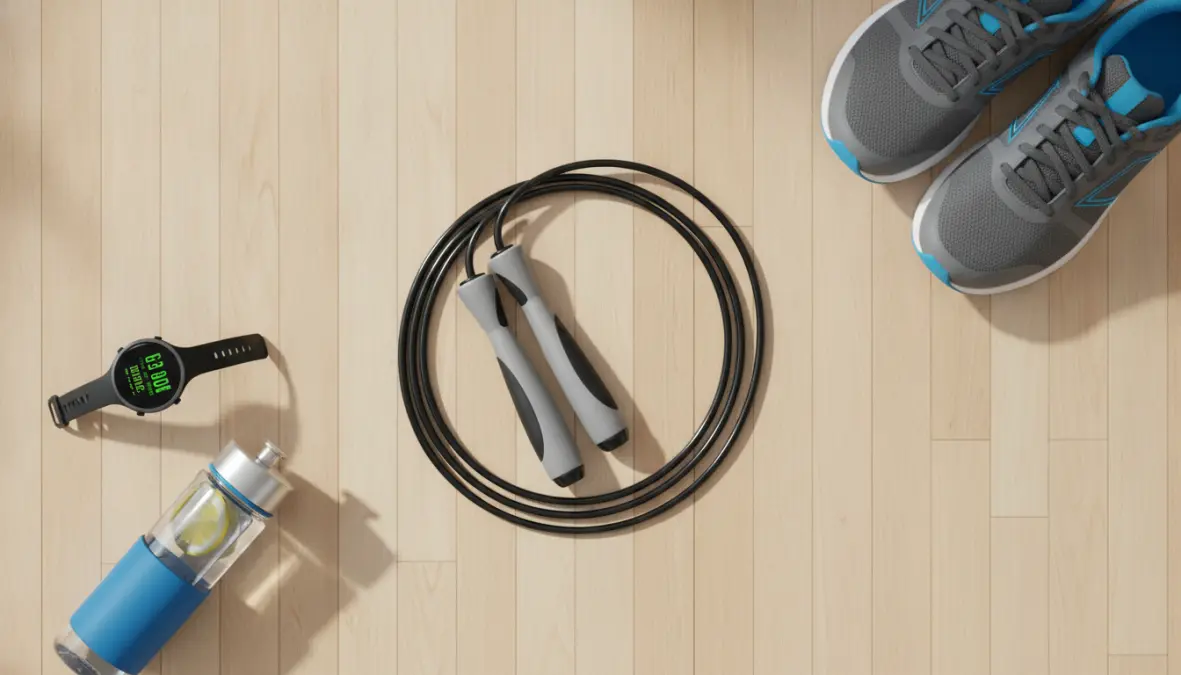
The warm-up approach works brilliantly—5-10 minutes of moderate-intensity rope work elevates heart rate, lubricates joints, and primes the nervous system better than static stretching. As a finisher, 8-12 minutes of high-intensity intervals after your main workout builds that extra conditioning layer. For cross-training on recovery days, 20-30 minutes at conversational intensity provides active recovery without the joint impact of running.
Rope selection matters. Speed ropes (thin cable, minimal handles) are best for best jump rope workouts for athletes focused on turnover speed and double unders. Weighted ropes (usually 1-2 pounds) add resistance for strength-focused sessions but sacrifice speed. Start with a quality speed rope and master technique before experimenting with weighted options.
Common mistakes to avoid: jumping too high (you only need to clear the rope by an inch), landing flat-footed (stay on the balls of your feet), and progressing volume too quickly. Your calves and Achilles tendons need time to adapt. Start conservative, add 2-3 minutes per week, and prioritize recovery. Proper nutrition and recovery strategies become even more important when adding high-impact training. Don’t forget to track your sessions with a quality fitness tracker to monitor intensity and recovery needs.
FAQ
How long should athletes jump rope?
For warm-ups, 5-10 minutes is ideal. For conditioning workouts, 15-30 minutes depending on intensity. Beginners should start with 5-minute sessions and build gradually to avoid overuse injuries. Quality beats quantity—a focused 15-minute HIIT session often delivers better results than 45 minutes of moderate pace.
Is jump rope better than running for athletes?
It depends on your goals, but jump rope offers advantages: less joint impact per session, better coordination development, more time-efficient cardiovascular training, and superior calf/ankle strengthening. Running builds specific endurance for distance events. Many athletes benefit from combining both as complementary agility exercises and conditioning methods.
What type of jump rope is best for athletic training?
Speed ropes with thin cables and lightweight handles are ideal for most jump rope training program for athletes focused on coordination, speed, and conditioning. Look for adjustable length, smooth rotation bearings, and durable cable material. Weighted ropes serve specific strength purposes but aren’t ideal for skill development or high-speed work.
Can jump rope replace cardio workouts?
Absolutely. A well-structured jump rope cardio routine for endurance athletes provides cardiovascular benefits comparable or superior to traditional cardio methods. However, sport-specific athletes should view it as a powerful complement to, rather than complete replacement for, their primary conditioning work. The plyometric training aspect also builds power that steady-state cardio doesn’t address.
The jump rope isn’t just a training tool—it’s a complete athletic development system hiding in plain sight. Whether you’re chasing explosive power, building cardiovascular endurance, or sharpening coordination that gives you an edge over the competition, this simple rope delivers complex results. Start with the basics, progress methodically, and watch your athletic performance reach new levels. Your competitors might not know your secret weapon fits in a gym bag, and that’s just fine.