Cross-Training with Swimming for Cyclists: A Low-Impact Conditioning Protocol
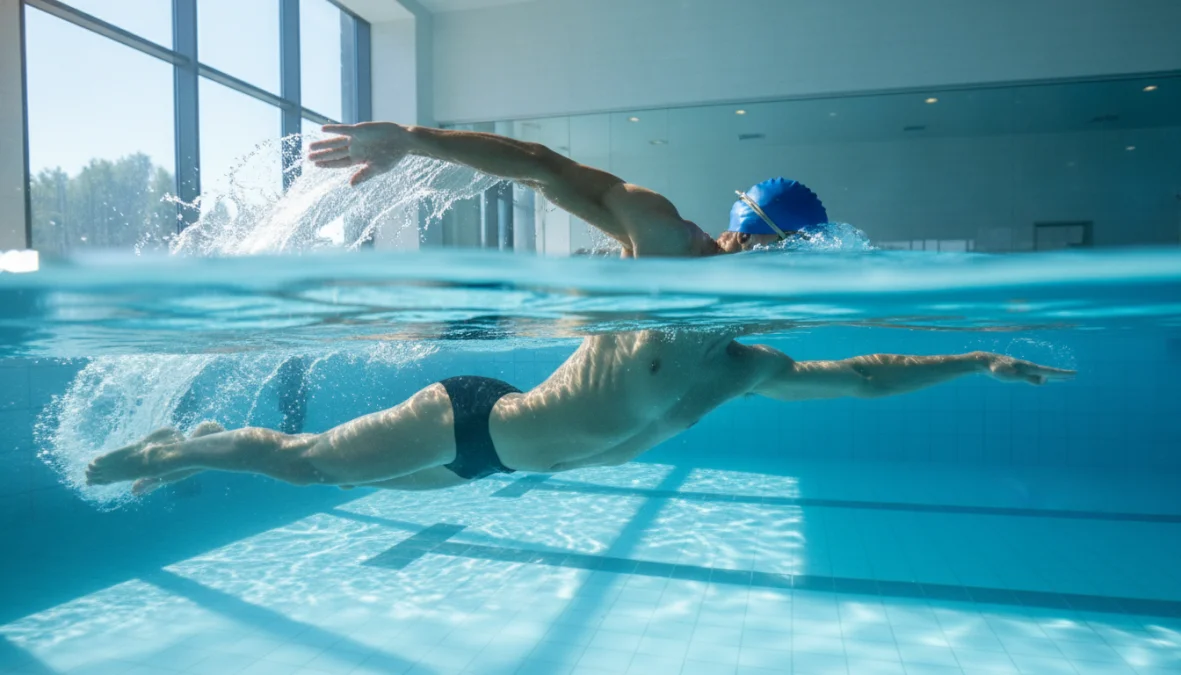
If you’ve been hammering the pedals day after day, your knees might be begging for mercy while your shoulders wonder if they’re even invited to the party. As a cyclist, you know the drill: powerful quads, tight hip flexors, and an upper body that’s mostly along for the ride. That’s where swimming for cyclists becomes your secret weapon—a training method that builds cardiovascular fitness without the pounding, balances your muscle development, and might just save your joints from a lifetime of clicking and complaining.
Why Swimming Is the Ultimate Cross-Training for Cyclists
The beauty of cross-training for cyclists through swimming lies in its paradox: you’re working incredibly hard while your joints are practically on vacation. Research shows that water supports approximately 90% of your body weight, reducing joint impact to nearly zero compared to the repetitive stress cycling places on your knees, hips, and lower back. This makes low-impact training cyclists can sustain year-round without the overuse injuries that plague single-sport athletes.
But swimming offers way more than just joint relief. Your cycling-dominant lower body gets a break while your neglected upper body finally gets to contribute. This muscular balance isn’t just aesthetic—it improves your bike handling, supports better posture during long rides, and enhances overall athletic performance. The horizontal body position in water also promotes better spinal alignment, counteracting the hunched position you maintain on the bike.
Perhaps most importantly for aerobic conditioning, swimming forces you to master breathing efficiency. Unlike cycling where oxygen is readily available, swimming demands controlled breath cycles that expand lung capacity and improve oxygen utilization. Studies indicate that regular swimmers develop 10-15% greater lung capacity than non-swimmers, directly translating to better endurance training capacity on the bike. Plus, the constant resistance of water makes every movement a strength exercise, building core stability and leg strength without a single weight room visit. For more comprehensive off-bike conditioning, check out strength training strategies that complement your cycling.
The Low-Impact Swimming Conditioning Protocol for Cyclists
Let’s get practical. The best swimming workouts for cyclists aren’t about becoming Michael Phelps—they’re about strategic pool workouts for cyclists that enhance your cycling performance. This swimming conditioning protocol is designed specifically around cycling demands, not competitive swimming.
Beginner Protocol: Building Your Swimming Foundation
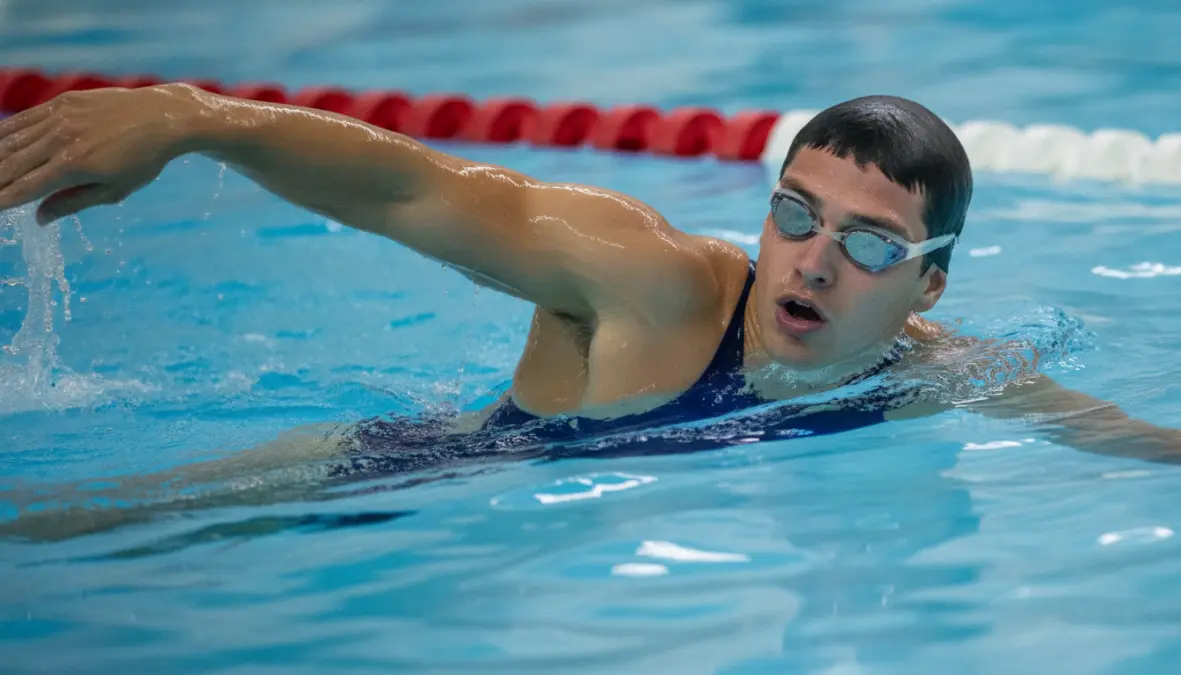
If you’re new to swimming or haven’t done laps since high school, start here. Commit to 2-3 sessions weekly, each lasting 20-30 minutes. Your first month isn’t about distance—it’s about technique and comfort in the water.
Week 1-2 Sample Session:
- Warm-up (5 minutes): Easy freestyle with as much rest as needed, focusing on relaxed breathing every 3-5 strokes
- Technique drills (10 minutes): Kickboard drills to practice body position, side-breathing exercises, catch-up drill for stroke mechanics
- Main set (10 minutes): 4 x 50 meters easy freestyle with 30-60 seconds rest between
- Cool-down (5 minutes): Very easy swimming or water walking
Week 3-6 Progression: Gradually increase your main set to 6-8 x 50 meters, reduce rest periods to 20-30 seconds, and extend total session time to 35-40 minutes. The goal is building aerobic base and swimming-specific muscle memory. Don’t worry about speed—consistency and proper breathing technique matter most. This foundation mirrors the base-building phase in cycling periodization.
Advanced Protocol: Performance and Recovery Swimming Workouts
Once you’re comfortable with basic technique, structure your cycling cross-training exercises in the pool around three workout types that directly support your cycling goals.
Aerobic Base Session (45-60 minutes): This mirrors your long, steady cycling rides. After a 10-minute warm-up, swim continuous freestyle at conversational pace for 25-40 minutes, then cool down for 5-10 minutes. Focus on maintaining consistent stroke rate and breathing rhythm. This builds the cardiovascular foundation that translates directly to the bike.
High-Intensity Interval Session (30-45 minutes): Simulate the intensity of hill repeats or tempo rides. After warming up, try 10 x 100 meters at moderate-hard effort with 15-20 seconds rest, or 6 x 200 meters at threshold pace with 30 seconds rest. These intervals spike your heart rate and build lactate tolerance just like hard cycling efforts, but without the joint stress.
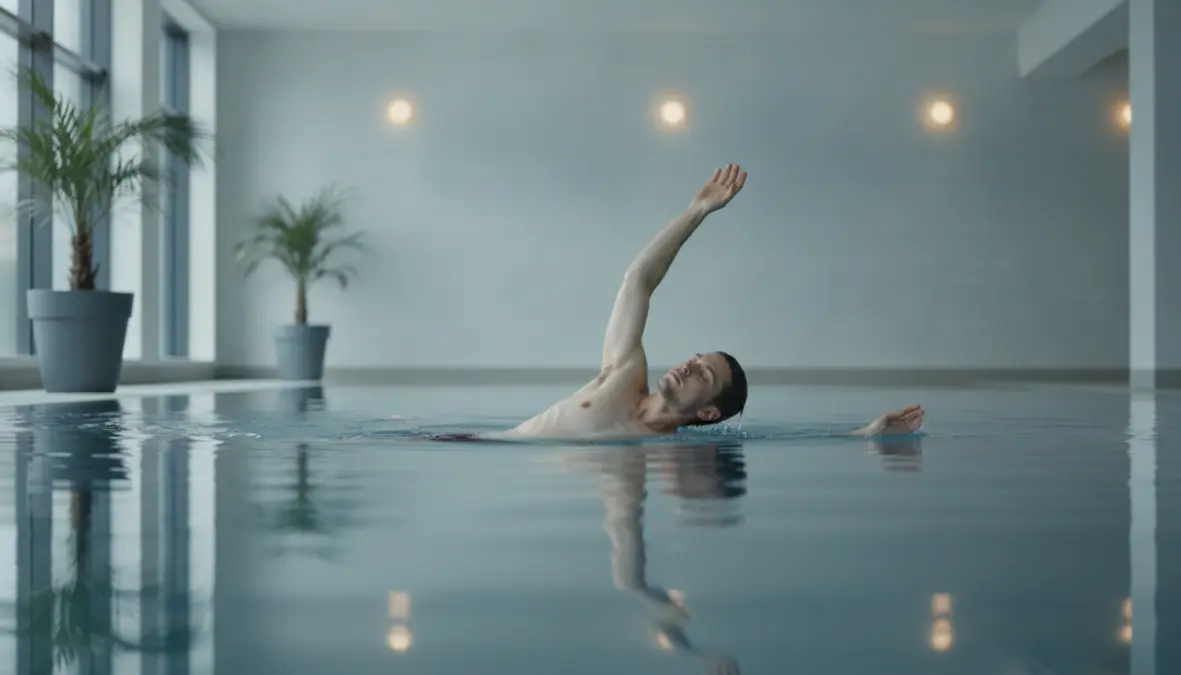
Active Recovery Session (20-30 minutes): Perfect for the day after brutal intervals or a long weekend ride. Keep heart rate low (Zone 1-2), mix in different strokes—backstroke opens up your chest and shoulders, breaststroke improves hip flexibility crucial for pedaling efficiency. This is cyclist recovery swimming at its finest: promoting blood flow and muscle recovery without adding training stress. This approach aligns with injury prevention strategies that emphasize recovery quality.
Integrating Swimming Into Your Cycling Training Plan
Knowing when to swim matters as much as how you swim. Strategic scheduling prevents overtraining while maximizing the benefits of cross-training for cyclists.
Off-Season (November-February): This is prime time for swimming volume. Replace 1-2 cycling sessions weekly with pool workouts. You’ll maintain cardiovascular fitness while giving your cycling-specific muscles a break and addressing muscular imbalances. Think 3-4 swims weekly during this period.
Base Building (March-May): Scale back to 2-3 swims weekly, using them primarily for recovery and aerobic conditioning. Schedule easy recovery swims the day after hard cycling intervals or long rides.
Peak Season (June-September): Drop to 1-2 swims weekly, focusing exclusively on active recovery sessions. Your primary adaptation stimulus should come from cycling now. Swimming serves as gentle cross-training that aids recovery without compromising cycling-specific fitness.
Equipment essentials: You need surprisingly little—decent goggles, a comfortable swimsuit, and access to a pool. Optional but helpful: pull buoy for upper body focus, kickboard for leg drills, and fins for technique work.
Common mistakes to avoid: Don’t swim hard the day before important cycling workouts. Don’t neglect technique in favor of distance—poor mechanics cause shoulder problems. Don’t try to match your cycling training volume in the pool; even 30 minutes of swimming provides significant training stimulus. For tracking your cross-training alongside cycling data, consider using multi-sport fitness trackers that handle both activities seamlessly.
FAQ: Swimming Cross-Training for Cyclists
How often should cyclists swim for cross-training?
It depends on your season. During off-season, 3-4 times weekly is ideal. During peak cycling season, 1-2 recovery-focused sessions weekly is sufficient. Always prioritize your primary sport—cycling—during competition periods.
Can swimming replace cycling workouts?
Only during injury recovery or off-season. Swimming builds excellent cardiovascular fitness and maintains aerobic base, but it lacks cycling-specific adaptations like pedaling efficiency and bike-handling skills. Use it to complement, not replace, bike time.
What swimming stroke is best for cyclists?
Freestyle is your primary stroke for aerobic work and intervals. Add backstroke for shoulder mobility and upper back strength, and breaststroke for hip flexibility. Mixing strokes provides the most balanced muscular development.
How long should a swimming session be for cyclists?
Beginners: 20-30 minutes. Intermediate: 30-45 minutes. Advanced: 45-60 minutes for aerobic sessions, 30-40 minutes for intervals. Remember, water resistance makes swimming more intense than equivalent cycling time.
Is swimming good for cycling recovery?
Absolutely. Easy swimming promotes blood flow without joint impact, helps flush metabolic waste from hard cycling efforts, and provides gentle movement that aids recovery. Keep intensity very low (conversational pace) for recovery swims to work effectively.
Swimming isn’t just another workout to cram into your schedule—it’s an investment in longevity, balance, and injury prevention that pays dividends for years. Whether you’re grinding through base miles or recovering from race season, the pool offers a training environment where you can push hard or recover gently, always with zero impact on the joints that keep you pedaling. Dive in, literally, and discover how this ultimate low-impact cross-training for road cyclists transforms not just your fitness, but your entire approach to athletic development.