
Periodization Training for Cyclists: How to Structure Your Season for Peak Performance
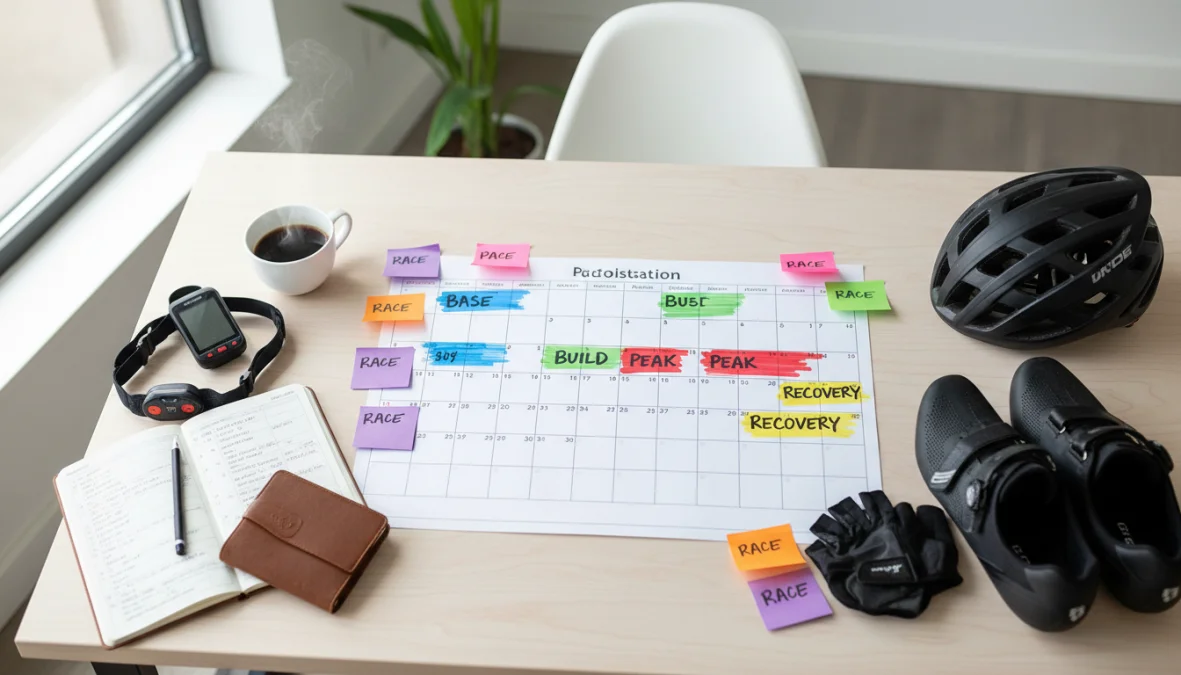
Ever wonder why some cyclists crush their target events while others plateau despite logging countless miles? The secret isn’t just riding more—it’s riding smarter through periodization training cycling. This systematic approach to structuring your training isn’t reserved for pros; it’s the difference between randomly spinning your wheels and strategically building toward peak performance when it matters most.
What Is Periodization Training and Why Cyclists Need It
Cycling training periodization is the strategic organization of your training into distinct phases, each with specific goals that build upon one another. Think of it like constructing a house—you need a solid foundation before adding walls and a roof. Instead of randomly mixing hard efforts with easy rides, periodization creates a deliberate progression that maximizes training adaptation while minimizing burnout and injury risk.
The framework consists of three hierarchical levels: macrocycles (your entire season, typically 6-12 months), mesocycles (training blocks of 3-6 weeks focused on specific adaptations), and microcycles (individual weeks). This structured approach delivers scientifically-proven benefits that random training simply can’t match. Your body adapts through progressive overload, but it also needs strategic recovery to absorb those adaptations. Without proper annual training plan cycling, you risk overtraining, plateaus, and missing your peak form when races arrive.
Research shows periodized athletes achieve superior gains in functional threshold power compared to those following non-periodized programs. The systematic variation prevents staleness, reduces injury risk, and ensures you’re building the right fitness at the right time. Whether you’re an amateur targeting local crits or a serious racer chasing podiums, understanding how to periodize cycling training separates consistent improvement from frustrating stagnation. For more on avoiding the pitfalls of excessive training, check out our guide on common overtraining symptoms.
The Four Essential Phases of Cycling Training Periodization
Understanding cycling training phases is crucial for structuring a cycling training year effectively. Each phase builds specific physiological adaptations that prepare you for the next stage, following the base build peak taper cycling progression.
Base/Preparation Phase (8-12 weeks): This is where champions are built, even though it feels deceptively easy. During base training cycling, you’re establishing aerobic foundation through high-volume, low-intensity rides. We’re talking 70-80% of your time in Zone 2, building mitochondrial density, capillary networks, and fat oxidation capacity. Typical rides last 2-5 hours at conversational pace, with total weekly volume gradually increasing by 5-10%. This phase usually happens in off-season months when racing isn’t happening. The goal isn’t speed—it’s building an engine that can handle the intensity coming later. Many cyclists make the mistake of rushing this phase, but cutting it short undermines everything that follows. Our spring cycling training guide dives deeper into maximizing this critical period.
Build Phase (6-8 weeks): Now the real work begins. Training cycles cycling shift toward race-specific intensity, incorporating threshold intervals, VO2max efforts, and tempo work. Volume slightly decreases while intensity ramps up—this is where you’re sharpening the base you built. Workouts might include 2×20 minute efforts at FTP, hill repeats, or race-pace simulations. The volume intensity distribution typically shifts to 60-70% easy riding with 30-40% quality work. This phase directly targets the physiological demands of your goal events. You’ll also want to integrate complementary training like our strength training for cyclists to build power without adding unnecessary bulk.
Peak/Competition Phase (4-8 weeks): This is showtime. The focus shifts to peak performance cycling through race sharpness and careful tapering. Volume drops significantly (30-50% reduction) while maintaining intensity to preserve fitness without accumulating fatigue. Race preparation cycling includes openers, short high-intensity efforts, and dress rehearsals of race scenarios. The key is maintaining training stress balance—enough stimulus to stay sharp, but sufficient recovery to arrive at events fresh. Many cyclists overtrain during this phase, fearing fitness loss. Trust the taper—your body needs time to absorb months of work.
Transition/Recovery Phase (2-4 weeks): Often overlooked but absolutely essential, this phase prevents burnout and sets you up for the next season. Active recovery through easy rides, cross-training, or complete rest allows physical and mental regeneration. This isn’t laziness—it’s strategic recovery that prevents the downward spiral described in overtraining recovery. Without this phase, chronic fatigue accumulates year after year.

How to Create Your Annual Cycling Training Plan
Creating your cycling season planning roadmap doesn’t require a coach, though one certainly helps. Here’s how to build a cycling training plan for the season that delivers results:
Step 1: Identify Your Target Events. Classify races as A (priority events), B (important but secondary), or C (training races). Most cyclists can realistically peak 2-3 times per season. Choose wisely—trying to peak for everything guarantees peaking for nothing.
Step 2: Work Backwards. Starting from your A-race dates, count back to allocate phases. A typical progression: 4-week peak phase before the race, 6-8 week build phase before that, and 8-12 week base phase starting your season. This reverse engineering ensures you arrive at peak form exactly when needed.
Step 3: Choose Your Periodization Model. Single periodization works for one major goal (like a century or gran fondo). Double periodization creates two peaks (spring classics and fall racing). Triple periodization suits year-round racers but requires careful management to avoid burnout. Most amateur cyclists do best with single or double periodization models.
Step 4: Balance Volume and Intensity. A practical rule: build volume in base phase to 20-30% above race-season levels, then reduce volume as intensity increases. Include recovery weeks cycling every 3-4 weeks where volume drops 40-50% to allow adaptation. Tracking your training stress balance with tools like fitness trackers helps prevent overreaching.
Example Annual Plan: November-January (12 weeks base), February-March (8 weeks build), April-May (6 weeks peak for spring A-race), June (4 weeks recovery), July-August (6 weeks build), September (4 weeks peak for fall A-race), October (transition).
Personalization Tips: Older athletes (40+) need longer recovery between hard efforts. Working professionals might need shorter, more intense mesocycles. Beginners should extend base phases. The beauty of periodization is its flexibility—adjust based on response, life stress, and performance markers. Don’t forget that proper hydration and nutrition timing support every phase of your plan.

FAQ: Common Questions About Cycling Periodization
How long should base training be for cyclists?
Most cyclists benefit from 8-12 weeks of dedicated base training cycling, though experienced riders with established aerobic foundations might maintain fitness with 6-8 weeks. Beginners or those returning from extended breaks should aim for the longer end. The key isn’t calendar time but achieving specific markers—comfortable sustained efforts at 70-75% FTP for 3+ hours without excessive fatigue. Rushing base training to get to “fun” intensity work undermines your entire season.
Can you do periodization training without a coach?
Absolutely. While coaches provide expertise and accountability, self-coached athletes successfully implement periodization training plan for road cyclists using available resources. Start with established frameworks, track training metrics honestly, and adjust based on performance and recovery. Online platforms offer structured plans following proper periodization principles. The challenges are discipline and objectivity—it’s harder to recognize when you’re overtraining or undertrained without external perspective.
What happens if I miss a training phase?
Missing isolated workouts isn’t catastrophic, but skipping entire phases creates problems. Jumping straight to high-intensity work without base preparation invites injury and burnout. If life disrupts your plan, compress rather than eliminate phases—a 4-week abbreviated base beats no base. Alternatively, adjust your peak targets backward. Progressive overload cycling requires sequential adaptation; shortcuts typically backfire.
How do you periodize training for multiple peak events?
The periodization model for cyclists with multiple goals uses mini-cycles between peaks. After your first A-race, take 1-2 recovery weeks, then a shortened 3-4 week build to re-sharpen for the next peak. This maintenance approach works for events 6-12 weeks apart. Closer spacing requires treating early events as B-races or hard training. Events more than 12 weeks apart allow full base-build-peak cycles. Remember that quality peaks require recovery between them—trying to maintain peak form for months guarantees mediocre performance.

Implementing periodization training cycling transforms training from guesswork into a strategic progression toward your goals. Whether you’re structuring your first annual training plan cycling or refining an existing approach, these principles provide the framework for consistent improvement. The cyclists who succeed aren’t necessarily those who train hardest—they’re the ones who train smartest, building fitness systematically while respecting recovery. Start planning your season today, and arrive at your target events with the form you’ve deliberately built, not the fitness you randomly stumbled into.