Kettlebell Workouts for Cyclists: Build Hip Power and Core Stability

If you’re a cyclist who’s only training on the bike, you’re leaving serious performance gains on the table. While logging miles builds cardiovascular endurance, it doesn’t address the explosive hip power and rock-solid core stability needed for sustained power output, efficient climbing, and injury prevention. That’s where kettlebell workouts for cyclists come in—a game-changing approach to off-bike training that targets exactly what road cycling doesn’t: functional strength, posterior chain development, and the kind of explosive power that translates directly to more watts on the pedals.
Why Kettlebells Are Essential for Cycling Performance
Let’s be real: cycling creates some pretty gnarly muscular imbalances. You’re locked in the same position for hours, performing thousands of repetitive pedal strokes that favor your quads while neglecting your glutes, hamstrings, and core stabilizers. Kettlebell workouts for cyclists address these weaknesses head-on, building the kind of functional strength that improves your biomechanical efficiency and keeps you injury-free.
The ballistic nature of kettlebell movements—particularly swings—mirrors the cyclical, explosive nature of powerful pedaling. When you drive through the bottom of a pedal stroke during a sprint or climb, you’re relying on hip extension power generated primarily by your glutes and hamstrings. Traditional cycling strength training often misses this crucial movement pattern, but kettlebells excel at developing it.
Research shows that stronger glutes and hip extensors directly correlate with increased power output on the bike. But it’s not just about raw strength—core stability for cyclists is equally critical. A stable core allows you to maintain an efficient, aerodynamic position without energy leaks, especially during hard efforts. Kettlebell exercises like Turkish get-ups and windmills build this deep stability far better than traditional crunches ever could.
Beyond performance gains, cycling performance kettlebells training prevents the overuse injuries that plague cyclists: lower back pain, knee issues, and IT band syndrome. By strengthening neglected muscle groups and improving hip mobility, you create a more balanced, resilient body. For comprehensive injury prevention strategies, check out our guide on knee pain prevention for cyclists.
The 6 Best Kettlebell Exercises for Cyclists
Not all kettlebell movements are created equal for cyclists. These six exercises deliver the biggest bang for your buck, targeting the specific weaknesses and demands of cycling performance.
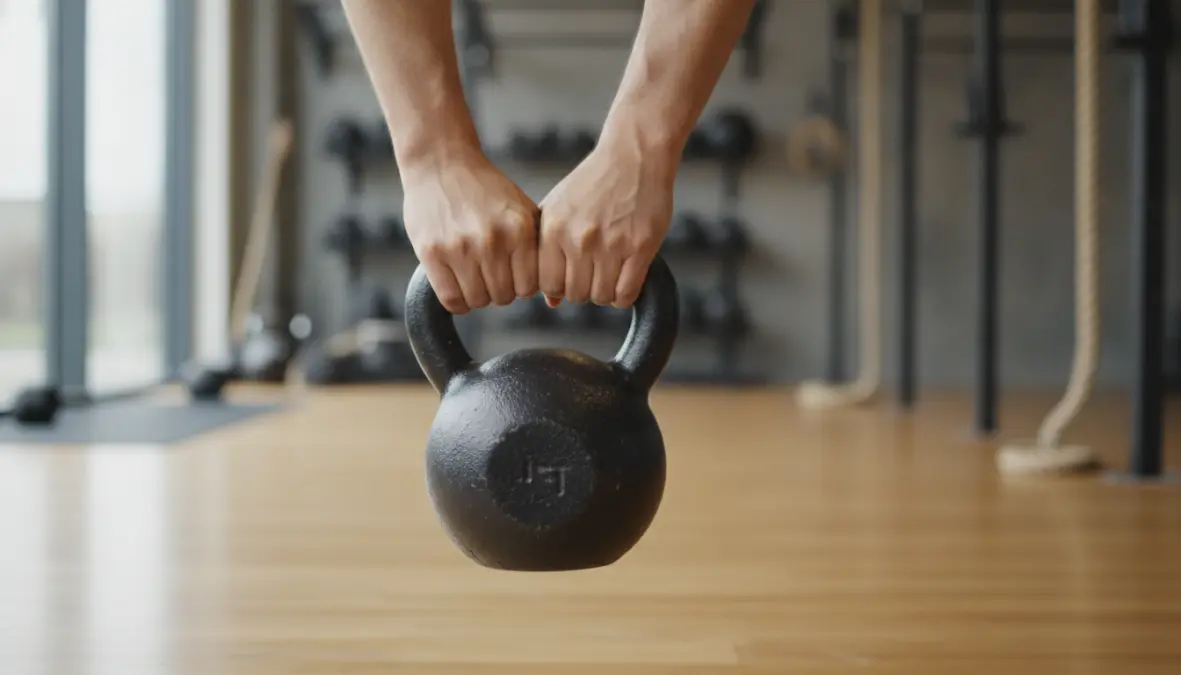
Kettlebell Swings: This is the king of kettlebell exercises for cyclists. The swing teaches proper hip hinge mechanics while explosively developing your posterior chain—glutes, hamstrings, and lower back. The ballistic hip snap at the top of each swing directly mimics the powerful hip extension needed for climbing and sprinting. Start with 2-hand swings to master the movement pattern, then progress to single-arm variations for additional core stability demands. Target muscles: glutes, hamstrings, lower back, core.
Goblet Squats: While cyclists already have strong quads, goblet squats improve hip and ankle mobility while building functional leg strength through a full range of motion—something you don’t get on the bike. The front-loaded position forces deep core engagement and helps correct the forward-tilted posture common in cyclists. Benefits for cycling: improved pedaling mechanics, enhanced hip mobility, better power transfer through full pedal stroke. Target muscles: quadriceps, glutes, core stabilizers.
Turkish Get-Up: This complex, total-body movement is unmatched for developing core stability for cyclists and shoulder mobility. The slow, controlled transitions from lying to standing challenge your stability in multiple planes of motion, building the kind of anti-rotation strength that keeps you planted during out-of-saddle efforts. Benefits for cycling: improved bike handling, enhanced shoulder stability for aggressive riding positions, full-body coordination. Target muscles: entire core, shoulders, hips, stabilizers throughout.
Single-Leg Deadlifts: Cycling is a bilateral movement, but strength imbalances between legs are common. This unilateral exercise addresses those imbalances while developing balance and posterior chain development crucial for pedaling power. The single-leg stance also improves proprioception and ankle stability. Benefits for cycling: balanced leg strength, improved pedaling efficiency, enhanced glute activation. Target muscles: hamstrings, glutes, lower back, core stabilizers.
Kettlebell Clean and Press: This explosive movement develops total-body power and teaches you to generate force from the hips and transfer it through the core—exactly what happens during maximal efforts on the bike. The overhead component also opens up chronically tight shoulders and improves thoracic mobility. Benefits for cycling: explosive power development, improved force production, enhanced shoulder mobility. Target muscles: entire posterior chain, shoulders, core, legs.
Russian Twists or Windmills: Cyclists need rotational stability to resist the twisting forces that occur during standing climbs and sprints. Russian twists build this anti-rotation strength, while windmills add a mobility component that opens up tight hips and shoulders. Both exercises strengthen the obliques and deep core muscles that traditional ab work misses. Benefits for cycling: better power transfer, reduced energy leaks, improved bike control. Target muscles: obliques, deep core stabilizers, hip stabilizers.
For additional core training ideas that complement these kettlebell movements, explore our article on core strength exercises for endurance athletes.
Sample Kettlebell Workout Routines for Cyclists
Having the right exercises is only half the battle—you need structured cyclist workout routines that fit into your training schedule without compromising recovery. Here are two complete programs designed specifically for cyclists.
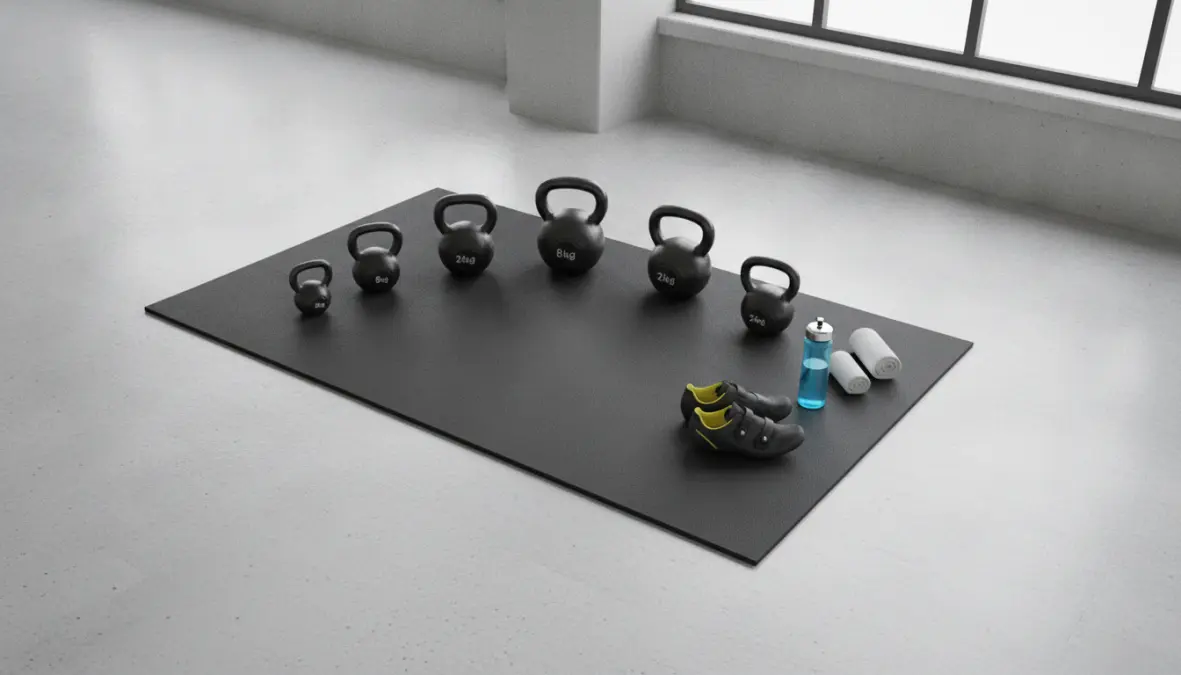
Beginner Kettlebell Routine for Cyclists (2x per week, 25-30 minutes): Perfect for those new to kettlebell training to improve cycling power. Start with a lighter kettlebell (8-12kg for women, 12-16kg for men) and focus on movement quality over intensity.
Warm-up: 5 minutes of hip circles, leg swings, and cat-cow stretches
• Goblet Squats: 3 sets of 10 reps, 60 seconds rest
• Kettlebell Swings: 3 sets of 15 reps, 90 seconds rest
• Single-Leg Deadlifts: 2 sets of 8 reps per leg, 60 seconds rest
• Russian Twists: 2 sets of 20 total reps, 45 seconds rest
Cool-down: 5 minutes of hip flexor stretches and foam rolling
Schedule these sessions on easy cycling days or complete rest days, never immediately before hard interval sessions. This frequency provides adequate stimulus without interfering with bike-specific training.
Performance Kettlebell Routine for Competitive Cyclists (2-3x per week, 35-40 minutes): Designed for experienced cyclists seeking maximum hip power exercises cycling development and strength gains. Use moderate to heavy kettlebells (12-16kg for women, 20-24kg for men).
Warm-up: 5-7 minutes of dynamic mobility
• Turkish Get-Ups: 3 sets of 3 reps per side, 90 seconds rest
• Kettlebell Swings: 4 sets of 20 reps, 2 minutes rest
• Kettlebell Clean and Press: 3 sets of 6 reps per side, 90 seconds rest
• Goblet Squats: 3 sets of 12 reps, 60 seconds rest
• Windmills: 2 sets of 5 reps per side, 60 seconds rest
Finisher: 3 sets of 10 single-leg deadlifts per leg, minimal rest
During your racing or peak season, reduce frequency to once weekly to maintain strength while prioritizing cycling-specific fitness. In the off-season or winter training kettlebell workouts for cyclists, increase to three sessions weekly to build maximum strength reserves. For more on periodization strategies, see our guide on spring cycling training.
Always prioritize proper warm-up and mobility work before handling kettlebells. The combination of cycling’s repetitive positioning and heavy kettlebell work requires extra attention to hip and shoulder mobility. Pair your kettlebell training with other complementary approaches like plyometric training for maximum performance gains.
FAQ
How often should cyclists do kettlebell training?
Most cyclists benefit from 2-3 kettlebell sessions weekly during the off-season, reducing to 1-2 sessions during competitive periods. Schedule sessions on easy riding days or rest days, never before hard interval workouts. During peak racing season, a single maintenance session prevents strength loss without compromising recovery.
What weight kettlebell should cyclists start with?
Begin conservatively: 8-12kg (18-26 lbs) for women, 12-16kg (26-35 lbs) for men. Master movement patterns with lighter weights before progressing. For swings and ballistic movements, you can typically handle heavier weights than for pressing exercises. Quality movement always trumps heavy weight.
Can kettlebell training improve cycling power?
Absolutely. Studies show that adding strength training to cycling programs increases power output, particularly during sprints and climbs. Kettlebell exercises specifically target hip extension power and glute activation—the primary drivers of pedaling force. Most cyclists see measurable watt increases within 6-8 weeks of consistent training. For additional power-building strategies, check out our guide on hill climbing techniques.
Do kettlebell workouts help prevent cycling injuries?
Yes, significantly. Kettlebell training addresses the muscular imbalances and weaknesses that cause common cycling injuries like knee pain, lower back issues, and IT band syndrome. By strengthening neglected muscle groups—especially glutes, hamstrings, and core stabilizers—you create a more resilient, balanced body capable of handling high training volumes.
Should I do kettlebells before or after cycling?
Ideally, separate kettlebell and hard cycling sessions by at least 6-8 hours for optimal recovery. If combining in one day, perform quality cycling workouts first when you’re fresh, then follow with kettlebell training. Never do heavy kettlebell sessions immediately before intense intervals or races. On easy ride days, either order works fine, but listen to your body and watch for signs of overtraining.
Integrating kettlebell workouts for cyclists into your training plan isn’t about becoming a powerlifter—it’s about building the functional strength, explosive hip power, and bulletproof core stability that transforms good cyclists into great ones. The beauty of kettlebells lies in their efficiency: just two or three focused sessions weekly can unlock performance gains you’d never achieve through cycling alone. Start with the basics, focus on quality movement, and watch your power numbers climb as your body becomes stronger, more balanced, and more resilient than ever before.