Core Strength Exercises for Endurance Athletes: Build Stability and Power

You’ve probably heard runners talk about ‘engaging your core’ or cyclists discussing core stability. But if you’re logging miles and hours in the saddle, you might wonder: does core training really matter when your legs do all the work? The short answer is absolutely. Your core strength endurance athletes develop isn’t just about aesthetics—it’s the foundation that keeps you efficient, injury-free, and powerful through every repetition of your stride or pedal stroke. Let’s dive into why core work deserves a spot in your training plan and exactly which exercises will make the biggest difference.
Why Core Strength Matters for Endurance Performance
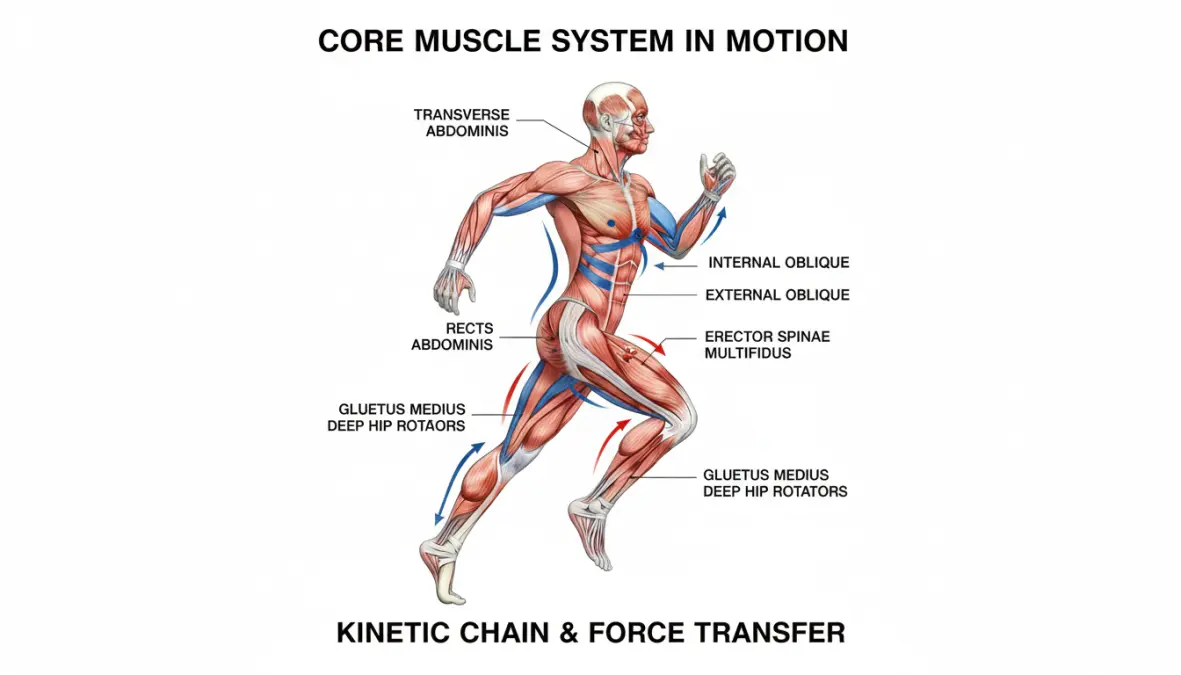
When we talk about core strength endurance athletes need, we’re referring to much more than six-pack abs. Your core includes everything from your diaphragm down to your pelvic floor, encompassing your abdominals, obliques, lower back, and hip stabilizers. During endurance performance training, this muscular system acts as your body’s central command center, transferring forces between your upper and lower body while maintaining proper alignment.
Here’s the reality: during a marathon, your core fires thousands of times to stabilize your torso against the repetitive impact of each foot strike. In cycling, it anchors your upper body so your legs can generate maximum power without energy leaks through unnecessary movement. Research shows that runners with better core stability demonstrate improved running economy—meaning they use less oxygen at the same pace. This happens because a stable trunk prevents excessive rotation and flexion that would otherwise waste energy with every step.
The science behind endurance athlete training increasingly emphasizes the kinetic chain concept: power generated in your legs must transfer through a stable core to propel you forward efficiently. A weak link in this chain—specifically, poor trunk stability or lumbar spine control—forces other muscles to compensate, leading to form breakdown and increased injury risk. Think of your core as the pillar connecting your power-generating legs to your momentum-carrying upper body. Without pillar strength, you’re essentially trying to fire a cannon from a canoe. Additionally, improving your overall conditioning through targeted work can complement other aspects of your training regimen, much like how proper hydration strategies support performance across multiple systems.
Essential Core Stability and Power Exercises for Endurance Athletes
The most effective core exercises for runners, cyclists, and triathletes aren’t traditional crunches. Instead, functional core training focuses on teaching your trunk to resist unwanted movement—the exact challenge you face during endurance activities. Let’s break down the essential categories of athletic core strengthening exercises.
Anti-Extension Exercises train your core to resist arching (excessive lumbar extension). The front plank remains foundational—maintain a straight line from head to heels, engaging your transverse abdominis for 30-60 seconds. Progress to plank variations like plank with alternating arm reaches or stability ball rollouts. Dead bugs are particularly valuable for endurance athletes: lying on your back, slowly extend opposite arm and leg while keeping your lower back pressed to the floor. This teaches neuromuscular control critical for maintaining posture as fatigue sets in during long efforts.
Anti-Rotation Exercises are among the best core strength exercises for marathon runners and cyclists because they directly address the rotational forces these sports create. The Pallof press involves holding a resistance band or cable at chest height and pressing straight out, resisting the pull that tries to rotate your torso. Bird dogs combine anti-rotation with anti-extension: from hands and knees, extend opposite arm and leg while keeping your hips and shoulders square. Side planks target your obliques and quadratus lumborum, essential for lateral stability. Progress these by adding leg lifts or holds of 45-90 seconds.
Anti-Lateral Flexion Exercises prevent side-bending under load. Suitcase carries and single-arm farmer walks are deceptively simple but incredibly effective: hold a heavy kettlebell or dumbbell in one hand and walk 30-40 meters while keeping your torso perfectly upright. These functional core exercises for cyclists and triathletes build real-world trunk stability that translates directly to maintaining position on the bike or during the run leg.
Power Exercises add a dynamic component once you’ve built a stability foundation. Medicine ball slams develop explosive core power through flexion, while rotational medicine ball throws against a wall train the diagonal patterns used in running. Explosive mountain climbers combine core stability with cardiovascular demand. These power exercises for athletes should be performed with quality over quantity—8-12 explosive reps with full recovery between sets. Just as strength training for cyclists builds power without adding bulk, these movements develop core explosiveness without compromising your endurance adaptations.

Programming Core Training Into Your Endurance Routine
The question isn’t whether to include core conditioning for athletes in your schedule—it’s how to integrate it without compromising your primary endurance athlete training. The optimal approach balances frequency, timing, and progression based on your training phase.
Most endurance athletes benefit from 2-4 core sessions weekly, each lasting 15-25 minutes. This frequency provides enough stimulus for adaptation without excessive fatigue. Timing matters: performing intensive core work immediately before key workouts can compromise performance, while post-run sessions capitalize on your already-warmed muscles. Many athletes find success with a core strength training plan for distance runners that places brief stability work (10 minutes of planks and anti-rotation exercises) after easy runs, reserving longer, more intensive sessions including power work for rest days or following recovery runs.
Periodization principles apply to functional core training just as they do to your running or cycling volume. During base-building phases, emphasize stability and endurance—longer holds, more reps, perfect form. As you approach race season, shift toward maintenance (2 sessions weekly) with slightly more power-focused work to maintain strength without adding training stress. A sample workout structure might include: 5-minute dynamic warm-up focusing on mobility work, 3 anti-extension exercises (2-3 sets each), 2 anti-rotation exercises (2-3 sets each), 1 carry variation, and 1-2 power exercises if appropriate for your training phase.
Important considerations: avoid high-volume core work within 48 hours of hard interval sessions or long runs, as core fatigue can compromise form when it matters most. Similarly, if you’re experiencing lower back pain, focus exclusively on stability exercises and consult a professional before progressing to power movements. Balance is key—core training should enhance your endurance performance training, not become another source of accumulated fatigue.

FAQ
How often should endurance athletes train their core?
Most endurance athletes see optimal results with 2-4 core sessions per week, each lasting 15-25 minutes. During heavy training blocks or race season, reduce to 2 maintenance sessions to avoid excessive fatigue. Consistency matters more than volume—two quality weekly sessions beat sporadic intense workouts.
What’s the difference between core stability and core strength?
Core stability refers to your trunk’s ability to resist unwanted movement—preventing rotation, extension, or lateral flexion under load. Core strength involves generating force through core musculature. Endurance athletes primarily need stability to maintain efficient form, though power exercises add valuable explosive capacity for hills and surges.
Can core exercises improve running economy?
Yes. Research demonstrates that improved trunk stability reduces unnecessary torso rotation and vertical oscillation, meaning less wasted energy with each stride. Runners with better core endurance maintain form longer into races, preserving their economy when fatigue sets in. The effect is most noticeable in longer distances where form degradation typically occurs.
Should I do core work before or after running?
Generally, perform intensive core training after running or on separate days. Pre-fatiguing your core before key workouts can compromise performance and increase injury risk. Brief activation work (5-8 minutes of light planks or dead bugs) before easy runs is fine and may improve running posture, but save longer sessions for afterward.
What are the best core exercises for cyclists vs runners?
Both benefit from anti-rotation and anti-extension work, but emphasis differs slightly. Cyclists should prioritize anti-flexion exercises (back extensions, bird dogs) to counter the rounded cycling position, plus anti-rotation for out-of-saddle climbing. Runners need more anti-lateral flexion work (single-leg exercises, carries) to handle single-leg stance phase impact forces. Triathletes need both, making comprehensive functional core training essential.
Building core strength as an endurance athlete isn’t about adding hours to your already-packed training schedule—it’s about strategic, focused work that pays massive dividends in performance and injury prevention. The exercises outlined here address the specific stability and power demands of endurance sports, teaching your trunk to function as the stable, efficient pillar it needs to be. Start with stability fundamentals, progress intelligently, and watch how improved core function translates to better form, reduced fatigue, and stronger finishes. Your core might not cross the finish line first, but it’s the foundation that gets you there efficiently. Just as you prioritize proper nutrition timing and mental preparation, make core training a non-negotiable component of your endurance training plan.