Gran Fondo Training: Complete Plan to Prepare for Long Distance Cycling Events
Standing at the start line of your first gran fondo, surrounded by hundreds of cyclists ready to tackle 100+ miles of challenging terrain, is both exhilarating and intimidating. But here’s the good news: with the right gran fondo training approach, you can transform from a weekend rider into a confident long-distance cyclist capable of conquering these epic events. Whether you’re wondering how to train for a gran fondo or looking for a structured approach to your long distance cycling preparation, this guide will show you exactly what it takes to cross that finish line strong.
Understanding Gran Fondo Training Requirements
Gran fondo events aren’t your typical Sunday ride. These mass-participation cycling events typically range from 100 to 200 kilometers (60-125 miles), combining sustained endurance efforts with challenging climbs and varying intensity. What makes gran fondo training unique is this multi-faceted demand: you need the aerobic base to sustain hours in the saddle, the strength to tackle sustained climbs, and the power to hang with pacelines or push through technical sections.
Before diving into a training plan, assess your baseline fitness. Ideally, you should be comfortable riding 2-3 hours at a steady pace and cycling 3-4 times weekly. If you’re starting from scratch, spend 4-6 weeks building this foundation first—our complete guide to spring cycling training can help establish this base fitness.
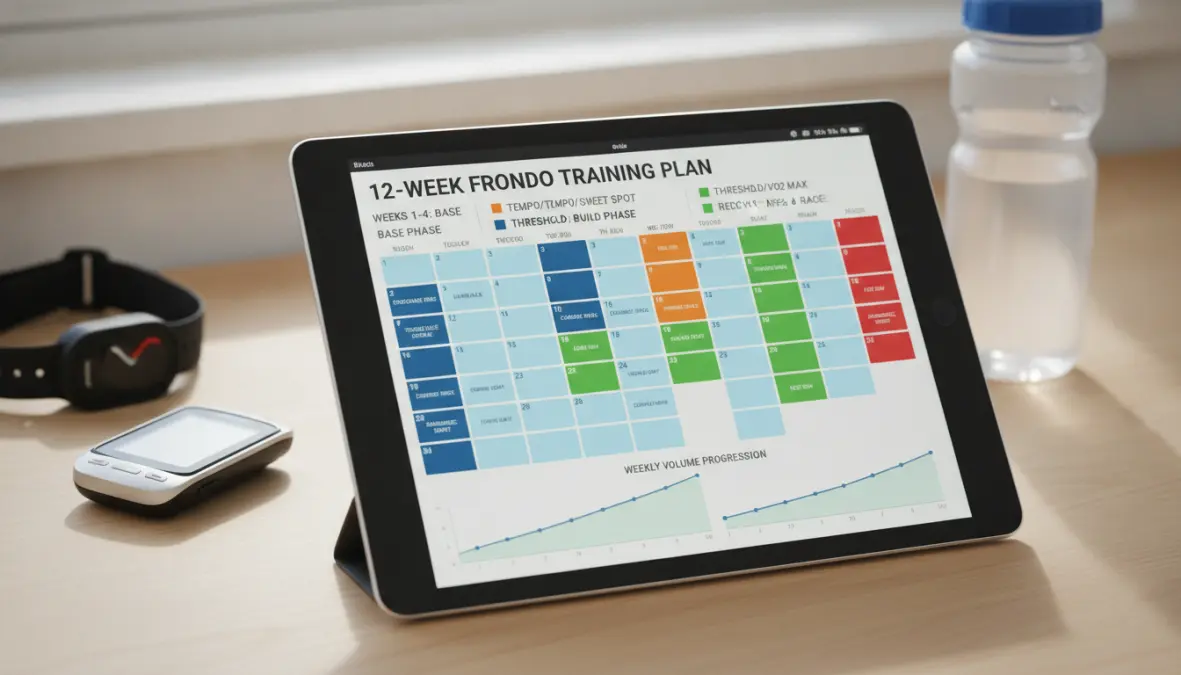
The ideal timeframe for endurance cycling training is 12-16 weeks, divided into three distinct phases: base training (building aerobic capacity), the build phase (adding intensity and specificity), and the taper week (recovery before your event). This cycling periodization approach ensures progressive adaptation while managing fatigue.
The Complete Gran Fondo Training Plan Structure
A solid gran fondo training plan balances volume (total hours riding) with intensity (how hard you ride). The key is progressive overload—gradually increasing stress on your body while allowing adequate recovery. A typical week includes 4-5 rides: one or two long endurance rides, 2-3 quality sessions (intervals, tempo, or climbing), and recovery rides to facilitate adaptation.
Your weekly training volume should increase gradually, following the 10% rule—never increase total riding time by more than 10% week-over-week. For most cyclists following a 12 week gran fondo training plan, this means starting at 6-8 hours weekly and building to 10-14 hours by peak weeks. Every third or fourth week should be a recovery week with 20-30% reduced volume to prevent burnout and allow your body to absorb the training load.
Base Phase: Building Aerobic Endurance (Weeks 1-6)
The foundation of any successful century ride training program is aerobic development. During these initial weeks, 80-85% of your riding should be in Zone 2 (conversational pace) with occasional pushes into Zone 3 (moderately hard but sustainable). This base training develops mitochondrial density, capillary networks, and fat-burning efficiency—the physiological adaptations that enable endurance building.
A typical base phase week includes: a Tuesday easy spin (60-90 minutes, Zone 2), Thursday steady ride with some Zone 3 efforts (90-120 minutes), Saturday recovery ride (60 minutes, very easy), and Sunday long ride progressively building from 2.5 to 4.5 hours. Add a midweek strength session focusing on core stability and leg strength to support your on-bike performance—mobility training is equally crucial for injury prevention.
Build Phase: Intensity and Specificity (Weeks 7-12)
Once your aerobic base is established, the build phase introduces interval training to develop threshold power and VO2max—the intensity zones you’ll tap into during climbs and hard sections of your gran fondo. This phase maintains your long endurance rides while replacing one or two easy sessions with quality workouts.
Key gran fondo workout plan sessions include: sweet spot intervals (3-4 x 10-15 minutes at 88-93% FTP with 5-minute recoveries), tempo efforts (2 x 20-30 minutes at 85-90% FTP), climbing repeats mimicking your event’s terrain, and VO2max intervals (5-6 x 3-5 minutes hard with equal recovery). Weeks 10-11 should include gran fondo simulation rides—tackling 70-80% of your event distance at target pace, practicing your cycling nutrition strategy, and testing equipment. For proper fueling guidance during these long efforts, check out our hydration strategies for endurance athletes.
By week 11, you should complete your longest training ride—typically 80-85% of your gran fondo distance. This builds confidence without creating excessive fatigue before your event.
Essential Training Elements for Gran Fondo Success
Beyond structured rides, several complementary elements separate successful gran fondo finishers from those who struggle. Here’s what you need to prioritize in your sportive training plan:
Recovery and Periodization: Your body adapts during rest, not while riding. Schedule at least one complete rest day weekly, and make your recovery rides genuinely easy—Zone 1-2, shorter duration, focusing on smooth pedaling. Every 3-4 weeks, take a recovery week with reduced volume to consolidate fitness gains.
Strength and Mobility: Incorporate 2 weekly strength sessions focusing on core stability, hip strength, and lower body power. Exercises like single-leg deadlifts, planks, squats, and glute bridges directly translate to on-bike performance. Don’t neglect flexibility work—tight hips and hamstrings compromise pedaling efficiency and increase injury risk.
Nutrition Strategy: Practice your race-day nutrition during long training rides. Aim for 60-90 grams of carbohydrates hourly during rides exceeding 90 minutes, mixing solid foods early with gels or liquids as intensity increases. Test different products to find what your stomach tolerates—race day is not the time for experimentation.
Mental Preparation: Gran fondos test mental fortitude as much as physical fitness. Develop strategies for managing discomfort, breaking the ride into manageable segments, and maintaining positive self-talk during challenging moments. Our mental training guide offers specific techniques for building psychological resilience.
Equipment and Bike Fit: A proper bike fit prevents injury and maximizes efficiency. Get professionally fitted if possible, and use training rides to dial in your position. Test all race-day equipment during training—saddle, clothing, shoes, and nutrition products. Consider using a fitness tracker to monitor training load, heart rate, and power data for more precise training.
The Taper: Your final 10-14 days should reduce volume by 40-50% while maintaining some intensity to preserve fitness. Your last hard workout should be 10-12 days before the event, followed by easy spins and complete rest 1-2 days prior. This taper week allows full glycogen replenishment and muscle repair.
FAQ
How long does it take to train for a gran fondo?
For cyclists with a baseline fitness level (regularly riding 3-4 times weekly), a dedicated gran fondo training program typically requires 12-16 weeks. Complete beginners should allow 20-24 weeks to build foundational fitness before starting specific gran fondo preparation. The exact duration depends on your starting fitness, target event difficulty, and available training time.
How many hours per week should I train?
Most successful cycling training programs for gran fondos require 8-12 hours weekly during peak training phases. Begin with 6-8 hours weekly and progressively build to 10-14 hours by weeks 8-10, then taper. Quality matters more than quantity—a well-structured 8-hour week beats random 12-hour weeks. Balance training with work, family, and recovery needs.
What is the longest ride I should do before a gran fondo?
Your longest training ride should reach 80-85% of your event distance, typically completed 2-3 weeks before your gran fondo. For a 100-mile event, aim for an 80-85 mile ride; for 150km events, build to 120-130km. Going longer provides minimal additional benefit while increasing injury risk and requiring extended recovery that interferes with your taper.
Can I train for a gran fondo on an indoor trainer?
Yes, indoor training is highly effective for structured interval training and maintaining consistency regardless of weather. However, combine indoor sessions with outdoor rides to develop bike handling skills, practice nutrition strategies, and adapt to real-world conditions like wind, terrain changes, and group riding dynamics. Aim for at least 40-50% of your training outdoors, including all long rides.
Do I need to train on hills for a gran fondo?
If your target gran fondo includes significant climbing, hill training is essential—you cannot simulate the specific muscular and cardiovascular demands of sustained climbing on flat terrain. If you live in flat areas, incorporate longer efforts at climbing-specific intensities (tempo and sweet spot), use indoor training apps with gradient simulation, or occasionally travel to hilly areas for specific training blocks. For relatively flat gran fondos, general endurance cycling training suffices with some higher-intensity work.
Preparing for a gran fondo is a journey that transforms not just your fitness, but your confidence and capabilities as a cyclist. With this complete gran fondo training plan, you have everything needed to toe the start line ready to ride strong, enjoy the challenge, and cross the finish line with a massive smile. Start building your base today, trust the process of progressive training, and remember—consistency beats perfection every time. Now get out there and start pedaling toward your gran fondo goals!