Beta-Alanine for Endurance Athletes: Performance Benefits and Dosing Guide

If you’ve been around the endurance sports scene for a while, you’ve probably heard about beta alanine endurance supplements. Maybe you’ve seen fellow athletes downing capsules before training, or maybe you’ve experienced that weird tingling sensation yourself. But does this ergogenic supplement actually live up to the hype for runners, cyclists, and other endurance athletes? Let’s cut through the noise and get into what beta-alanine really does, how it works, and whether it deserves a spot in your supplement stack.
How Beta-Alanine Works for Endurance Performance
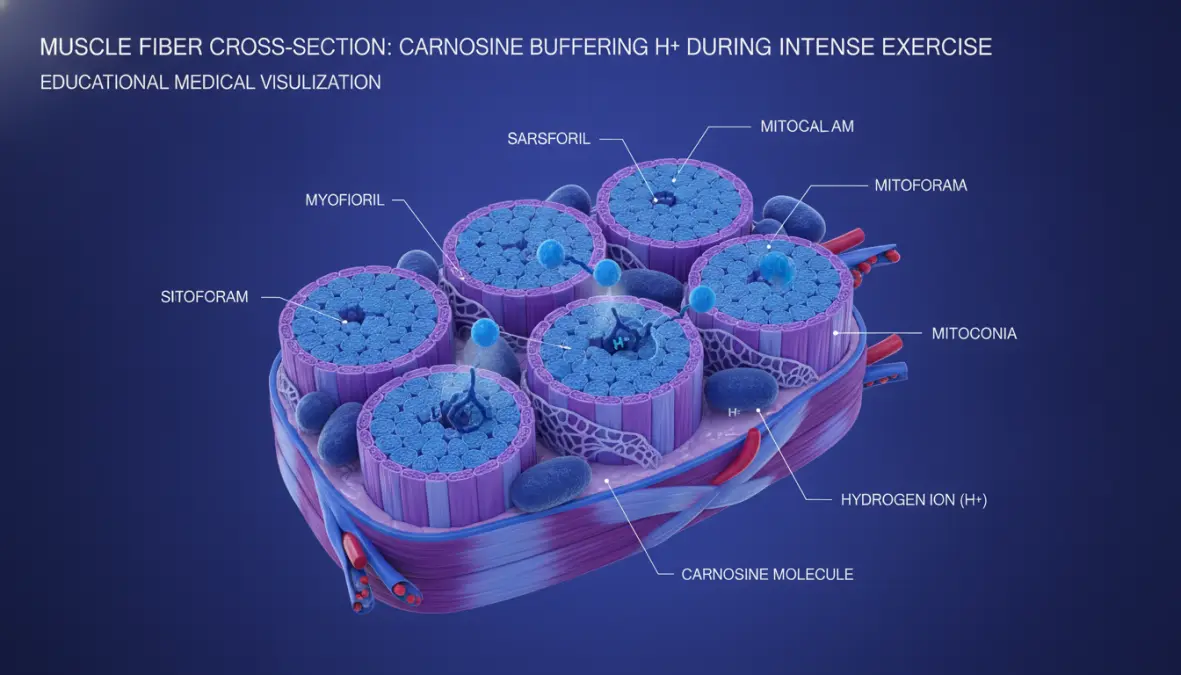
Here’s the deal with beta alanine benefits athletes: it’s not a pre-workout stimulant, and it won’t give you an instant energy boost. Instead, beta-alanine works behind the scenes to improve your body’s ability to buffer hydrogen ions during intense exercise. When you’re pushing hard—whether that’s a tempo run, hill repeats, or crushing intervals on the bike—your muscles produce lactate and hydrogen ions. It’s actually the hydrogen ions that lower your muscle pH and cause that burning sensation, not the lactic acid itself.
This is where carnosine endurance athletes need to understand comes in. Beta-alanine is a precursor to carnosine, a dipeptide found in your muscle tissue. Your body combines beta-alanine with another amino acid (histidine) to create carnosine, which acts as an intracellular buffer. More carnosine means better buffering lactic acid and hydrogen ion accumulation, which translates to delayed muscle fatigue and improved performance during high-intensity efforts.
The Carnosine Connection
Studies show that beta-alanine supplementation can increase muscle carnosine levels by 40-80% over 4-10 weeks. That’s a significant boost. The thing is, beta-alanine is the rate-limiting factor in carnosine synthesis—you typically have plenty of histidine floating around, but not enough beta-alanine to maximize carnosine production.
This enhanced buffering capacity becomes crucial during those sustained high-intensity efforts that push you close to your anaerobic threshold. When you’re working at or above your lactate threshold, your muscles are producing hydrogen ions faster than they can be cleared. Elevated carnosine levels help maintain muscle pH in that critical zone, allowing you to sustain harder efforts for longer periods and improving your time to exhaustion.
Why Endurance Athletes Benefit
You might be thinking: “I’m a long-distance runner, not a sprinter—why would I need this?” Good question. While beta alanine for runners and cyclists won’t dramatically change your easy aerobic base work, it shines during specific scenarios that matter for race performance.
Research shows the sweet spot for beta-alanine benefits is exercise lasting 4-10 minutes at high intensity. Think 1500m runs, 4km pursuit efforts on the bike, or those brutal VO2 max intervals during training. But here’s where it gets interesting for endurance athletes: beta alanine cycling performance and running improvements also show up during final sprint efforts, surges during races, and repeated high-intensity intervals.
If you race anything from 5Ks to half marathons, or participate in criteriums and road races with tactical surges, beta-alanine can give you an edge when you need to dig deep. It improves your muscle fatigue resistance during those critical moments when races are won or lost. For insights on how this relates to your physiological markers, check out our guide on Sports Performance Testing: VO2 Max, FTP, and Lactate Threshold Explained.
Beta-Alanine Supplementation Protocol for Endurance Athletes
So does beta alanine improve endurance performance? The science says yes, but only if you use it correctly. This isn’t a supplement you can take 30 minutes before a workout and expect immediate results. Beta alanine supplementation requires a strategic approach because it works by gradually building up carnosine stores in your muscles over time.
Optimal Dosage and Loading Strategy
When it comes to beta alanine dosage endurance athletes should aim for, the research consistently points to 3.2-6.4 grams per day. Most studies use around 4-6g daily during what’s called a loading phase. Here’s the protocol that works:
- Loading phase: 4-6 grams daily, split into 4 doses of 1-1.5g each, for 4-10 weeks
- Maintenance phase: 3.2-4 grams daily to maintain elevated carnosine levels
- Split dosing: Divide your daily dose into smaller amounts to minimize the paresthesia tingling sensation
That tingling feeling you get? It’s harmless but can be annoying. Taking smaller doses with meals helps reduce it significantly. If you’re wondering how much beta alanine for endurance training, stick to the 4-6g range—more isn’t necessarily better, and your body can only synthesize carnosine so fast.
When should you expect results? Unlike caffeine, you won’t feel anything immediately. It typically takes 2-4 weeks of consistent supplementation to see performance improvements, with maximal benefits appearing around 4-10 weeks. This is similar to how altitude training requires time to produce adaptations.
Timing and Stacking Considerations
The best time to take beta alanine for endurance is… honestly, whenever is most convenient for you to take it consistently. Since it works through chronic loading rather than acute effects, beta alanine timing endurance athletes worry about matters less than just taking it daily.
That said, taking it with meals can help with absorption and reduce tingling. Some athletes prefer post-workout since they’re already in their nutrition routine. The key is consistency—missing days will slow your carnosine buildup.
Beta-alanine stacks well with other supplements. It’s commonly combined with creatine (they work through different mechanisms), sodium bicarbonate (another buffering agent), and caffeine. Just remember that proper hydration strategies remain fundamental regardless of your supplement stack.
Frequently Asked Questions
How long does it take for beta-alanine to work for endurance?
You’ll typically notice performance improvements after 2-4 weeks of consistent supplementation at 4-6g daily. Maximal carnosine levels and benefits appear around 4-10 weeks. This is a marathon, not a sprint—the supplement needs time to build up muscle carnosine concentrations.
Does beta-alanine help with long-distance running?
Beta-alanine is most effective for high-intensity efforts lasting 4-10 minutes, but long-distance runners still benefit during surges, hill climbs, final kicks, and interval training sessions. It won’t dramatically change your easy aerobic runs, but it can improve your ability to handle tempo efforts and lactate threshold work that’s crucial for marathon and half-marathon training.
Can you take beta-alanine before a race?
Taking beta-alanine right before a race won’t help—it doesn’t work acutely. However, if you’ve been supplementing for several weeks leading up to your race, your elevated muscle carnosine levels will be there to help. Many athletes ask when to take beta alanine before race day, but the real answer is you should have been taking it daily for at least 4 weeks prior. Continue your normal dose on race morning if it’s part of your routine.
What are the side effects for endurance athletes?
The main side effect is paresthesia—that tingling or flushing sensation, usually in the face, neck, and hands. It’s harmless and temporary, typically lasting 60-90 minutes. Side effects of beta alanine in endurance athletes are minimal otherwise. Split dosing and taking it with food dramatically reduces tingling. There’s no evidence of negative effects on endurance performance or recovery.
Is beta-alanine better than creatine for runners?
This is like asking whether your running shoes or your watch is more important—they serve different purposes. When comparing beta alanine vs creatine for endurance, creatine helps with power output and repeated sprint ability, while beta-alanine improves buffering capacity during sustained high-intensity efforts. Many endurance athletes use both since they work through different mechanisms. Creatine might cause slight water retention, which some runners avoid before races, while beta-alanine doesn’t affect body weight.
If you’re serious about endurance performance, beta-alanine deserves consideration as part of a comprehensive training and nutrition approach. Combined with proper concurrent training, smart heart rate zone training, and solid core strength work, beta-alanine can help you find those extra percentage points that separate good performances from great ones. Just remember: supplements enhance a solid training foundation—they don’t replace it.