Overreaching vs Overtraining: Using Strategic Fatigue to Maximize Performance Gains

You’ve been crushing your workouts for weeks, pushing harder than ever. Your legs feel heavy, performance is dipping slightly, but your coach says this is exactly what you need to breakthrough to the next level. Meanwhile, your training partner has been grinding even harder for months—constant fatigue, declining performance, mood in the gutter. Same symptoms on the surface, but completely different outcomes ahead. Understanding the crucial distinction between overreaching vs overtraining can mean the difference between strategic performance gains and a months-long recovery nightmare.
What Is the Difference Between Overreaching and Overtraining?
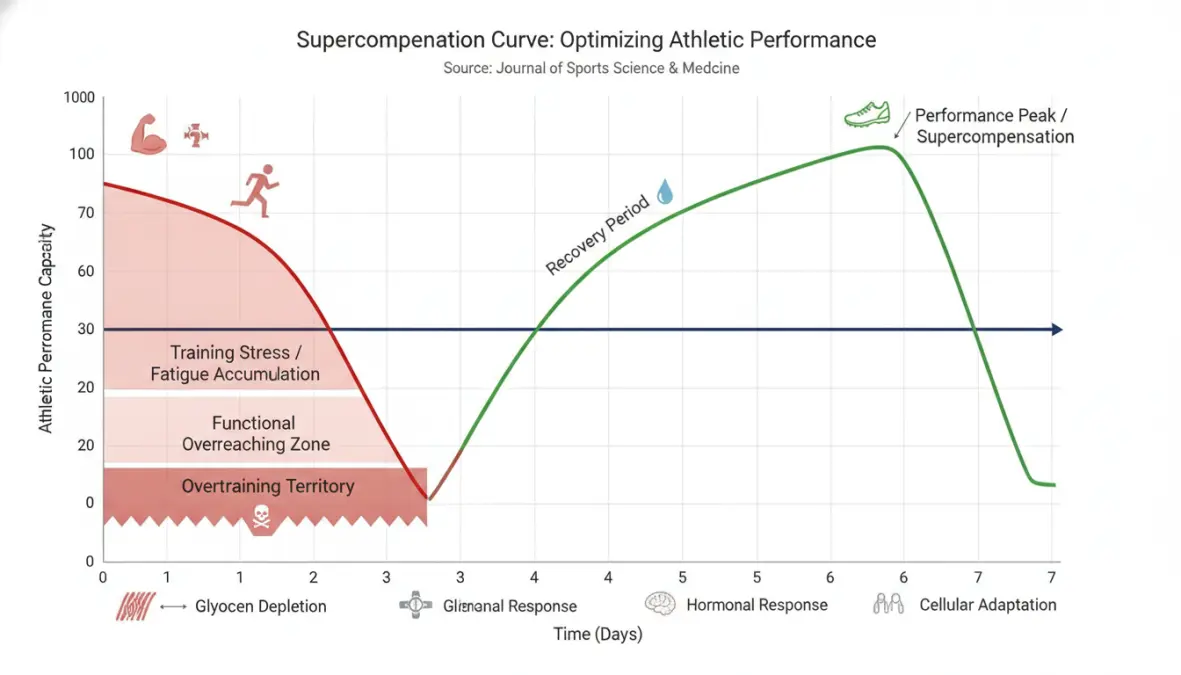
The debate around overreaching vs overtraining isn’t just semantics—it represents a spectrum of fatigue that ranges from productive stress to debilitating dysfunction. At one end, you’ve got normal training recovery where your body adapts and gets stronger. Push a bit harder, and you enter functional overreaching—a temporary state of accumulated fatigue that, when followed by adequate recovery, leads to supercompensation and performance improvements.
Move further along the spectrum without proper recovery, and you hit non-functional overreaching, where fatigue outpaces your body’s ability to adapt in a reasonable timeframe. Performance declines persist for weeks rather than days. Keep pushing through this warning zone, and you’ll eventually crash into overtraining syndrome—a chronic condition characterized by prolonged performance decrements, hormonal disruptions, immune suppression, and psychological symptoms that can take months to resolve.
The key differentiator? Recovery duration. Functional overreaching resolves in days to a couple of weeks. Non-functional overreaching might take several weeks to a few months. Overtraining syndrome? You’re looking at months of reduced training and potentially long-term consequences. For a deeper dive into recognizing when you’ve crossed the line, check out this guide on common overtraining symptoms and how to recover properly.
Functional Overreaching: Planned Performance Strategy
Functional overreaching is essentially controlled damage—you’re deliberately accumulating fatigue over a short period (typically one to three weeks) with the strategic intention of backing off and allowing supercompensation to occur. Think of it as creating a deeper recovery debt that, when properly repaid with rest, yields bigger performance dividends than standard training.
Elite athletes and their coaches use this technique during specific training blocks, particularly before major competitions. You’ll see cyclists loading up volume during base training camps, then tapering into peak form. Runners might increase mileage significantly for two weeks, then reduce volume while maintaining intensity. The temporary performance dip during the overreaching phase is expected—it’s the price of admission for the subsequent gains.
The magic happens during the recovery period. With adequate rest, nutrition, and stress management, your body doesn’t just return to baseline—it overshoots, delivering improved performance markers like increased VO2 max, higher power output, or faster race times. This is periodization in action, and it’s why understanding sports performance testing metrics becomes crucial for tracking whether your overreaching block is working as planned.
Overtraining Syndrome: When Recovery Fails
Overtraining syndrome is what happens when you ignore all the warning signs, skip recovery periods, and push through fatigue for too long. This isn’t a simple case of needing a week off—it’s a systemic breakdown that affects multiple physiological systems simultaneously.
Performance tanks and stays down despite rest. Your resting heart rate might be elevated (sympathetic overtraining) or unusually low (parasympathetic overtraining). Hormone profiles go haywire—cortisol stays chronically elevated while testosterone plummets, creating a catabolic environment where you’re essentially breaking down faster than you can build up. Your immune system becomes compromised, leading to frequent illness. Sleep quality deteriorates even though you’re exhausted. Mood disturbances, loss of motivation, and even clinical depression can emerge.
The distinction between sympathetic and parasympathetic overtraining matters. Sympathetic overtraining (more common in speed/power athletes) shows elevated sympathetic nervous system activity—higher resting heart rate, restlessness, poor sleep. Parasympathetic overtraining (more common in endurance athletes) shows the opposite—low heart rate, lethargy, extreme fatigue. Both require extended recovery, but the presentation differs significantly.
How to Recognize and Monitor Training Stress Levels
The difference between productive overreaching and destructive overtraining often comes down to whether you’re actually paying attention to what your body is telling you. Successful athletes don’t just train harder—they monitor smarter.
Physiological markers provide objective data. Heart Rate Variability (HRV) is one of the best early warning systems—a declining trend over several days suggests accumulated fatigue that requires attention. Resting heart rate patterns matter too; a sustained elevation of 5-10 beats per minute above your normal baseline screams overreaching or worse. Performance metrics themselves tell the story: if your power output, speed, or strength numbers are declining despite maintained or increased effort, you’re accumulating fatigue faster than you’re recovering.
Psychological indicators often appear before physiological markers reach crisis levels. Pay attention to motivation changes—if sessions you normally enjoy suddenly feel like torture, that’s significant. Sleep quality disruptions, increased irritability, difficulty concentrating, and loss of appetite are all red flags. Many athletes use simple questionnaires like the POMS (Profile of Mood States) or custom wellness surveys that track these subjective markers daily.
Laboratory testing can confirm what you suspect. The testosterone-to-cortisol ratio is particularly useful—a declining ratio indicates you’re in a catabolic state. Elevated inflammatory markers like C-reactive protein, changes in immune cell counts, and altered iron status can all point to overtraining. While not practical for daily monitoring, these tests help distinguish between functional overreaching and more serious issues.
Modern technology makes monitoring accessible. Wearables track HRV, resting heart rate, and sleep quality automatically. Training apps calculate acute-to-chronic workload ratios, helping you visualize whether you’re ramping up too quickly. Rating of Perceived Exertion (RPE) multiplied by session duration gives you a simple daily training load number. The key is consistency—pick a few metrics, track them regularly, and watch for trends rather than single data points.

Implementing Strategic Overreaching for Performance Gains
Now that you understand the risks, let’s talk about how to use functional overreaching as a performance tool without crossing into the danger zone. This is where periodization becomes your best friend—the systematic planning of training variables to optimize adaptation while managing fatigue.
Effective overreaching blocks typically last one to three weeks. Shorter than that, and you haven’t accumulated enough fatigue to stimulate significant supercompensation. Longer than that, and you’re flirting with non-functional overreaching or worse. During this period, you’ll increase training load by manipulating volume (more sets, reps, or duration), intensity (heavier loads, faster paces), or frequency (more sessions per week). For endurance athletes, this might look like a high-volume training camp. For strength athletes, it might be a Bulgarian-style high-frequency squat block.
The taper or deload following your overreaching block is non-negotiable—it’s where the magic happens. Reduce training volume by 40-60% while maintaining intensity. This allows fatigue to dissipate while preserving fitness adaptations. The duration depends on the overreaching block length and your individual recovery capacity, but one to two weeks is typical. This is similar to how cyclists periodize their spring training to build base fitness before peak season.
Recovery protocols during and after overreaching blocks are crucial. Nutrition needs to support the increased training load—adequate calories, protein for tissue repair (roughly 1.6-2.2g per kg bodyweight), and carbohydrates to replenish glycogen stores. Check out strategies for optimal pre-workout nutrition to fuel these demanding sessions. Sleep becomes even more critical—aim for 8-10 hours during overreaching blocks. Mobility work and stress management techniques (meditation, breathing exercises) help manage accumulated physical and psychological stress.
Know when NOT to overreach intentionally. Young athletes with less training experience lack the adaptive reserves to handle aggressive overreaching. If you’re already dealing with high life stress (work deadlines, relationship issues, financial problems), adding training stress is asking for trouble. During periods of illness, injury, or when trying to balance multiple training modalities, conservative programming beats aggressive overreaching.
FAQ
How long does it take to recover from overreaching?
Functional overreaching typically requires 4-14 days of reduced training to see supercompensation. Non-functional overreaching can take several weeks to a few months. The key is recognizing which type you’re experiencing and adjusting recovery accordingly.
Can you reverse overtraining syndrome?
Yes, but it requires patience. Full recovery from overtraining syndrome typically takes several months of significantly reduced training volume and intensity, along with addressing sleep, nutrition, and life stress. Some athletes may experience lingering effects for even longer. Prevention is far easier than cure.
What’s the difference between overtraining and burnout?
While they overlap, overtraining is primarily physiological—a biological response to excessive training stress. Burnout is more psychological—emotional exhaustion, reduced sense of accomplishment, and cynicism toward training. Both can coexist, and both require addressing training load and recovery, though burnout may also need mental health support.
How often should athletes use overreaching blocks?
Most periodization models incorporate overreaching blocks 2-4 times per year, typically before major competition periods. The frequency depends on your training age, sport demands, and individual recovery capacity. Newer athletes should use them less frequently, while elite athletes with years of training adaptation can potentially handle more frequent blocks.
What are the first warning signs I’m crossing from overreaching to overtraining?
Watch for performance that doesn’t rebound within two weeks of reduced training, persistent sleep disturbances, unusual mood changes that don’t improve with rest, resting heart rate that stays elevated beyond a week, and loss of motivation that persists despite deload periods. If multiple markers are trending wrong simultaneously and not improving with standard recovery protocols, seek professional guidance.
Understanding the nuanced difference between strategic overreaching and destructive overtraining gives you a powerful tool for performance optimization. Used wisely, functional overreaching becomes a secret weapon for breakthrough performances. Ignored or misapplied, it becomes the fastest route to months of frustration and declining results. Monitor yourself honestly, respect recovery as much as training intensity, and remember that the goal isn’t just to train harder—it’s to adapt better. Your next performance breakthrough might just require a well-timed step backward before you can leap forward.