
Block Periodization: How Concentrated Training Loads Drive Peak Performance

Ever wonder why some athletes seem to peak perfectly for competition while others struggle with inconsistent performance? The secret often lies in how they structure their training. Block periodization has revolutionized how elite athletes prepare for peak performance by using concentrated training loads that target specific adaptations in sequential phases. Unlike traditional approaches that try to develop everything at once, this periodization model focuses your energy where it matters most, when it matters most.
What Is Block Periodization and How Does It Work?
Block periodization is a training methodology developed by Soviet sports scientist Yuri Verkhoshansky that organizes your training into highly focused blocks, each targeting specific athletic qualities. Instead of spreading your efforts thin across multiple goals simultaneously, block training uses concentrated loading to maximize adaptations in one area before moving to the next.
The genius of this periodization model lies in understanding residual training effects—the concept that certain adaptations persist even after you stop training them directly. For example, if you build significant muscle mass during a high-volume phase, that muscle doesn’t disappear immediately when you shift focus to power development. This allows you to layer adaptations strategically.
Traditional periodization tries to maintain multiple qualities at once, which creates what sports scientists call “concurrent training interference.” When you’re trying to build endurance, strength, and power simultaneously, each quality competes for your body’s recovery resources. Block periodization eliminates this problem by separating these goals into distinct phases.
The system revolves around three sequential blocks: accumulation, transmutation, and realization. Each block builds upon the previous one, creating a pyramid of athletic performance that culminates in competition-ready fitness. This approach to training load management ensures your body adapts optimally without the interference that plagues traditional methods.
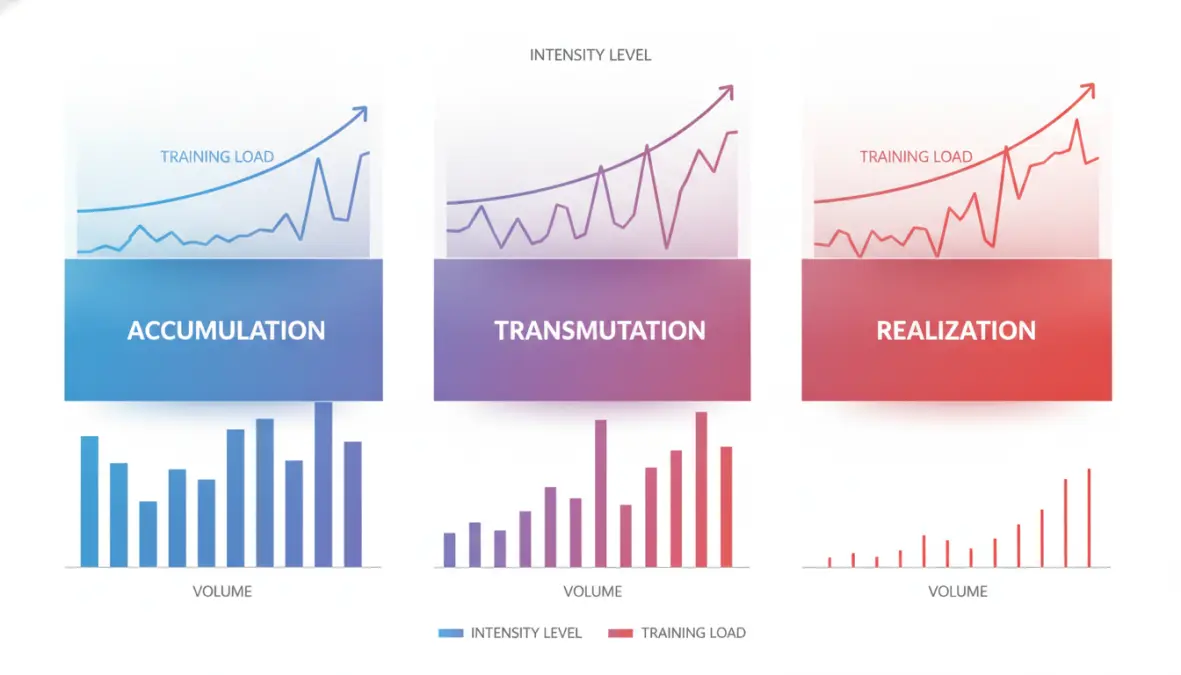
The Three Essential Training Phases in Block Mesocycles
Understanding how each block mesocycle functions is crucial for implementing this system effectively. These training phases follow a logical progression that mirrors how your body naturally builds athletic adaptation.
Accumulation Block: Building the Foundation
The accumulation phase is where you lay the groundwork for everything that follows. This block typically lasts 2-4 weeks and emphasizes high training volume with moderate intensity. Think of it as building your engine before you learn to push the redline.
During accumulation, you’re primarily targeting general physical preparation, hypertrophy, and work capacity. For strength periodization, this means performing 4-6 sets of 8-12 reps at 65-75% of your one-rep max. The workload feels substantial but manageable—you should finish sessions fatigued but not destroyed.
A powerlifter might perform squats, Romanian deadlifts, and accessory work with higher rep ranges. Endurance athletes focus on building aerobic capacity with longer, moderate-intensity sessions. The key is accumulating training stress that forces your body to adapt without pushing into overtraining territory. Proper pre-workout nutrition becomes essential during these high-volume blocks to fuel your sessions adequately.
This phase also benefits from incorporating mobility training to maintain movement quality despite increased training volumes.
Transmutation and Realization: From Strength to Power
The transmutation phase bridges the gap between general preparation and competition-specific performance. Lasting 2-3 weeks, this block converts the qualities built during accumulation into sport-specific attributes. Volume decreases while intensity climbs to 80-90% of maximum.
For strength athletes exploring block periodization for strength athletes, transmutation focuses on maximal strength development. Those 8-12 rep sets become 3-5 reps at much heavier loads. The concentrated loading shifts from building muscle to teaching your nervous system to recruit maximum motor units efficiently.
The realization phase represents your peak performance training block. This 1-2 week period dramatically reduces volume while maintaining or slightly increasing intensity. You’re no longer building adaptations—you’re expressing them. This is essentially a structured taper designed to maximize performance for competition.
Training frequency might drop from 5-6 sessions weekly to 2-3. A powerlifter might only perform competition lifts at 90-95% for singles and doubles. The body finally gets space to supercompensate from accumulated fatigue, revealing the full extent of your adaptations. Quality sleep optimization becomes crucial during this phase to support peak performance.
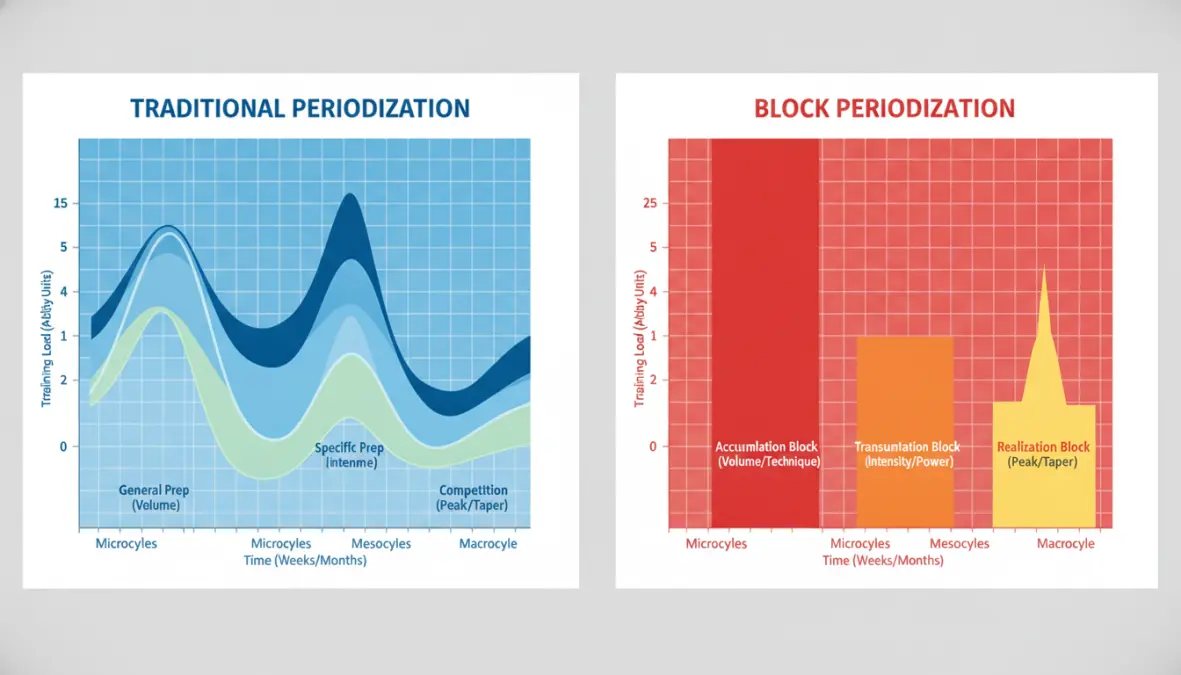
Block Periodization vs Traditional Periodization: Which Maximizes Athletic Performance?
The debate between block periodization vs linear periodization isn’t about one being universally superior—it’s about matching the model to your needs and experience level.
Traditional linear periodization gradually increases intensity while decreasing volume over many months. It works well for beginners who benefit from consistent, predictable progression. However, advanced athletes often hit plateaus because they’re never focusing intensely enough on any single quality to drive significant adaptation.
Block training excels for intermediate to advanced athletes preparing for specific competitions. Research shows it produces superior results for athletic performance when peak performance timing matters. The concentrated training loads benefits include reduced interference between competing training stimuli and more pronounced supercompensation effects.
Does block periodization work for powerlifting? Absolutely. Powerlifters, Olympic weightlifters, and other strength athletes see excellent results because the sequential focus allows maximum strength development without the fatigue accumulation that occurs when mixing heavy lifting with high-volume work.
For endurance athletes, block periodization can be integrated within broader seasonal planning, as outlined in this guide to periodization training for cyclists. The accumulation phase might emphasize base building, similar to spring cycling training approaches.
The main limitation? Block periodization requires careful planning and isn’t ideal when you need to maintain multiple qualities simultaneously year-round. Team sport athletes in-season often fare better with modified approaches. Additionally, the peaking strategy works best when you have specific competition dates rather than needing consistent performance across long seasons.
Implementing this system also requires attention to recovery factors beyond training, including gut health optimization and adequate micronutrient intake to support the demanding adaptation process.
FAQ
How long should each block last?
Accumulation blocks typically run 2-4 weeks, transmutation blocks 2-3 weeks, and realization blocks 1-2 weeks. Total cycle length ranges from 5-9 weeks depending on your sport, training age, and competition schedule. Advanced athletes may shorten blocks while beginners benefit from longer accumulation phases to build necessary work capacity.
Can beginners use block periodization?
Beginners generally benefit more from linear periodization because they progress rapidly with consistent training and haven’t developed the work capacity for concentrated loading. However, late-stage beginners (6-12 months training) can experiment with modified block approaches using longer, gentler blocks to learn the system while still making progress.
What sports benefit most from block training?
Individual sports with clear competition peaks benefit most: powerlifting, Olympic weightlifting, track and field, swimming, and cycling. Combat sports athletes also see excellent results. Team sports requiring year-round readiness may need modified approaches. Any athlete needing predictable peak performance on specific dates can leverage this model effectively.
How do you transition between blocks?
Transitions should be deliberate but not abrupt. The final 2-3 sessions of each block gradually shift toward the next phase’s characteristics. Include a deload week between complete mesocycles (after realization). Monitor fatigue markers and adjust if you’re not recovering adequately before increasing intensity in the next block.
What are residual training effects?
Residual training effects describe how long specific adaptations persist after you stop training them directly. Maximal strength retains 90% for up to 30 days, while aerobic capacity declines faster (50% lost in 30 days). Understanding these timelines lets you strategically sequence blocks, knowing previous adaptations won’t disappear during subsequent phases.
Whether you’re figuring out how to implement block periodization for the first time or refining your existing block periodization training plan, this approach offers a powerful framework for achieving best periodization for peak performance. The concentrated focus of each phase eliminates the guesswork and conflicting adaptations that plague traditional methods, giving you a clear path from general preparation to competition-ready fitness. Start with conservative block lengths, respect the progression from accumulation through realization, and watch your performance reach new heights when it matters most.