Cycling Maintenance Schedule: Keep Your Bike Running Smoothly Year-Round
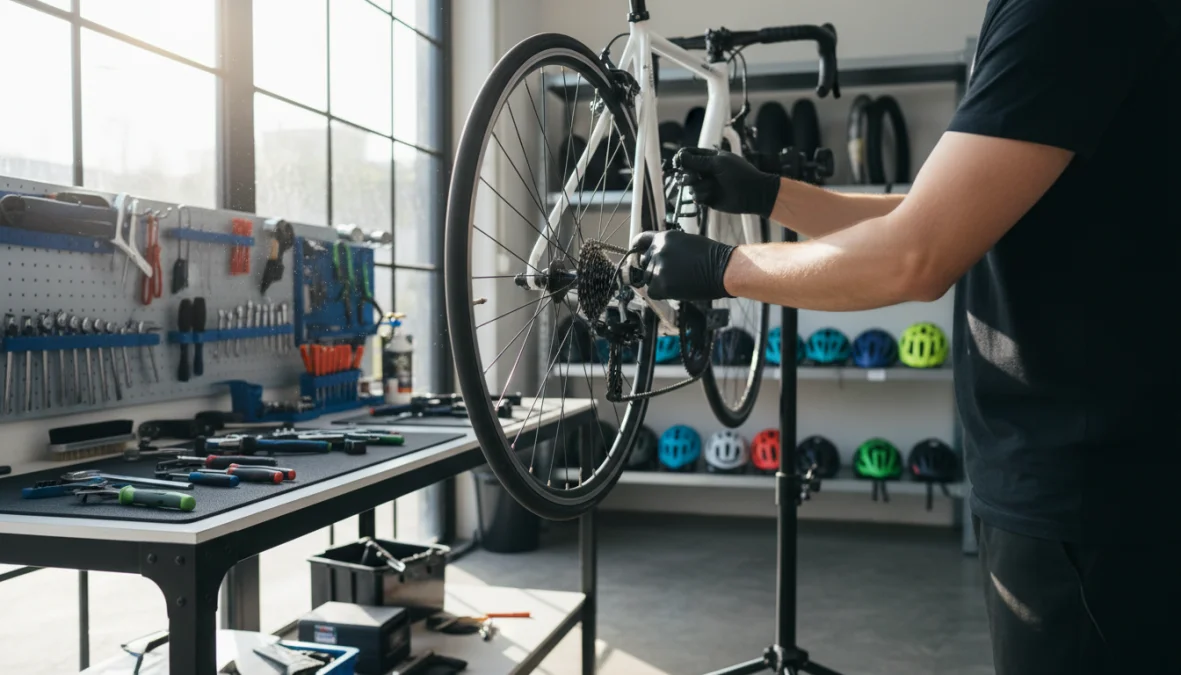
Your bike is your ticket to freedom, fitness, and adventure—but only if it’s running smoothly. Nothing kills the joy of cycling faster than a chain that skips, brakes that squeal, or gears that refuse to shift. The good news? A solid bike maintenance schedule can prevent most issues before they happen, keeping you safe on the road and saving you serious cash on emergency repairs. Whether you’re a weekend warrior or a daily commuter, understanding when and how to maintain your bike isn’t rocket science—it’s just a matter of building the right bike care routine.
Understanding Your Bike Maintenance Schedule: Why Regular Care Matters
Let’s be real: most of us don’t think about bike maintenance schedule until something goes wrong. But here’s the thing—regular maintenance isn’t just about keeping your bike pretty. It’s about safety, performance, and getting the most bang for your buck over the long haul.
A consistent bike care routine does four major things. First, it keeps you safe by ensuring your brakes work when you need them and your wheels stay true. Second, it maintains performance—a well-lubricated chain and properly inflated tires can make every ride feel effortless. Third, it extends your bike’s lifespan dramatically, sometimes by years. And fourth, it saves money by catching small issues before they become expensive problems. Replacing a worn chain costs about $30; replacing a cassette damaged by a neglected chain? That’s $80-150.
When creating your bike upkeep schedule, you’ll want to think about two factors: time intervals and mileage. If you ride regularly, mileage-based maintenance makes more sense. Casual riders might prefer calendar-based schedules. The key is consistency—whether you measure in miles or months, stick to your plan. Just like with optimizing your pedaling rate, regular attention to your bike pays dividends in efficiency and enjoyment.
Complete Bicycle Maintenance Checklist: From Daily Checks to Annual Overhauls
Here’s where the rubber meets the road—literally. This bicycle maintenance checklist breaks down exactly what to do and when, giving you a comprehensive cycling maintenance guide that takes the guesswork out of bicycle service intervals.
Daily/Pre-Ride Checks
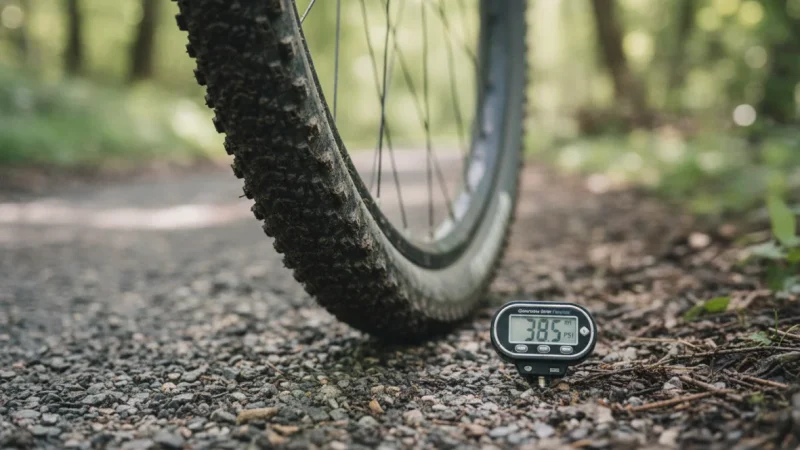
Before every ride, spend two minutes on these quick checks. Perform a tire pressure check—squeeze your tires to ensure they’re firm (or use a gauge for precision). Test your brakes by squeezing both levers hard. Spin the wheels to check for wobbles. Shift through all your gears while the bike is on a stand or flipped. Listen for unusual noises. This simple component inspection takes almost no time but can prevent accidents.
Weekly/Every 100km
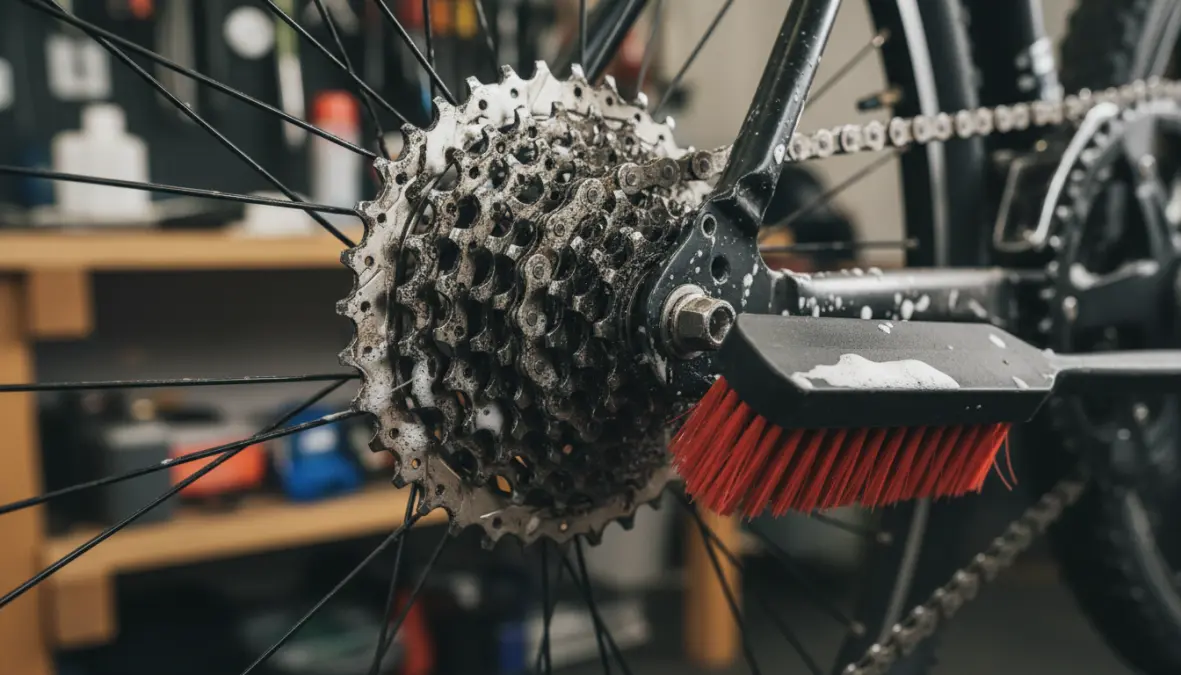
Time for some hands-on love. Clean your chain with a rag (degreaser if it’s really grimy), then apply fresh lubricant—proper chain lubrication is probably the single most important maintenance task you can do. Wipe off excess lube to prevent dirt attraction. Check brake pad wear by looking at the grooves; if they’re nearly gone, order replacements. Inspect your tires for cuts, embedded glass, or excessive wear. A quick drivetrain cleaning at this interval keeps things running silky smooth.
Monthly/Every 300-500km
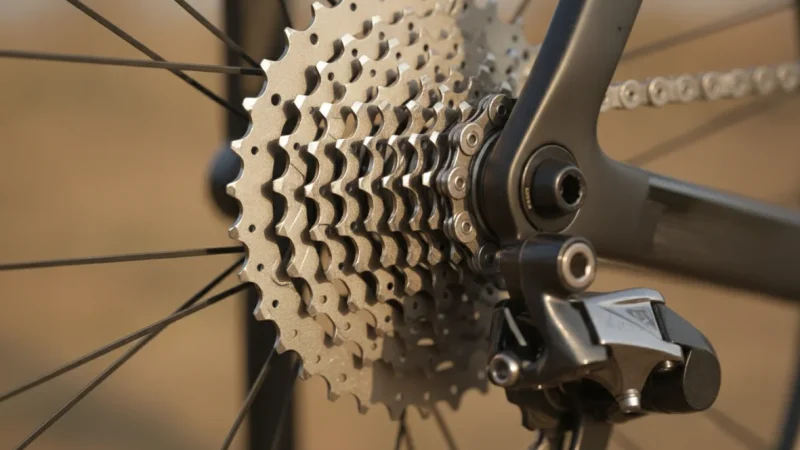
Give your bike a proper bath. Clean the entire drivetrain including cassette, chainrings, and derailleurs. Check all cable housings for fraying. Inspect pivot points and lube them lightly. Check all bolts (especially stem, handlebars, and seat post) for proper torque—they shouldn’t be loose or over-tightened. Look at your brake pads alignment and perform basic brake adjustment if needed. This is also a good time for gear tuning if you’ve noticed shifting issues creeping in.
Quarterly/Every 1,000-1,500km
Now we’re getting serious. Check for spoke tension and perform wheel truing if you notice wobbles (or take them to a shop). Inspect bottom bracket and headset bearings for play or grinding. Clean and inspect your brake rotors (if disc brakes) or rims (if rim brakes). This is when you might notice that cables are starting to fray and plan for cable replacement soon. If you’re transitioning seasons, like moving from indoor to outdoor cycling, a quarterly check is perfect timing.
Annual/Every 3,000-5,000km
This is your complete overhaul time and answers how often should I service my bike professionally. Replace all cables and housing. Have wheel bearings serviced or replaced. Replace your chain even if it seems fine—it’s cheap insurance for your cassette. Get a professional to check your bottom bracket and headset. Consider new bar tape or grips. Check derailleur hangers for alignment. This comprehensive bike service schedule ensures another year of trouble-free riding.
Essential Bike Maintenance Tips: Pro Strategies to Extend Your Bicycle’s Lifespan
Beyond the basic schedule, smart cyclists adapt their bike maintenance tips to their specific situation. Your maintenance needs vary dramatically based on how you ride.
Road cyclists can often extend intervals slightly since they encounter less dirt and mud. Mountain bikers need to shorten everything—that weekly chain cleaning becomes after-every-muddy-ride cleaning. Commuters in wet climates should lube their chains more frequently and check for rust regularly. Salt from winter roads is particularly brutal and requires more frequent drivetrain cleaning. If you ride both gravel and road, adjust your schedule based on the rougher terrain.
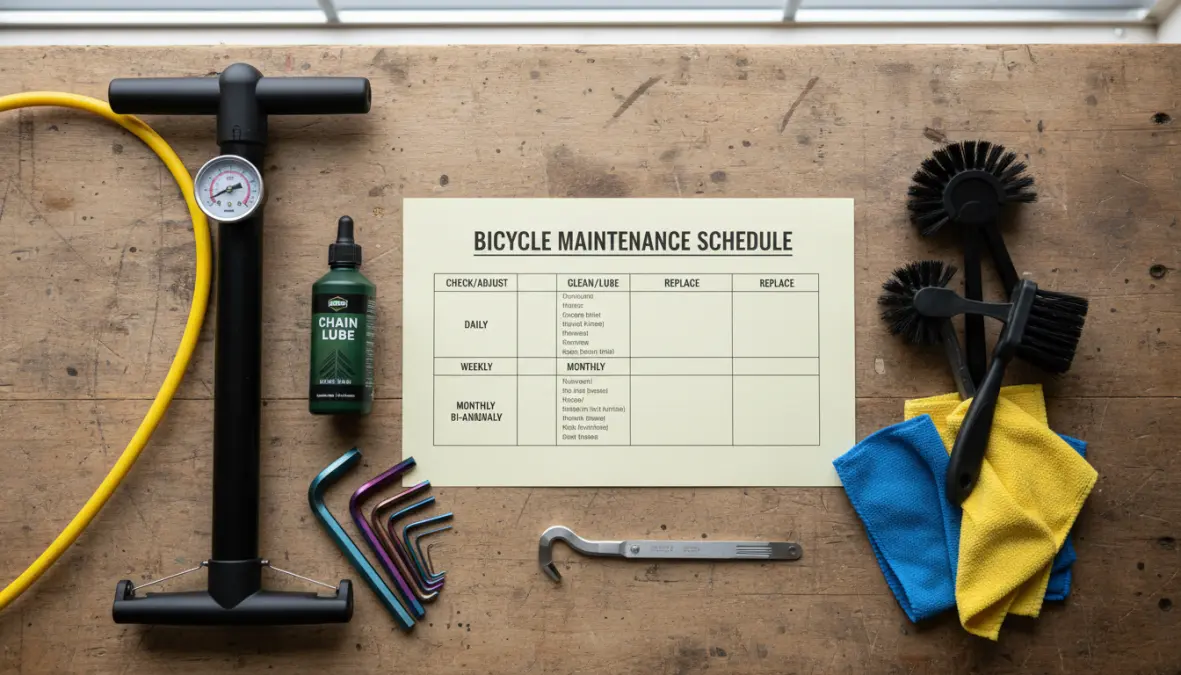
For preventive bike maintenance schedule success, invest in essential tools: a good floor pump with gauge, chain lube appropriate for your climate, degreaser, brushes, hex key set, and a chain wear indicator tool. These basics handle 80% of routine maintenance.
Know when to DIY and when to call a pro. Chain lubrication, tire pressure, and basic cleaning? Easy DIY. But wheel building, hydraulic brake bleeding, and bottom bracket overhauls? Unless you’re confident and have the right tools, leave those to professionals. Watch for warning signs that demand immediate attention: grinding noises, sudden shifting problems, brake fade, or steering that feels loose. These aren’t things to put off.
Keep a maintenance logbook—it can be as simple as notes in your phone. Record what you did and when, along with mileage. This helps you spot patterns and remember when you last replaced components. Plus, it’s valuable documentation if you ever sell your bike. And remember, proper maintenance starts with proper fit—correct bike positioning reduces unnecessary wear on components and prevents injury.
FAQ
How often should I service my bike?
For regular riders, a professional service should happen annually or every 3,000-5,000km. However, you should perform basic maintenance weekly (chain cleaning and lubrication) and more comprehensive checks monthly. Adjust frequency based on riding conditions—mountain bikers and those riding in harsh weather need more frequent service than fair-weather road cyclists.
What maintenance does a bike need most frequently?
Chain lubrication and tire pressure checks are your most frequent tasks, ideally before every ride or at least weekly. These two simple actions prevent the majority of common bike problems and significantly extend component life. A clean, lubed chain and properly inflated tires also make every ride more efficient and enjoyable.
How do I know when my bike needs maintenance?
Listen and feel for changes. Squealing brakes, skipping chains, rough shifting, or unusual noises all signal maintenance needs. Visually inspect for worn brake pads, rusty chains, or low tire pressure. If your bike doesn’t feel as smooth as it used to, it’s probably time for a tune-up. Don’t ignore small issues—they always get worse.
Can I do bike maintenance myself?
Absolutely! Basic maintenance like chain cleaning, lubrication, tire pressure checks, and brake pad replacement are beginner-friendly with minimal tools. Online tutorials make learning easy. However, complex tasks like wheel truing, hydraulic brake service, and bearing overhauls require specialized tools and experience. Start simple and gradually build your skills as you become more confident.
How much does professional bike maintenance cost?
A basic tune-up typically runs $75-150, including brake and gear adjustments, cleaning, and lubrication. A complete overhaul with parts replacement can range from $200-400 depending on what needs replacing. Regular preventive maintenance actually saves money long-term by preventing expensive component failures. Many shops offer maintenance packages that provide better value than one-off services.
Your bike gives you so much—fitness, adventure, freedom, and joy. Return the favor with consistent care. A solid bike maintenance schedule isn’t complicated or time-consuming, but it makes all the difference between rides that feel magical and ones that feel like a struggle. Start with the basics, build your routine, and soon maintenance becomes second nature. Your future self—and your wallet—will thank you every time you throw a leg over that perfectly running machine.