Prescription Cycling Sunglasses: Complete Guide for Glasses Wearers
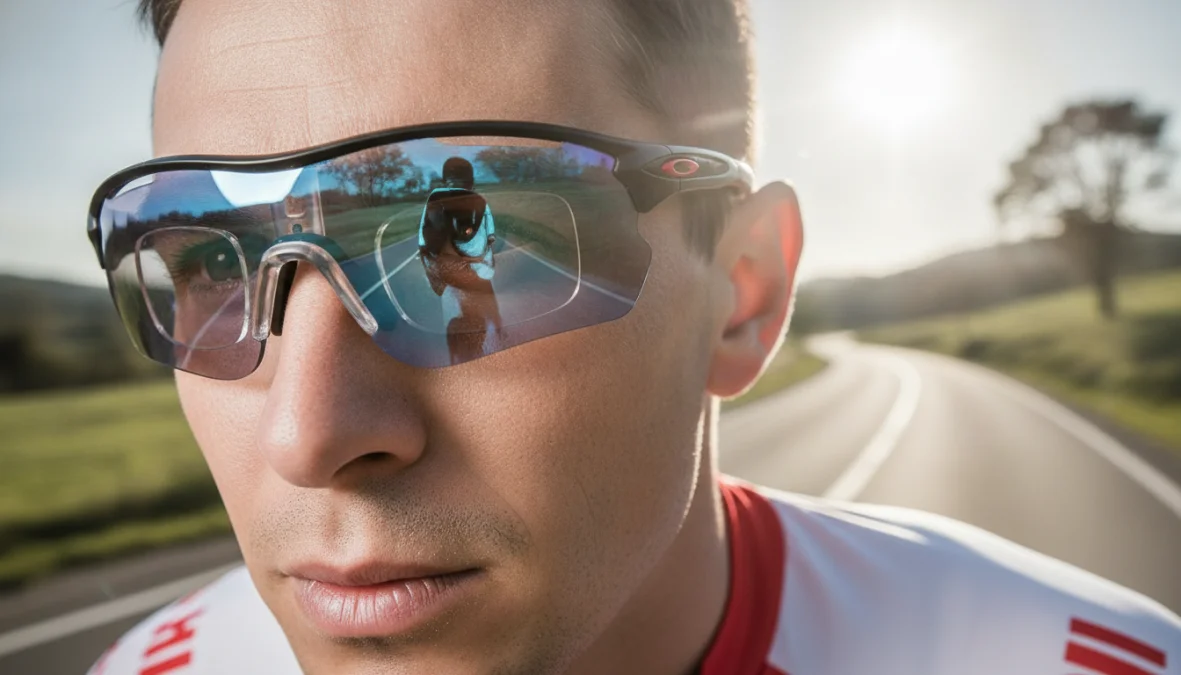
If you’re a cyclist who wears glasses, you’ve probably felt the frustration of trying to find the perfect solution for clear vision on the road. Squinting through regular glasses under a helmet, dealing with fogged lenses on climbs, or trying to cram prescription glasses under standard cycling sunglasses just doesn’t cut it. The good news? Prescription cycling sunglasses have come a long way, offering multiple solutions that combine vision correction with the performance features serious cyclists need. Whether you’re tackling century rides or just enjoying weekend spins, there’s a prescription eyewear option that’ll work for your eyes and your riding style.
Understanding Your Options for Prescription Cycling Eyewear
When it comes to prescription cycling glasses, you’ve got several paths to choose from, and understanding the differences will save you time and money. The main options break down into four categories: direct prescription lenses, optical insert systems, contact lenses with regular cycling sunglasses, and over-the-glasses (OTG) designs.
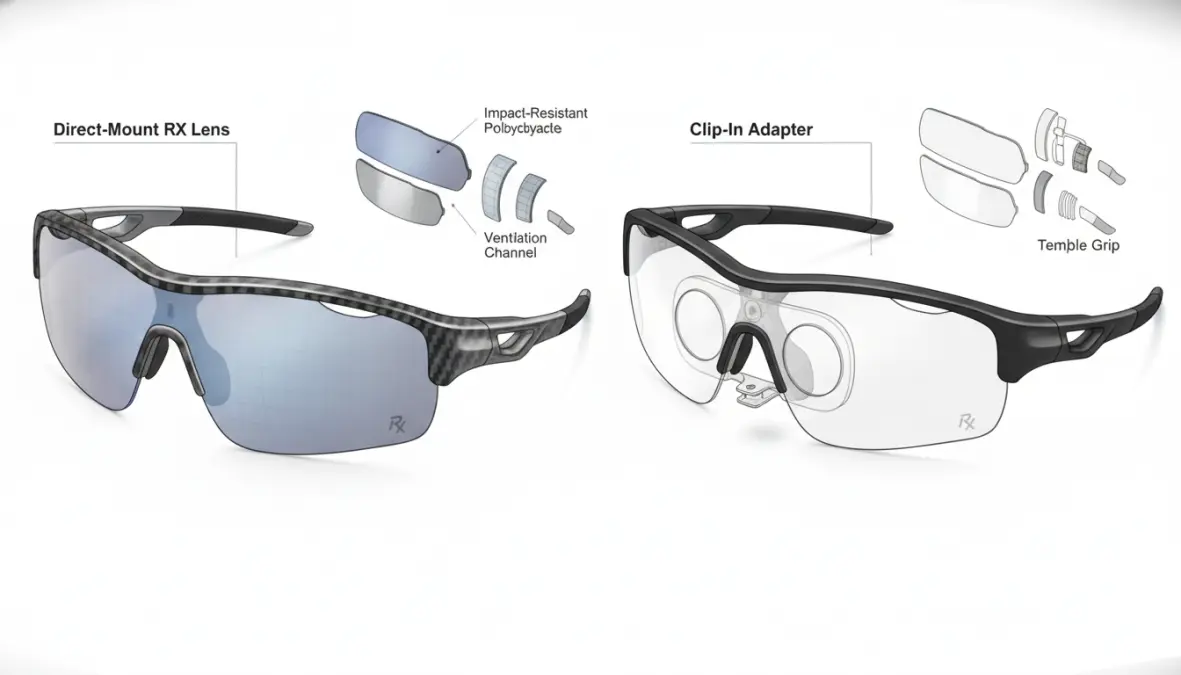
Direct prescription lenses involve having your exact prescription ground directly into the cycling sunglasses lens. This gives you the cleanest optical experience and best aesthetics, but typically costs more (€200-500+ depending on brand and prescription complexity) and takes longer to receive since they’re custom-made. These are the best prescription cycling sunglasses for road biking if budget isn’t your primary concern.
Optical insert cycling systems use a separate clip-in prescription lens that sits behind the main protective lens. These clip-in prescription lenses are increasingly popular because you can swap the outer lens for different conditions while keeping your prescription constant. They’re generally more affordable (€150-300 total) and work brilliantly for mild to moderate prescriptions. Just like optimizing your position affects performance—as discussed in our guide to cycling aerodynamics—the right eyewear setup can significantly impact your riding experience.
Contact lenses plus regular sunglasses remain a viable option for many cyclists, offering the widest selection of frame styles and easiest lens replacement. However, contacts can dry out on long rides, cause issues in dusty conditions, and add ongoing costs. OTG solutions that fit over regular glasses work in a pinch but compromise aerodynamics and often create gaps that let wind and debris through.
Direct Prescription Lenses vs Insert Systems
The debate between rx cycling sunglasses with direct glazing versus insert systems comes down to your priorities. Direct glazing means your prescription is incorporated into the actual shield lens, providing uninterrupted optics and the sleekest profile. There’s no additional adapter adding weight or creating a slight gap between lens elements. For competitive riders or those with simple prescriptions, this is often the gold standard.
Insert systems, on the other hand, excel at versatility. If you’re wondering how to get prescription inserts for cycling sunglasses, most major cycling eyewear brands now offer compatible optical adapters. The beauty here is swapping from clear to tinted to photochromic lenses cycling options without needing multiple prescription sets. The optical quality is excellent for most users, though those with high astigmatism or complex prescriptions might notice slight distortions at the edges.
What to Consider Based on Your Prescription Strength
Your prescription strength plays a huge role in determining which cycling eyewear with prescription will work best. For mild prescriptions (±2.00 diopters or less), you’ve got the full buffet of options. Insert systems work perfectly, direct glazing is straightforward, and lens thickness isn’t a concern.
Moderate prescriptions (±2.00 to ±4.00) start requiring more attention to lens material and grinding techniques. Prescription lens technology using high-index materials keeps things relatively slim, but you’ll want to discuss options with your provider. Corrective lens adapters still function well in this range, though stronger prescriptions create thicker inserts.
Strong prescriptions (over ±4.00) or significant astigmatism limit your options. You’ll likely need direct custom grinding with high-index lenses, and the wraparound design of cycling glasses can create optical challenges. If you’re searching for prescription cycling sunglasses for astigmatism, consult with an optometrist experienced in sports vision correction who can assess whether the curved lens base will work with your specific prescription.
Key Features to Look for in Prescription Sports Sunglasses for Cycling
Once you’ve decided on prescription type, focus on features that matter for cycling performance. Prescription sports sunglasses cycling need to do more than just correct your vision—they’re critical safety and performance equipment.
Wrap design and field of view top the list. Cycling-specific frames provide extensive peripheral coverage, protecting from wind, debris, and UV rays from multiple angles. Look for designs that balance wraparound protection with minimal optical distortion in the curved lens edges.
Lens materials matter significantly. Polycarbonate offers excellent impact resistance and light weight, making it ideal for prescription bike sunglasses. Trivex provides even better optical clarity with similar impact protection, though at slightly higher cost. Both block 100% UV radiation, which is non-negotiable.
Essential lens treatments include:
- Anti-fog coatings that prevent misting during hard efforts or climbs
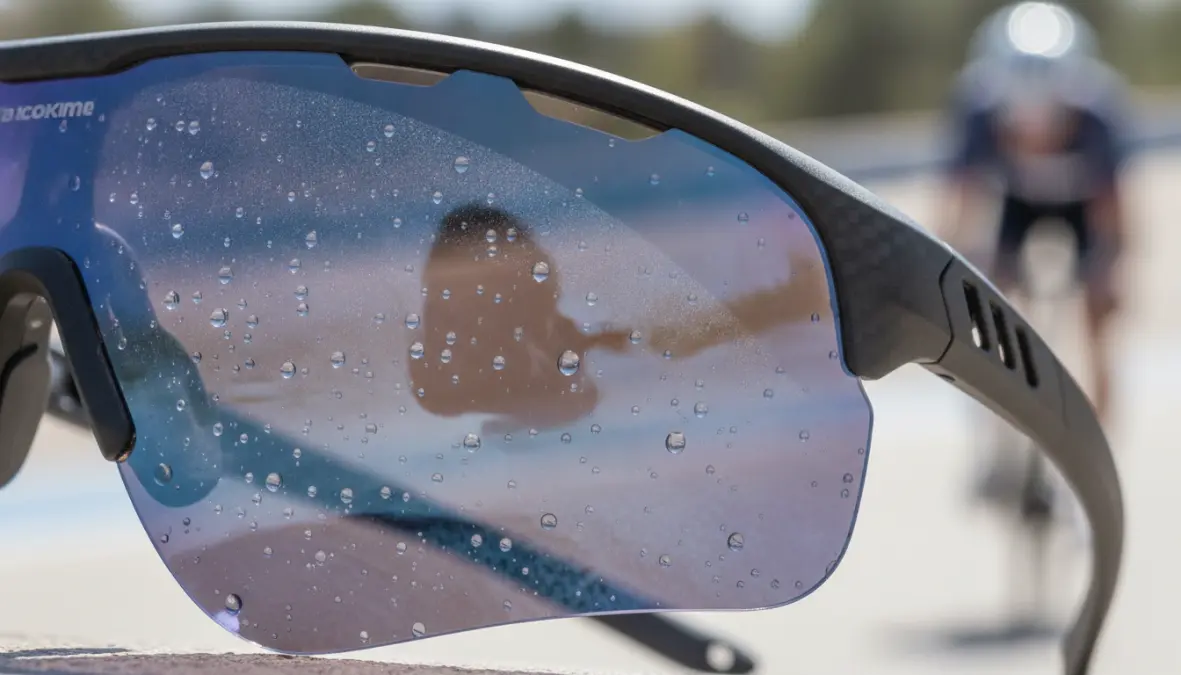
- Hydrophobic treatments that shed water and sweat
- Scratch-resistant hardening for durability
- Mirror or polarized options for glare reduction in bright conditions
Photochromic lenses cycling deserve special mention—these automatically adjust tint based on light conditions, reducing the need to carry multiple lenses. For riders seeking prescription cycling sunglasses with interchangeable lenses, ensure the prescription insert remains secure during lens swaps and doesn’t interfere with the mechanism.
Ventilation prevents fogging but shouldn’t create excessive air flow that dries your eyes. Strategic vents in the lens or frame keep air moving without blasting your corneas. Lightweight prescription cycling eyewear for long rides prevents fatigue and pressure points—anything over 35-40 grams starts feeling heavy after several hours. The fit should be secure enough for descents (similar techniques covered in our descending guide) without creating pressure behind the ears or on your nose.
Making the Right Choice: Popular Brands and What to Expect
The market for cycling sunglasses for glasses wearers spans from premium cycling-specific manufacturers to general sports eyewear brands and budget-friendly options. Premium cycling brands typically offer the best frame geometry for riding positions, most advanced lens technologies, and widest prescription ranges, but expect to pay €250-600. General sports eyewear brands provide solid performance at moderate prices (€150-350), while budget options can get you functional corrective cycling glasses for under €150, though with compromises in optical quality and durability.
When ordering custom rx cycling sunglasses, expect 2-4 weeks for delivery after submitting your prescription. This manufacturing time is why many cyclists considering affordable prescription cycling glasses options buy frames in advance to ensure proper fit before committing to prescription work.
Accurate PD (pupillary distance) measurement is critical for prescription eyewear. While many online retailers provide measurement tools, visiting an optician ensures precision, especially for higher prescriptions. When comparing prescription cycling sunglasses vs contact lenses, factor in the long-term costs: quality prescription cycling glasses last years, while contacts are ongoing expenses plus you still need sunglasses for protection.
Purchase channels matter too. Online retailers often offer better prices but require confidence in fit and measurements. Local cycling or optical shops provide fitting expertise and immediate troubleshooting. Many specialty shops can answer “can you get prescription lenses in cycling sunglasses” for specific frame models and help navigate insurance coverage if applicable.
Testing fit before prescription work is wise—many brands sell frame-only versions or have demo programs. The glasses should sit comfortably with your helmet, not slide during head movements, and provide even pressure distribution. For complex prescriptions or significant astigmatism, consultation with an optometrist experienced in sports eyewear prevents expensive mistakes.
Investment level depends on your riding volume and commitment. If you’re logging serious miles—perhaps following structured training like our spring cycling training programs—premium eyewear pays dividends in comfort and performance. Casual riders might find mid-range options perfectly adequate.
FAQ
Can you get prescription cycling sunglasses?
Absolutely. Most major cycling eyewear brands now offer prescription options either through direct lens grinding or compatible optical insert systems. You can get single-vision, progressive, or specialized prescriptions incorporated into high-performance cycling frames with all the protective features like UV blocking and impact resistance that regular cycling sunglasses provide.
Are prescription cycling glasses worth it?
For anyone who rides regularly, prescription cycling glasses are definitely worth the investment. They eliminate the hassles of wearing contacts during rides, provide better peripheral vision than over-glasses solutions, and integrate seamlessly with helmets and riding positions. The combination of vision correction with cycling-specific features like ventilation, wrap coverage, and optimized optics makes them far superior to makeshift solutions.
How much do prescription cycling sunglasses cost?
Expect to pay €150-600 depending on brand, prescription complexity, and lens technology. Budget options with basic prescriptions start around €150, mid-range quality systems run €250-350, while premium brands with advanced features or complex prescriptions can exceed €500. Insert systems are generally more affordable than direct prescription grinding, and simple prescriptions cost less than complex ones with astigmatism correction.
Can I use my regular prescription for cycling sunglasses?
Yes, your standard eyeglass prescription works for cycling sunglasses, but ensure it’s current (ideally less than two years old). However, discuss with your optician whether the wraparound design or specific frame base curve requires any prescription adjustments. Some high-curve frames need slight modifications to compensate for the lens angle, especially with stronger prescriptions or significant astigmatism.
What’s better for cycling: contacts or prescription glasses?
Both work, but each has advantages. Prescription cycling glasses eliminate contact lens issues like drying, dust irritation, or losing a lens mid-ride. They’re also one-time investments rather than ongoing costs. However, contacts offer unlimited sunglass choices and no prescription constraints on frame selection. Many cyclists keep both options, using prescription glasses for long rides and contacts for racing or social rides where they want specific eyewear aesthetics.
Finding the right prescription cycling sunglasses transforms your riding experience from squinting struggle to clear-eyed confidence. Whether you’re preparing for multi-day adventures like those in our bikepacking guide or simply enjoying clearer views on daily rides, investing in proper prescription eyewear is one of the smartest upgrades you can make. Take time to assess your prescription needs, test different systems, and choose quality that matches your riding ambitions—your eyes will thank you for every kilometer ahead.