Pilates for Runners: Core Workouts to Boost Running Economy and Performance
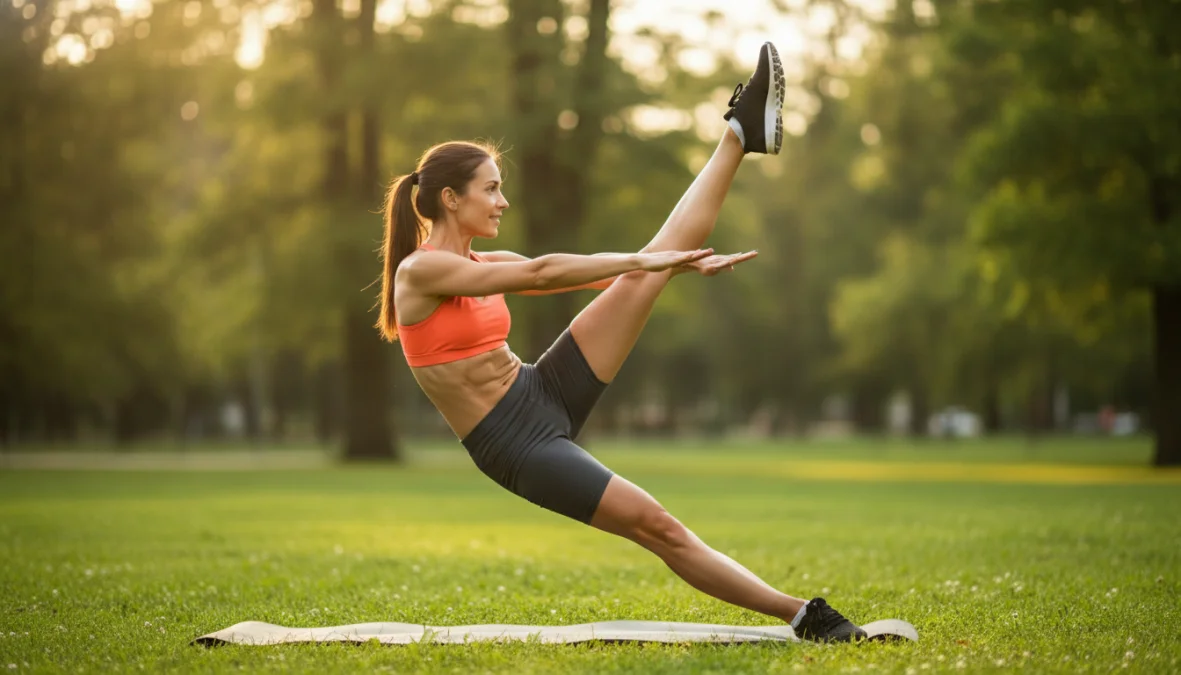
Ever notice how some runners seem to glide effortlessly while others struggle with each stride? The secret often isn’t just in their legs—it’s in their core. Pilates for runners is becoming the not-so-secret weapon for improving running economy, preventing injuries, and shaving precious seconds off your personal best. By strengthening the deep stabilizing muscles that control your every movement, Pilates transforms you from a runner who fights their body into one who moves with fluid efficiency.
Why Pilates Makes You a Stronger, More Efficient Runner
The connection between pilates for runners and improved performance goes far deeper than just “core work.” When we talk about running economy exercises, we’re looking at how efficiently your body uses oxygen at a given pace. Research shows that runners with better core stability and postural alignment use less energy to maintain the same speed—and that’s exactly what Pilates delivers.
Think of your core as the central power station for your running stride. Every time your foot strikes the ground, forces equivalent to 2-3 times your body weight ripple through your body. Without proper runner core strength, that energy dissipates through compensatory movements—your hips drop, your torso twists, and your form deteriorates. Pilates benefits runners by building the deep stabilizers (transverse abdominis, pelvic floor, multifidus) that keep your torso stable while your limbs move dynamically.
Beyond performance, the pilates running performance connection extends to injury prevention. Most running injuries stem from muscle imbalances and poor biomechanics. Pilates addresses these issues head-on by emphasizing balanced muscle development, breathing technique, and body awareness. By correcting postural alignment and strengthening hip flexor strength bilaterally, you’re essentially bulletproofing your body against common running ailments like IT band syndrome, runner’s knee, and lower back pain. For comprehensive injury prevention strategies, combining Pilates with targeted strengthening creates an unbeatable foundation.
Essential Pilates Exercises for Runners to Build Core Strength
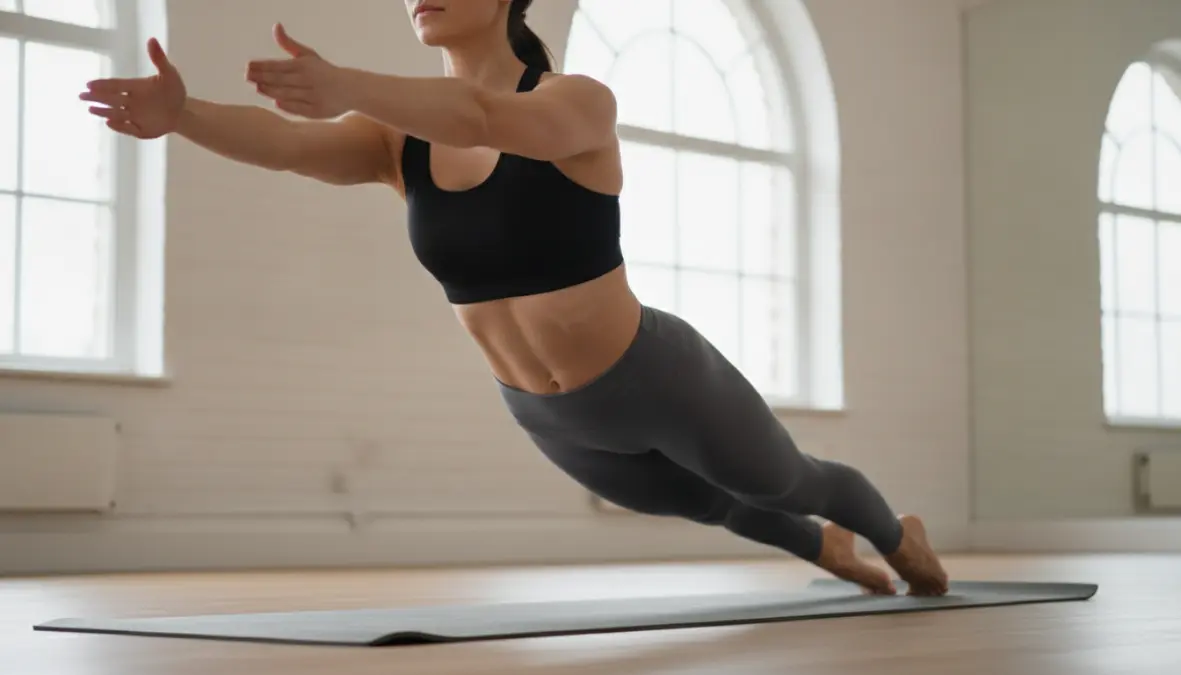
Ready to transform your running with pilates exercises for runners? These core workouts for runners target the specific muscles that directly impact your running efficiency and injury resilience. Each movement focuses on control, precision, and the mind-body connection that makes Pilates uniquely effective.
The Hundred: This classic exercise fires up your entire core while teaching proper breathing technique under load. Lie on your back, lift your head and shoulders, extend legs to 45 degrees, and pump your arms vigorously for 100 counts. This builds the endurance your core needs during long runs and improves your ability to maintain breathing patterns when fatigued.
Single Leg Stretch: Perfect for developing the stability needed for the single-leg stance phase of running. From a supine position, pull one knee toward your chest while extending the other leg, then switch. This movement pattern directly mimics running mechanics while strengthening hip flexor strength and core stability simultaneously.
Plank to Pike: Start in a forearm plank, then lift your hips toward the ceiling, creating an inverted V. This dynamic variation builds shoulder stability and deep core activation necessary for maintaining upright posture during fatigue. It’s one of the best pilates exercises to prevent running injuries by strengthening the entire kinetic chain.
Side-Lying Leg Series: Lying on your side, perform controlled leg lifts, circles, and pulses. This targets the hip abductors and glute medius—crucial for preventing the hip drop that causes knee pain and IT band issues. These muscles control your pelvic stability during the single-leg support phase of running.
Bridge with Leg Extension: From a standard bridge position, extend one leg while maintaining a level pelvis. This exercise is gold for runners because it builds glute strength, hamstring endurance, and teaches pelvic stability—all critical for powerful push-off and running efficiency.
Swimming: Lying prone, alternately lift opposite arm and leg while keeping your core engaged and hips stable. This posterior chain strengthener improves postural alignment and builds the back extensors that prevent the forward lean that develops during long runs.
Dead Bug: On your back with arms extended toward ceiling and knees at 90 degrees, slowly lower opposite arm and leg while maintaining a neutral spine. This anti-rotation exercise is phenomenal for teaching true core stability—the ability to keep your trunk stable while your limbs move independently, exactly what happens when you run.
These pilates improve running exercises work synergistically to address muscle imbalances and build the foundation for efficient, injury-free running. For additional core strengthening strategies specifically designed for endurance athletes, consider integrating complementary movements into your routine.
How to Integrate Pilates into Your Running Training Plan
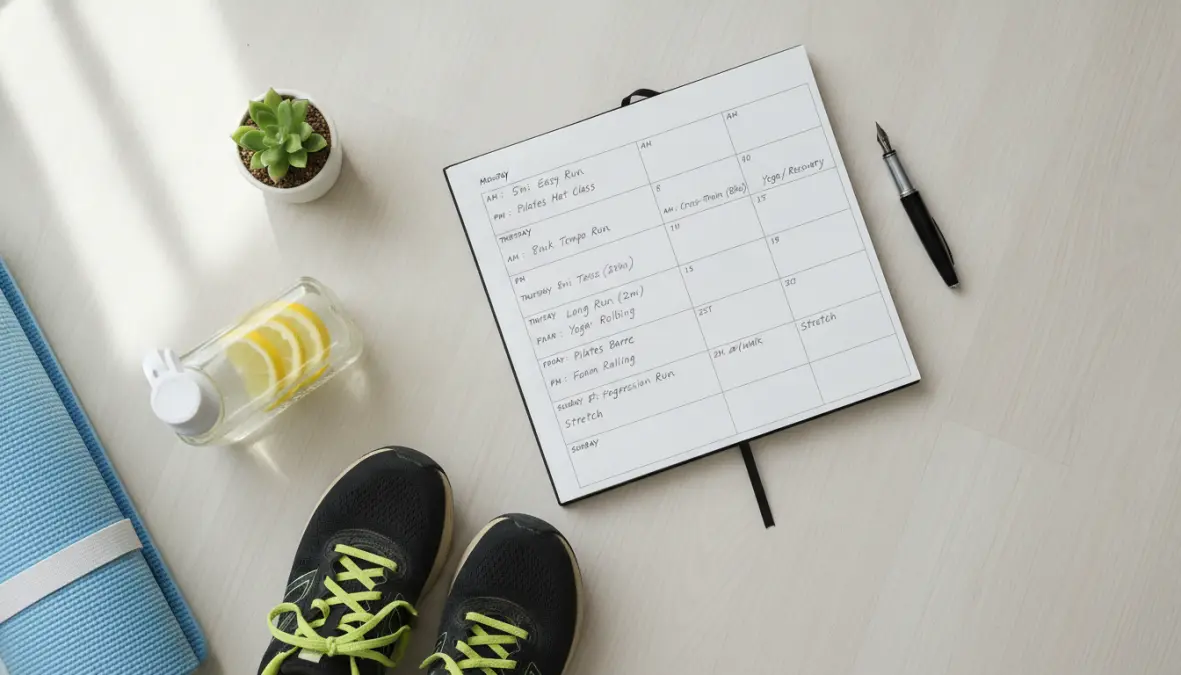
Knowing the best pilates exercises for runners is one thing; actually incorporating them into your training schedule is another. The good news? You don’t need hours of additional training to reap the benefits. Most runners see significant improvements with just 2-3 Pilates sessions per week, each lasting 20-30 minutes.
Timing matters when combining pilates for runners with your regular training. The sweet spot is performing Pilates on easy run days or rest days—never before a hard workout or long run. Your muscles need to be fresh for quality speed work or high mileage. Consider a pilates routine for marathon training that might look like: Monday (hard run), Tuesday (easy run + 25-minute Pilates), Wednesday (rest day with 30-minute Pilates), Thursday (tempo run), Friday (easy run + 20-minute Pilates), Saturday (long run), Sunday (complete rest or active recovery).
For beginners, start with just the fundamentals—planks, bridges, and basic leg series—focusing on perfect form rather than quantity. As you build core stability and body awareness, progress to more dynamic movements and longer holds. Advanced runners can increase intensity by adding small props like resistance bands or slowing down the tempo for greater time under tension.
Equipment-wise, you’ll need minimal investment: a quality exercise mat is essential, and optional props like a small Pilates ball or resistance band can add variety. Many core workouts for runners require nothing but your body weight, making this incredibly accessible training. The key is consistency—regular, focused sessions trump occasional marathon Pilates classes. To avoid overtraining symptoms, ensure your Pilates sessions complement rather than compete with your running volume.
FAQ: Pilates and Running
Can Pilates replace strength training for runners?
Not entirely. While Pilates provides excellent core and flexibility training, runners still benefit from traditional strength training with heavier loads for building maximum strength in the legs and glutes. Think of Pilates as a complement, not a replacement.
How long before I see improvements in my running?
Most runners notice better body awareness and posture within 2-3 weeks. Measurable improvements in running economy and performance typically appear after 6-8 weeks of consistent practice (2-3 times weekly).
Should I do Pilates before or after running?
After is generally better, or on separate days entirely. Doing Pilates before a run can pre-fatigue your core stabilizers, potentially compromising your running form and increasing injury risk.
Is Pilates better than yoga for runners?
Both offer unique benefits. Pilates tends to be more focused on core strength and dynamic stability—directly translating to running performance. Yoga excels at flexibility and mental relaxation. Many runners benefit from incorporating both.
How does Pilates prevent running injuries?
By correcting muscle imbalances, improving postural alignment, and building core stability, Pilates addresses the root biomechanical issues that lead to common running injuries like knee pain, IT band syndrome, and plantar fasciitis.
Whether you’re chasing a new PR or simply want to run pain-free for years to come, integrating Pilates into your training plan is one of the smartest investments you can make. The combination of improved core strength, better breathing technique, and enhanced body awareness creates a powerful foundation for running success. Start with just two 20-minute sessions this week, focus on quality over quantity, and watch as your running transforms from the inside out.