
Polarized Training vs Pyramidal: Which Distribution Works Best for Endurance Athletes

You’ve probably heard coaches and training gurus throw around terms like “polarized training” and “pyramidal distribution” with the confidence of someone who’s discovered the secret to endurance success. But here’s the thing: most athletes are training in a murky middle ground without even realizing it. The debate between polarized training vs pyramidal approaches isn’t just academic—it directly impacts how fast you’ll get, how well you’ll recover, and whether you’ll actually enjoy the process. Let’s cut through the noise and figure out which approach deserves a spot in your training plan.
Understanding Training Intensity Distribution Models
At its core, training intensity distribution is simply how you divide your weekly training volume across different intensity zones. Think of it like budgeting your energy—some goes to easy efforts, some to moderate work, and some to absolute suffer-fests.
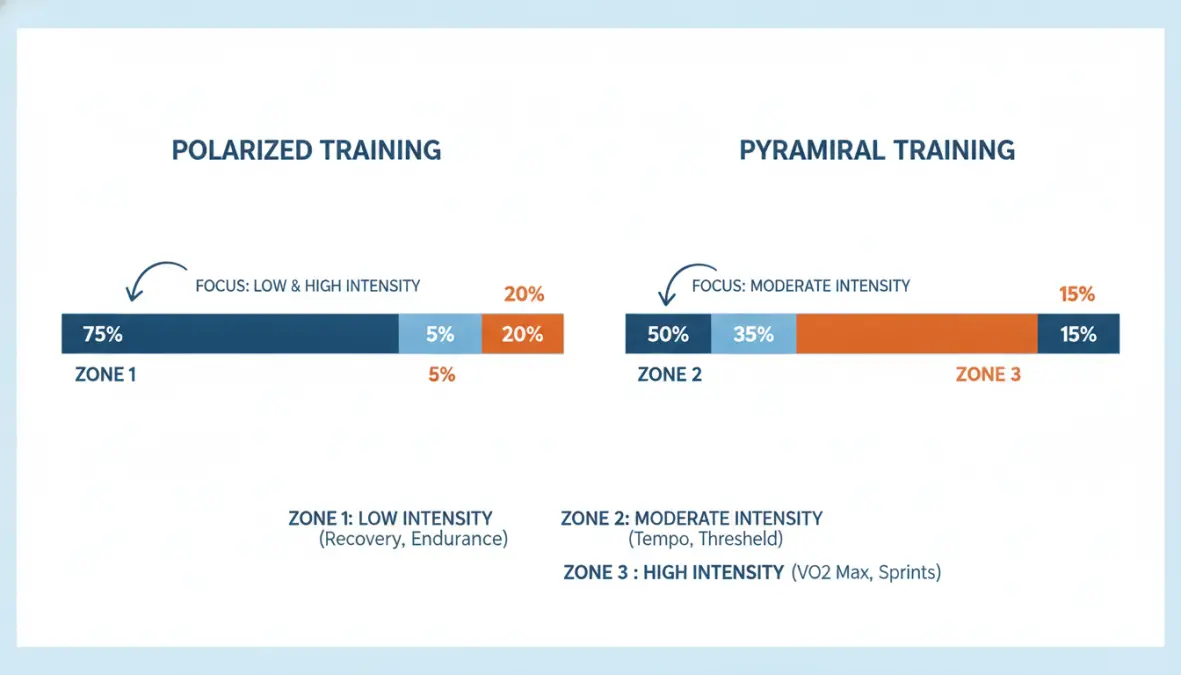
Most scientists use either a 3-zone or 5-zone model based on heart rate zones, lactate measurements, or perceived exertion. In the simplified 3-zone model: Zone 1 is easy conversational pace (below first lactate threshold), Zone 2 is that uncomfortable “tempo” range (between thresholds), and Zone 3 is hard intervals (above second threshold). Polarized training emerged from studying elite Nordic skiers and rowers in the 1990s who, researchers discovered, spent about 80% of training time super easy and 20% going genuinely hard—with almost nothing in between. This 80/20 training method typically breaks down to 75-80% in Zone 1, less than 5% in Zone 2, and 15-20% in Zone 3.
Pyramidal training, by contrast, looks more like what the name suggests: a pyramid with a massive base. Athletes using this approach still do lots of zone 2 training (the true aerobic foundation), but they also include a meaningful chunk of threshold training in Zone 2. The typical pyramidal distribution is 70-80% Zone 1, 10-15% Zone 2, and 5-10% Zone 3. The key difference? Pyramidal training doesn’t avoid the middle zone—it intentionally incorporates it as a training stimulus.
Polarized vs Pyramidal: Key Differences and Scientific Evidence
Now let’s get into the meat of the polarized training vs pyramidal debate. These approaches might seem similar on paper, but they create distinctly different training experiences and potentially different results.
How Each Method Structures Training Volume
Let’s make this concrete with a sample week for a runner logging 8 hours of training. Under a polarized training plan for runners, you might see: 6 hours of truly easy Zone 1 runs (where you could literally sing if you weren’t self-conscious), maybe 20 minutes of Zone 2 work accidentally creeping in, and 1.5 hours of hard VO2 max intervals or race-pace efforts. That’s it. No tempo runs, no “comfortably hard” sessions—just easy and hard.
The same runner using pyramidal training distribution explained might structure the week differently: 5.5-6 hours easy in Zone 1, 1-1.5 hours of tempo or sweet-spot work in Zone 2, and 45 minutes to 1 hour of high-intensity Zone 3 intervals. For cyclists wondering about the best training distribution for cyclists, the pattern holds but might involve more total volume given cycling’s lower impact.
The polarized approach religiously avoids what coaches call the “grey zone”—that moderately hard pace where you’re not recovering but not really getting a strong training stimulus either. Many athletes accidentally spend too much time here, which is why polarized training has gained such traction. If you’re someone who tends to push easy days too hard, learning how to implement polarized training might be exactly what your program needs. You might also benefit from checking out common overtraining symptoms to ensure you’re recovering properly between those hard sessions.
What Research Says About Performance Outcomes
Here’s where it gets interesting. When scientists directly compare polarized vs pyramidal training results, the answer isn’t as clear-cut as social media coaches might suggest. Several studies on well-trained endurance athletes found that polarized approaches led to greater improvements in VO2 max and endurance performance markers over 8-12 week periods. One frequently cited study showed polarized training produced better gains in aerobic capacity compared to threshold-heavy programs.
But—and this is important—other research found no significant difference, or even slight advantages for pyramidal distribution in certain populations. Elite athletes who’ve already been training for years often use variations of pyramidal approaches, suggesting that when asking which training model is most effective, the answer depends heavily on context. Your training age, sport demands, and even genetics play roles.
What most studies agree on: both methods crush the old “moderate intensity all the time” approach that many recreational athletes accidentally fall into. The real enemy isn’t pyramidal or polarized—it’s the undisciplined middle ground where everything feels kinda hard but nothing is truly easy or truly challenging.

Which Training Distribution Is Right for You
Enough theory—let’s talk about your actual training. The question “what is polarized training for endurance?” matters less than whether it fits your life and goals.
Polarized training tends to work exceptionally well for time-crunched athletes who can’t afford junk miles, advanced runners and cyclists preparing for long-distance events, and anyone with a tendency to overtrain. If you’re the type who struggles to keep easy days easy, polarized provides clear guardrails. It’s also brilliant for masters athletes whose recovery capacity has declined—those genuinely easy days allow proper adaptation between hard sessions. Consider pairing this approach with proper sleep optimization for maximum recovery benefits.
Pyramidal training often suits intermediate athletes building their aerobic engine, those with more available training volume who can handle additional moderate work, and athletes preparing for middle-distance races where threshold pace matters enormously. If you’re training for events like Olympic-distance triathlons or 10Ks, some deliberate threshold training provides race-specific preparation. For triathlon training beginners, pyramidal might feel more intuitive initially.
Here’s a secret: elite athletes often blend approaches through periodization. They might use more polarized distribution during base-building phases, then shift toward pyramidal as races approach and race-specific intensity becomes crucial. Cyclists, for instance, might benefit from strength training alongside either distribution method to build power without adding bulk.
Tracking your training distribution requires honest data. Using fitness trackers for multi-sport athletes with heart rate monitoring helps ensure your easy days stay easy and your hard days hit the right zones. Without objective feedback, most athletes drift toward that problematic middle zone.
FAQ
Can you combine polarized and pyramidal training?
Absolutely. Many successful athletes use polarized distribution during base phases for aerobic development, then incorporate more pyramidal elements closer to competitions when race-specific threshold work becomes valuable. This periodized approach leverages the strengths of both models throughout the season.
Is polarized training better for beginners?
Not necessarily. Beginners often benefit from consistent low intensity training without worrying about strict distribution models. As fitness develops, polarized training can prevent the common mistake of making easy runs too hard. Start simple, then refine your approach as you gain experience and training awareness.
How long does it take to see results from polarized training?
Most studies show measurable improvements in VO2 max and lactate threshold within 8-12 weeks of consistent polarized training. However, the discipline required—truly keeping easy days easy—takes mental adjustment. Initial weeks might feel frustratingly slow, but patience pays off with better endurance performance and recovery.
What is the biggest mistake in pyramidal training?
Letting Zone 2 work bleed into too much of your training volume. Pyramidal doesn’t mean “mostly moderate”—it still requires a massive Zone 1 base. Many athletes misinterpret pyramidal as permission to hammer tempo runs constantly, which leads to fatigue without adequate recovery or true high-intensity stimulus.
Do professional athletes use polarized or pyramidal training?
Research on elite endurance athletes shows both patterns, often varying by sport and season phase. Many world-class runners, cyclists, and triathletes use predominantly pyramidal distributions but with disciplined intensity control. The key isn’t the exact model but avoiding excessive moderate-intensity training and ensuring adequate recovery.
The polarized training vs pyramidal debate ultimately misses a bigger point: consistency, proper recovery, and intelligent progression matter more than perfectly hitting distribution percentages. Choose the approach that matches your goals, experience level, and lifestyle—then commit to it long enough to actually see results. Whether you’re tracking zones with technology or using perceived effort, the magic happens when you stop guessing and start training with purpose. Your body doesn’t care about training philosophy debates—it responds to clear, consistent signals. Give it those signals, support them with proper hydration strategies and mental training, and watch what happens.