
Cycling Shoulder Pain: Causes, Prevention, and Corrective Exercises

If you’ve ever climbed off your bike after a long ride with aching, stiff shoulders that feel like they’ve been carrying the weight of the world, you’re definitely not alone. Cycling shoulder pain is one of those nagging issues that catches many riders off guard—after all, your legs are doing all the work, right? Wrong. Your upper body plays a crucial role in stabilizing your position on the bike, and when things aren’t set up correctly or your muscles aren’t prepared for the task, your shoulders take the brunt of it. Let’s dig into why this happens and, more importantly, what you can do about it.
Why Cyclists Experience Shoulder Pain: Common Causes
Understanding shoulder pain cycling starts with recognizing that cycling is fundamentally a static position sport. Unlike running where your arms swing freely, cycling locks you into a fixed posture for extended periods. This static loading creates tension, especially when your bike shoulder pain stems from improper setup or weak supporting muscles.
The most common culprit? Poor bike fit. When your handlebars are too low, too far away, or both, you’re forced into an overly stretched position that dumps weight onto your shoulders and hands. Your shoulders end up acting as shock absorbers rather than stable platforms. A weak core compounds this problem—without adequate core strength to support your torso, your shoulders compensate by bearing more load than they should.
Another often-overlooked factor is breathing patterns. Many cyclists develop shallow, chest-based breathing under exertion, which overworks the accessory breathing muscles in your neck and shoulders (especially the scalenes and upper trapezius). This creates chronic tension that manifests as cycling posture shoulder pain. Additionally, gripping the handlebars too tightly—a common habit when fatigued or nervous—sends tension straight up your arms into your shoulders and neck.
Road Bike vs. Other Cycling Styles
If you’re experiencing road bike shoulder pain, there’s a good reason. Road bikes, particularly racing-oriented models, place riders in an aggressive, aerodynamic position with dropped handlebars positioned significantly lower than the saddle. This forward lean increases the angle at which your shoulders must support your upper body weight. Mountain bikes and hybrid bikes typically feature more upright positions with higher handlebars, distributing weight more evenly and reducing shoulder strain. That’s why you might notice shoulder discomfort intensifies when transitioning to road cycling or after upgrading to a more aggressive race geometry frame.
Upper Back and Shoulder Connection
You can’t talk about shoulder pain without addressing cycling upper back pain—they’re intimately connected through the kinetic chain. Your scapulae (shoulder blades) rest on your ribcage, supported by muscles like the trapezius, rhomboids, and serratus anterior. When these muscles fatigue or become imbalanced, your shoulders lose their stable foundation. The upper trapezius tries to compensate, becoming chronically tight and pulling your shoulders up toward your ears. Meanwhile, weak middle and lower trapezius muscles fail to properly retract and depress the scapulae, creating a cascade of dysfunction that radiates into the rotator cuff and neck.
Corrective Exercises and Stretches for Cycling Shoulder Pain
Now for the good stuff—how to actually fix shoulder pain from cycling. These exercises target the specific muscle imbalances and mobility restrictions that plague cyclists. Aim to perform this routine 3-4 times weekly, especially on rest days or after easy rides.
Doorway Pectoral Stretch: Place your forearm against a doorframe with your elbow at 90 degrees, then gently rotate your body away until you feel a stretch across your chest. Hold 30-45 seconds per side. Tight pecs pull your shoulders forward, so this is essential.
Wall Slides for Scapular Mobility: Stand with your back against a wall, arms in a “W” position. Slowly slide your arms overhead while keeping contact with the wall. This improves scapular stability and shoulder blade movement patterns. Perform 3 sets of 10 reps.
Scapular Push-Ups: In a plank position, without bending your elbows, let your shoulder blades pinch together, then push them apart to round your upper back. This activates the serratus anterior, crucial for shoulder health. Do 3 sets of 12-15.
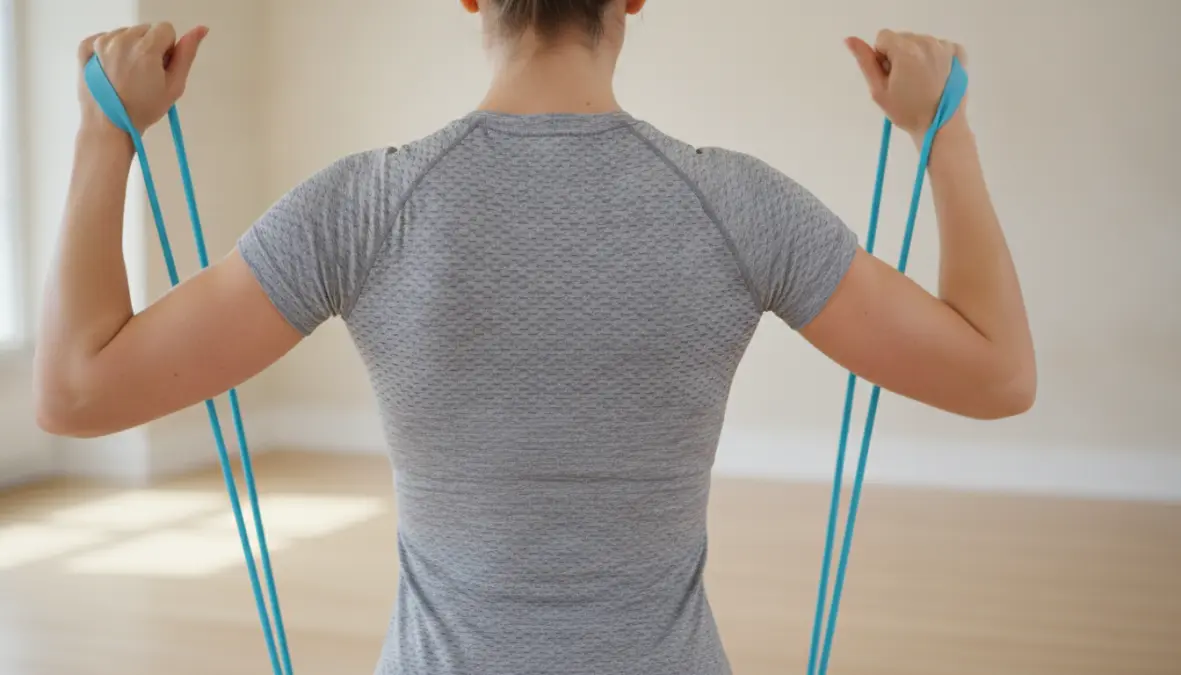
Band Face Pulls: Using a resistance band, pull toward your face with elbows high, squeezing your shoulder blades together. This strengthens the middle and lower trapezius and rotator cuff muscles. Perform 3 sets of 15 reps.
Bent-Over Rows: Whether with dumbbells or a barbell, rows strengthen the rhomboids and lats, countering the forward-hunched cycling position. Focus on squeezing your shoulder blades together at the top. Do 3 sets of 10-12.
Chin Tucks: Gently tuck your chin back (making a “double chin”) to strengthen deep neck flexors and reduce neck tension. Hold 5 seconds, repeat 10 times. This addresses the forward head posture common in cyclists.
Foam Rolling Upper Back: Lie on a foam roller positioned across your upper back, arms crossed over chest. Roll slowly to release tension in the thoracic spine and surrounding muscles. Spend 1-2 minutes daily.
Prevention Tips: Bike Setup and Riding Technique
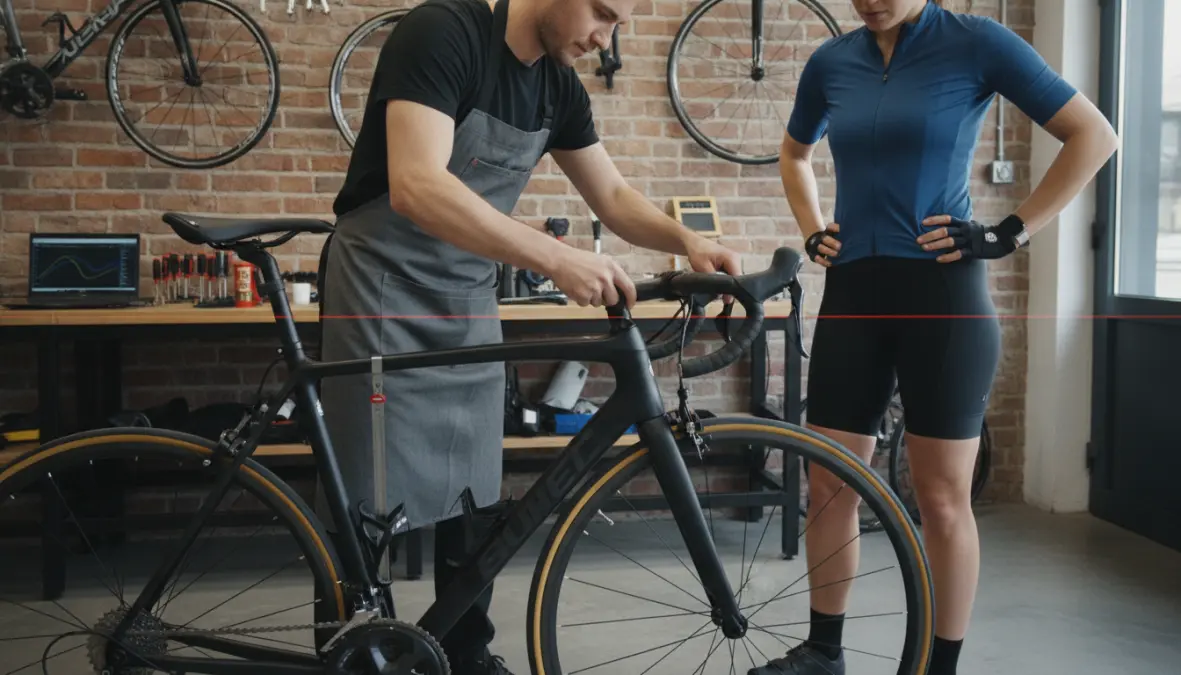
Prevention beats cure every time when it comes to cycling shoulder pain. Start with a professional bike fit—it’s worth every penny. A qualified fitter will assess your flexibility, riding style, and goals to optimize your handlebar height and reach. Even small adjustments (raising your bars 10-15mm, for instance) can dramatically reduce shoulder strain.
During rides, make it a habit to change hand positions frequently. Most road bikes offer tops, hoods, and drops—rotate through them every 10-15 minutes to vary the load on your shoulders and wrists. Consciously engage your core to support your torso rather than dumping weight onto your handlebars. Think about drawing your belly button toward your spine and maintaining a neutral spine rather than collapsing.
On longer rides, take brief stretch breaks every 60-90 minutes. Get off the bike, roll your shoulders, stretch your chest and neck. Practice diaphragmatic breathing rather than shallow chest breathing—this reduces tension in the accessory breathing muscles that attach to your neck and shoulders. Before rides, spend 5-10 minutes on a dynamic warm-up that includes arm circles, shoulder rolls, and thoracic rotations. Post-ride, dedicate time to stretching, particularly your pecs, lats, and hip flexors. For guidance on building comprehensive fitness that supports injury-free riding, check out our complete guide to spring cycling training.
If shoulder pain persists despite these interventions, consult a physiotherapist who understands cycling biomechanics. Similarly, working with an experienced bike fitter can identify position issues you might not notice yourself. Understanding how your riding position affects your body is crucial—much like learning optimal cycling aerodynamics and position can improve performance.
FAQ
How long does cycling shoulder pain take to heal?
Mild cyclist shoulder injury cases typically improve within 1-2 weeks with rest, stretching, and corrective exercises. Moderate cases may require 4-6 weeks, especially if addressing bike fit issues and muscle imbalances. Chronic shoulder pain from poor position or accumulated trapezius strain may take 2-3 months of consistent intervention. If pain persists beyond a few weeks or worsens, consult a healthcare professional to rule out rotator cuff injuries or other structural issues.
Should I stop cycling with shoulder pain?
Not necessarily. If pain is mild and doesn’t worsen during rides, you can continue cycling while implementing corrective measures. However, reduce ride intensity and duration, avoid aggressive positions, and focus on your bike fit. Sharp pain, weakness, numbness, or pain that intensifies during rides requires stopping until evaluated by a professional. Active recovery rides with an upright position can sometimes help by promoting blood flow without aggravating the issue.
Can handlebars cause shoulder pain?
Absolutely. Handlebars that are too low, too far forward, or too narrow force your shoulders into compromised positions. Bars too low create excessive forward lean and cycling posture shoulder pain. Bars too far away overstretch your shoulders. Narrow bars can cramp your shoulder position and restrict breathing. A professional bike fit addresses these variables, and sometimes something as simple as raising your stem or using a shorter reach handlebar can eliminate shoulder pain entirely.
Is cycling bad for your shoulders?
No, cycling isn’t inherently bad for your shoulders—but poor bike fit, weak supporting muscles, and improper technique certainly can be. When properly set up with adequate core strength and good position awareness, cycling can actually improve shoulder stability and endurance. The key is balance: complement your riding with strength work for your upper back and rotator cuff, maintain proper position, and address issues early before they become chronic problems requiring extended time off the bike.
Shoulder pain doesn’t have to be an inevitable part of cycling. By understanding the root causes—whether it’s your bike setup, muscle imbalances, or riding habits—and taking proactive steps to address them, you can ride longer and more comfortably. Your shoulders will thank you, and you’ll enjoy the ride a whole lot more. Now get out there and put these tips into practice!