Cycling Helmet Safety Standards: Your Complete Guide to Choosing the Safest Helmet
You’re gearing up for your next ride, but before you clip in, there’s one piece of equipment that literally stands between your brain and the pavement: your helmet. With dozens of safety certifications, testing protocols, and technologies like MIPS flooding the market, understanding cycling helmet safety can feel more complicated than choosing the bike itself. Let’s cut through the jargon and break down exactly what makes a helmet safe, how to interpret those certification stickers, and which features actually matter when protecting your head.
Understanding Bicycle Helmet Standards and Safety Certifications
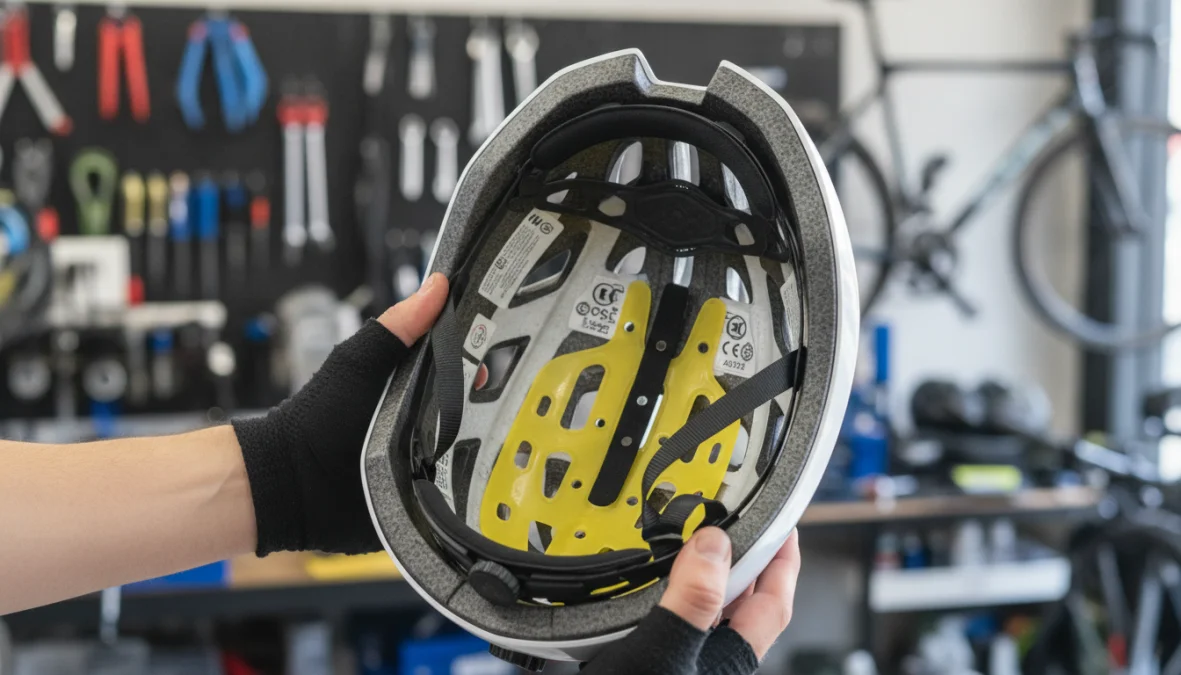
If you’ve ever flipped a helmet over and wondered what those cryptic stickers mean, you’re not alone. Bicycle helmet standards exist because governments and safety organizations have established minimum requirements that helmets must meet before hitting store shelves. The most common helmet safety certifications you’ll encounter depend on where you’re buying.
In the United States, the CPSC certification (Consumer Product Safety Commission) is mandatory for all bike helmets sold. This standard requires helmets to withstand impacts at speeds up to 14 mph and includes tests for strap strength and coverage area. Across the pond, the EN 1078 standard governs European helmets with similar but slightly different testing protocols. Australia and New Zealand use the AS/NZS 2063 standard, while the Snell B-95 certification represents a voluntary, more rigorous testing protocol that exceeds basic requirements.
So what’s the difference between these standards? While they all test helmet impact protection, the specifics vary. CPSC tests impacts from higher drop heights (2 meters) than EN 1078 (1.5 meters), but EN 1078 includes a test for the helmet’s lateral stability that CPSC doesn’t. The Snell standard goes further with multiple impact testing and more stringent retention system requirements.
| Standard | Region | Drop Height | Key Features |
|---|---|---|---|
| CPSC | USA | 2.0m | Mandatory, single impact, peripheral vision test |
| EN 1078 | Europe | 1.5m | Lateral stability test, temperature conditioning |
| AS/NZS 2063 | Australia/NZ | 1.5m | Similar to EN 1078 with regional variations |
| Snell B-95 | Voluntary | 2.2m | Multiple impact testing, stricter retention |
When evaluating how to choose a safe cycling helmet, look for at least one of these certifications on the inside label. Any helmet sold legally in developed markets must meet regional standards, so the presence of these stickers is your baseline assurance.
How Bike Helmet Testing Actually Works
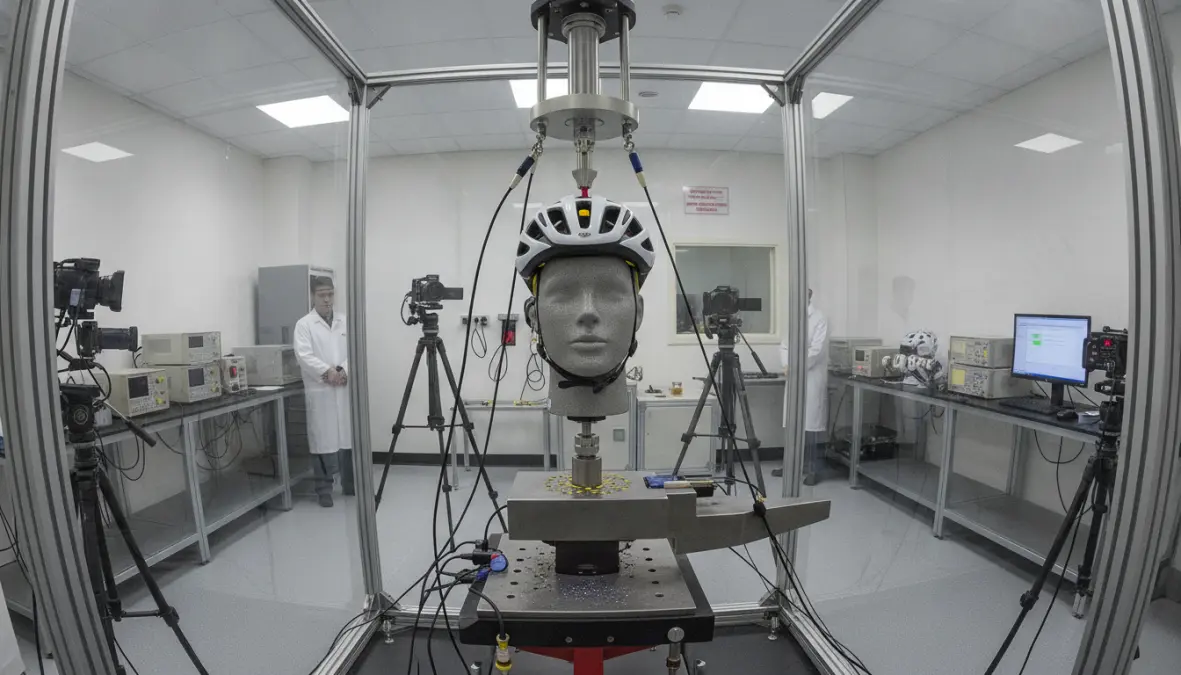
Understanding bike helmet testing helps demystify those certification stickers. The core test involves mounting a helmet on a headform (basically a dummy head) and dropping it onto various surfaces—flat anvils, curbstone-shaped anvils, and hemispherical anvils that simulate different impact scenarios.
During these drop tests, sensors inside the headform measure peak acceleration. Standards typically limit this to around 300g (300 times the force of gravity). Why 300g? Research suggests that accelerations beyond this threshold dramatically increase the risk of serious brain injury. The retention system—your chin strap and buckle—must also withstand specific forces without breaking or stretching excessively, ensuring the helmet stays on your head during impact.
Testing also evaluates coverage, ensuring helmets protect critical areas including temples and the back of the skull. However, here’s what most people don’t realize: standard tests only evaluate impact absorption from direct, perpendicular hits. Real-world crashes often involve rotational forces when your head hits at an angle, which is where newer technologies come into play.
Key Helmet Safety Features That Protect You
Beyond basic certification, several helmet safety features separate adequate helmets from the safest bike helmets available. The most talked-about technology lately is MIPS (Multi-directional Impact Protection System), and for good reason.
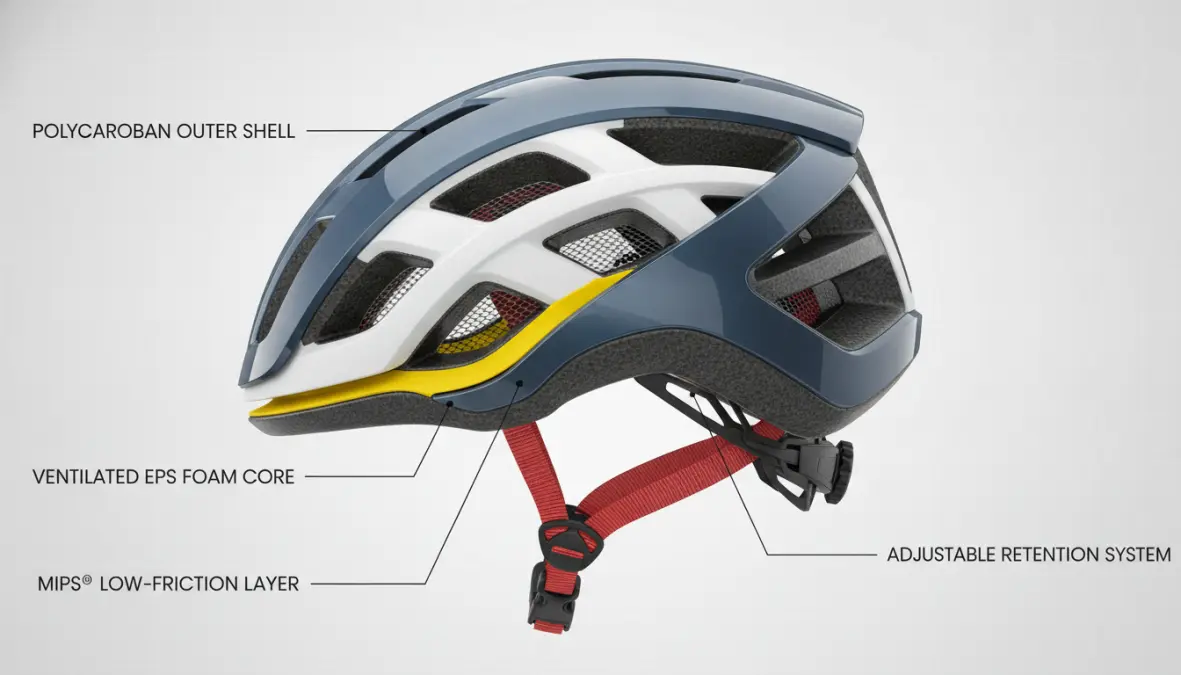
MIPS technology addresses rotational forces by incorporating a low-friction layer inside the helmet that allows 10-15mm of rotation during angled impacts. Studies suggest this can reduce rotational acceleration by up to 40%, potentially lowering the risk of concussion and traumatic brain injury. Similar systems include WaveCel, SPIN, and Koroyd, each using different approaches to manage rotational energy.
The foam liner itself—typically expanded polystyrene (EPS)—is your primary defense against linear impacts. Quality matters here: denser, well-engineered foam provides better impact absorption while managing the delicate balance of being soft enough to crush on impact but firm enough not to bottom out. Some higher-end helmets use multi-density foam, with softer foam for minor impacts and firmer foam for severe ones.
Most cycling helmets are designed for single-impact use, meaning the foam compresses permanently after one crash and must be replaced. A few models use EPP (expanded polypropylene) for multi-impact capability, though these are less common in road cycling due to weight considerations.
Your retention system deserves attention too. Modern systems like Boa dials or ratchet mechanisms allow precise fit adjustment, which is crucial—a helmet that shifts during impact provides less protection. Look for systems that distribute pressure evenly and keep the helmet positioned correctly: level on your head, about two finger-widths above your eyebrows.
Coverage is another critical factor. Helmets designed for mountain biking typically offer more coverage around the temples and back of the head compared to road helmets, which prioritize ventilation. Understanding your riding style helps determine which trade-offs make sense, similar to how you might adjust your nutrition strategy with carb cycling for different training intensities.
What Cycling Helmet Ratings Tell You (and What They Don’t)
While certifications confirm minimum safety standards, cycling helmet ratings from independent testing organizations help identify which helmets perform above baseline. The Virginia Tech Helmet Lab rates helmets on a 5-star scale based on their ability to reduce concussion risk across various impact scenarios. Their testing includes multiple impact locations and velocities, providing a more comprehensive picture than basic certification.
In the UK, the SHARP (Safety Helmet Assessment and Rating Programme) uses a similar star system specifically for motorcycle helmets, though no equivalent exists yet for cycling helmets in that region. These ratings help answer what makes a cycling helmet safe beyond just passing basic tests.
However, ratings have limitations. They can’t account for proper fit—a 5-star helmet that doesn’t fit your head properly will perform worse than a 3-star helmet that fits perfectly. They also don’t evaluate long-term durability or how helmets perform after exposure to UV rays, sweat, and temperature fluctuations. When considering whether to invest in higher-rated helmets, think about your riding exposure: daily commuters and frequent riders benefit more from premium protection than occasional recreational cyclists.
How to Choose the Safest Helmet for Your Riding Style
Choosing the right helmet involves more than grabbing the most expensive option. Start with this checklist for how to choose a safe cycling helmet:
- Verify certification: Check for CPSC, EN 1078, or equivalent stickers inside the helmet
- Ensure proper fit: The helmet should sit level, not rock front-to-back, and feel snug but comfortable
- Test the retention system: Open your mouth wide—the helmet should pull down on your head
- Check manufacturing date: Helmets degrade over time; avoid models older than the current season
- Consider coverage: Match protection level to your riding—more coverage for mountain biking, streamlined for road racing
To verify how to verify helmet safety certification, examine the interior labels and check manufacturer websites. Legitimate brands proudly display their testing compliance. Red flags include missing certification stickers, suspiciously low prices from unknown brands, or helmets marketed for multiple sports without specific cycling certification.
Helmet replacement is non-negotiable after any crash involving head impact, even if damage isn’t visible—the foam compresses microscopically. Even without crashes, replace helmets every 3-5 years as UV exposure, sweat, and material degradation compromise protection. This is as important as any other safety consideration, whether you’re riding in extreme heat or planning multi-day adventures.
For commuters, prioritize visibility features and coverage over weight savings. Road cyclists might opt for lighter, more ventilated designs with MIPS for race day. Mountain bikers should seek extended rear coverage and visor compatibility. The safest bike helmets are the ones that match your specific needs while meeting rigorous standards.
FAQ
What is the minimum acceptable safety standard for cycling helmets?
Any helmet sold in the USA must meet CPSC certification, while European helmets need EN 1078 compliance. These represent the absolute minimum—helmets without regional certification should never be used.
Is MIPS technology worth the extra cost?
For regular riders, yes. MIPS addresses rotational forces that standard tests don’t measure, potentially reducing concussion risk. The typical $20-40 price premium is worthwhile insurance for anyone riding more than occasionally.
How do I verify if a helmet is properly certified?
Check the interior labels for CPSC, EN 1078, or AS/NZS stickers. You can also verify the model on manufacturer websites or contact them directly with the model number.
Are inexpensive helmets safe enough?
Budget helmets meeting CPSC standards provide adequate basic protection—certification is binary, not graduated. However, pricier helmets often offer better ventilation, lighter weight, advanced technologies like MIPS, and superior comfort that encourages consistent wear.
How long does a helmet’s safety certification last?
Certification doesn’t expire, but helmet materials degrade. Replace helmets every 3-5 years regardless of visible wear, as UV exposure and material aging compromise protective properties even without impacts.
What should I do with a helmet after a crash?
Replace it immediately, even without visible damage. The foam structure compresses during impact and won’t provide the same protection in a subsequent crash. Most manufacturers offer crash replacement discounts.
Your helmet is the single most important piece of safety equipment in cycling—far more critical than any performance upgrade or high-tech gadget. Understanding cycling helmet safety standards, features, and proper selection ensures that when it matters most, your helmet does its job. Whether you’re hammering intervals, commuting through traffic, or exploring new trails, invest the time to find a properly certified, well-fitting helmet with modern safety features. Your brain will thank you.