Cycling Pedal Types Explained: Platform vs Clipless vs Hybrid Pedals
Ever stood in a bike shop staring at pedals and wondered why some cost ten times more than others? Or maybe you’ve heard cyclists talk about “clipless” pedals and thought, “Wait, aren’t all pedals clip-less?” You’re not alone. Choosing between cycling pedal types can feel overwhelming, but it doesn’t have to be. Whether you’re commuting to work, hitting mountain trails, or training for your first century ride, the pedals under your feet make a bigger difference than you might think. Let’s break down the three main cycling pedal systems and help you find the perfect match for your riding style.
Understanding the Three Main Cycling Pedal Types
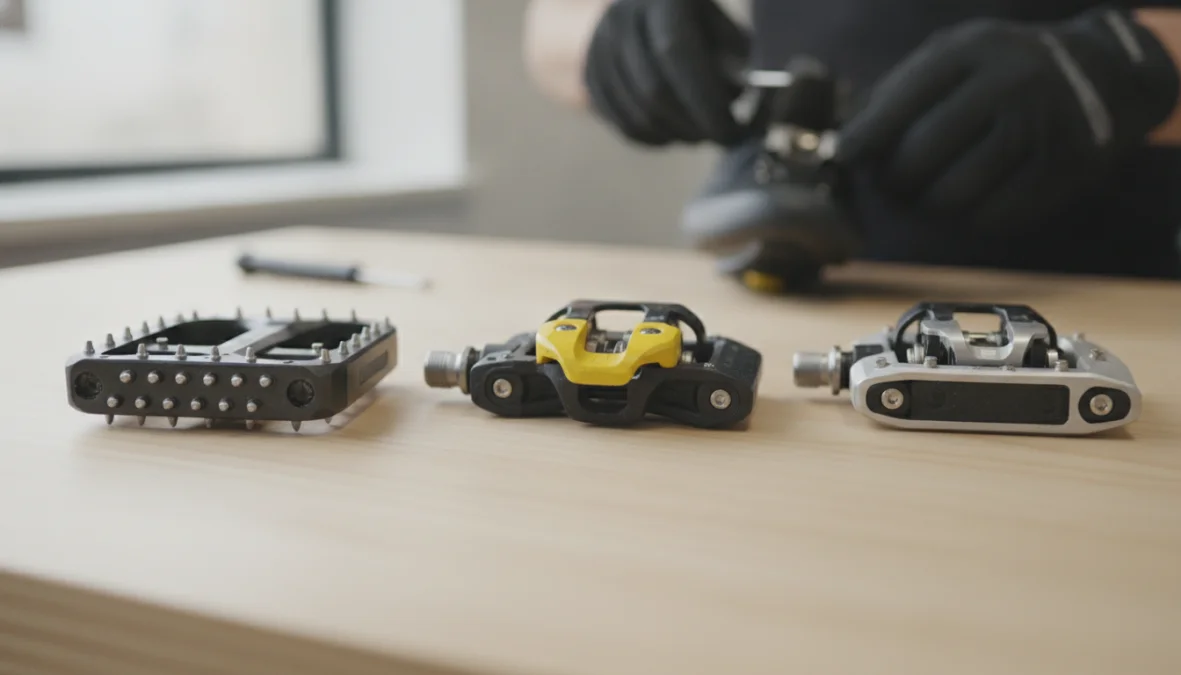
When it comes to cycling pedal types, there are three primary categories: platform (flat) pedals, clipless pedals, and hybrid pedals. Each system has a distinct attachment method and serves different riders with varying experience levels and cycling goals.
Platform pedals are the simple, flat pedals you probably grew up with—just step on and go. Clipless pedals, despite their confusing name, actually do clip your shoe to the pedal using a cleat mechanism (they’re called “clipless” because they replaced the old toe clips and straps system). Hybrid pedals offer both options on one pedal, giving you flexibility depending on your shoes and mood.
Here’s a quick bike pedal comparison to visualize the differences:
- Platform Pedals: No attachment required, use any shoes, easy on/off, lower performance efficiency
- Clipless Pedals: Cleat attachment required, need compatible cycling shoes, learning curve, maximum power transfer efficiency
- Hybrid Pedals: Dual-sided or convertible, offers both platform and clipless options, middle-ground weight and cost
The myth about “clipless” confuses nearly every beginner cyclist. The name refers to the absence of traditional toe clips—those metal cages with straps from decades ago. Modern clipless systems use a spring-loaded mechanism and cleat systems that snap your shoe directly to the pedal, providing superior pedal retention without the clunky cages.

Deep Dive: Platform, Clipless, and Hybrid Pedals Compared
Now that we’ve covered the basics, let’s explore each cycling pedal system in detail to understand the real-world implications of your choice.
Platform (Flat) Pedals: Simplicity and Versatility
Platform pedals are the workhorses of casual cycling. They feature a flat surface, often with metal or plastic pins that grip your shoe sole. High-end models use aluminum or magnesium alloy construction with replaceable pins, while budget options typically feature composite plastic bodies.
The advantages are straightforward: absolute simplicity. You can ride in any footwear—sneakers, sandals, or proper flat-soled mountain bike shoes. There’s zero learning curve, and you can instantly put your foot down at stoplights or in sketchy trail situations. This makes them the best pedals for beginner cyclists who aren’t ready to commit to the clipless experience. They require minimal maintenance beyond an occasional cleaning and bearing service.
However, the flat pedals vs clipless debate reveals some limitations. Without a secure attachment, your foot can slip off during aggressive riding or wet conditions. You’re also missing out on the upstroke portion of your pedal stroke, reducing overall efficiency. On steep climbs, maintaining consistent foot position requires more concentration. When considering platform pedals vs clipless for commuting, platforms win for convenience, but clipless edges ahead for longer distances where efficiency matters.
Choose platform pedals for: urban commuting, casual riding, downhill mountain biking, bike park sessions, or when you’re just starting out and want maximum confidence.
Clipless Pedals: Maximum Efficiency and Power Transfer
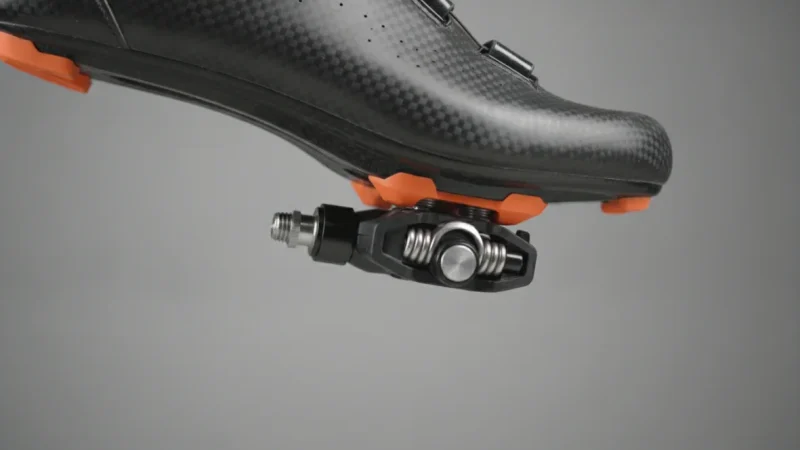
Clipless pedals represent the performance standard in road cycling and cross-country mountain biking. The system works through a cleat mounted to the sole of your cycling shoe that clicks into a spring-loaded mechanism on the pedal. Different brands use proprietary standards: SPD pedals (Shimano’s mountain bike system with recessed cleats), SPD-SL (Shimano’s road system), Look Keo, and Speedplay are the most common.
The clipless pedal benefits are significant. You achieve a complete 360-degree pedal stroke, pulling up on the backstroke and pushing down on the power phase, dramatically improving power transfer efficiency. Your foot stays in the optimal position throughout every revolution, which matters when you’re working on your cadence and pedaling efficiency. You gain superior bike control during technical sections, sprints, and out-of-saddle climbing. Many systems offer pedal float adjustment, allowing slight rotational movement to protect your knees.
But are clipless pedals worth it? That depends on your goals. The downsides are real: there’s a learning curve that often includes at least one stationary fall (usually at a stoplight with witnesses). Cycling shoes compatibility means investing in dedicated footwear that’s often awkward for walking, especially road models. The entry and exit mechanism requires practice to master, and you’ll need to remember to unclip before stopping—a lesson learned exactly once by most riders.
Clipless pedals are ideal for: road cycling, racing, long-distance touring, performance-oriented riding, and when you’re ready to take your training to the next level.
Hybrid Pedals: The Best of Both Worlds?
Hybrid pedals attempt to solve the platform-versus-clipless dilemma by offering both on a single pedal. Most feature a clipless mechanism on one side and a flat platform on the other, though some use convertible platforms that accept clip-in attachments.
The flexibility is appealing: ride clipped in during your training ride, then flip the pedal for your coffee stop or grocery run in normal shoes. They’re excellent for bike commuters who want efficiency during the ride but walkability at their destination. They also provide a gradual transition path—you can practice clipping in on quiet roads while keeping the platform option available for busy intersections.
Discussing hybrid pedals pros and cons honestly, they do make compromises. They’re typically heavier than dedicated platforms or clipless pedals because they’re essentially two pedals in one. The platform side is rarely as grippy as a proper flat pedal, and the clipless side often has a smaller engagement area than a dedicated clipless model. They’re frequently more expensive than choosing one type or the other. When asking what pedals do professional cyclists use, you’ll never see hybrids—pros choose specialized equipment optimized for their specific discipline.
Consider hybrid pedals if you’re: commuting by bike regularly, riding gravel with mixed terrain, wanting to test clipless before fully committing, or need genuine versatility more than absolute optimization.
How to Choose the Right Pedal Type for Your Cycling Style
Making the right choice among cycling pedal types comes down to matching your equipment to your actual riding—not the riding you imagine doing. Here’s a practical decision framework:
For road cycling and racing: Clipless pedals are the standard. The efficiency gains matter over long distances, and the performance advantages are undeniable. If you’re serious about maximizing your speed and efficiency, clipless is non-negotiable.
For mountain biking: The answer depends on your style. Cross-country and trail riders overwhelmingly prefer clipless (usually SPD) for climbing efficiency and technical control. Downhill, enduro, and bike park riders often choose platforms for the ability to quickly adjust foot position and bail out when needed. When comparing clipless vs platform pedals for mountain biking, consider the terrain and your confidence level.
For commuting and urban cycling: Platforms or hybrids make the most sense unless your commute is long enough that efficiency matters more than convenience. Being able to wear normal shoes and quickly step off at intersections outweighs the marginal performance gains for most commuters.
For touring and bikepacking: Many experienced riders choose SPD-style clipless pedals with recessed cleats that allow relatively normal walking. However, some long-distance touring cyclists prefer quality platform pedals to avoid foot hotspots and maintain footwear flexibility.
For gravel and mixed-surface riding: Hybrids or mountain bike clipless pedals work well, offering efficiency on pavement and control on dirt while still allowing walkability.
Budget considerations matter too. A quality platform pedal setup might cost $50-150. Clipless requires both pedals ($80-300) and compatible shoes ($75-400+), representing a significant investment. Factor in the total cost when deciding.
If you’re wondering how to choose cycling pedals as a beginner, start with platforms. Once you’re comfortable handling your bike and have ridden consistently for a few months, then consider whether clipless benefits align with your cycling goals. When you do make the switch, practice the entry and exit mechanism in a safe environment—like grass or near a wall—before heading into traffic. And when you’re ready to transition your riding to new challenges, your pedal choice should evolve too.
There’s no universally “best” pedal type—only the best pedal for your specific needs, experience level, and cycling style. Take an honest assessment of where and how you actually ride, factor in your budget and commitment level, and choose accordingly. The right pedals will feel like a natural extension of your bike, supporting your cycling journey rather than complicating it.