Cycling Computer vs Smartphone: Which Navigation Solution Is Best for Your Rides
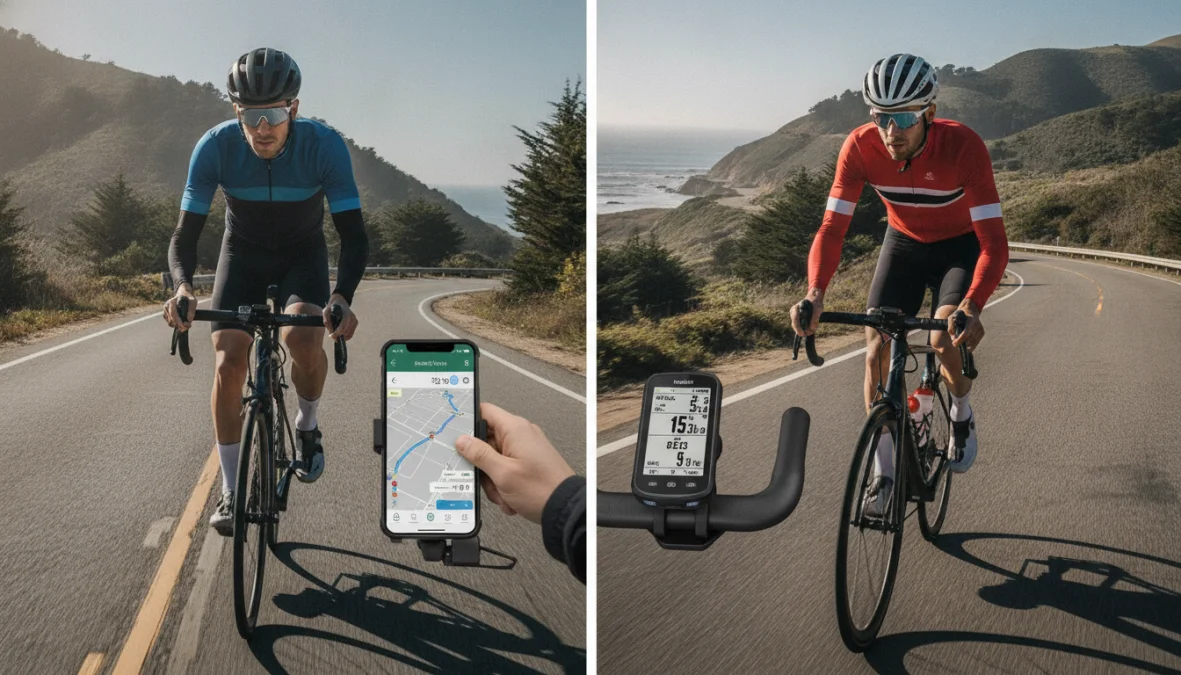
You’re planning a weekend ride and need navigation. Should you mount your smartphone on the handlebars or invest in a dedicated GPS cycling computer? It’s a question that sparks heated debates in cycling communities, and the answer isn’t always straightforward. Both options have their champions and critics, but understanding the real-world differences between a cycling computer vs smartphone setup can save you money, frustration, and maybe even a few wrong turns on your next adventure.
Cycling Computer vs Smartphone: Key Differences That Matter
The bike computer vs phone debate boils down to specialization versus versatility. A dedicated cycling navigation device is purpose-built for one job: tracking and guiding your rides in any condition. Your smartphone, meanwhile, is a Swiss Army knife that can handle navigation but wasn’t designed specifically for the rigors of cycling.
The most noticeable difference? Battery consumption. Running GPS navigation on your phone during a four-hour ride can drain 60-80% of your battery, leaving you anxious about making it home—or worse, stranded without communication. Dedicated cycling computers sip power conservatively, often lasting 15-30 hours on a single charge.
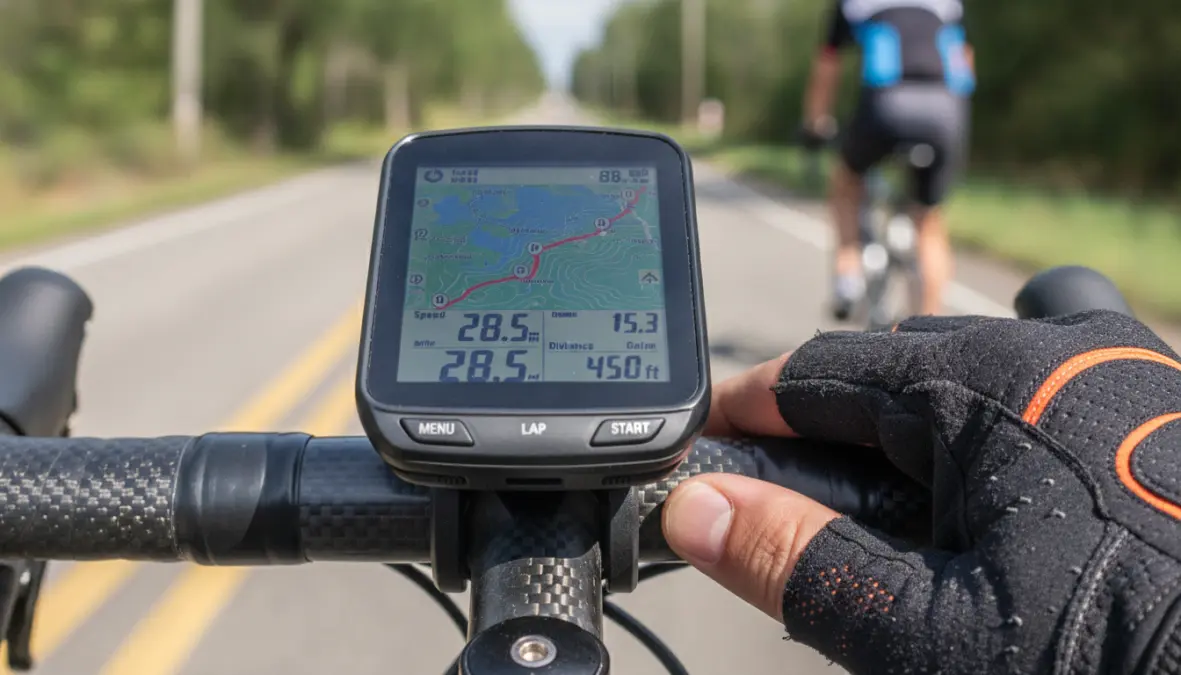
Screen visibility sunlight is another critical factor. Try reading your phone’s screen on a sunny afternoon ride, and you’ll understand why cyclists squint at their handlebars. Cycling computers use high-contrast displays specifically engineered for outdoor visibility, readable even in direct sunlight without maxing out brightness settings that kill battery life.
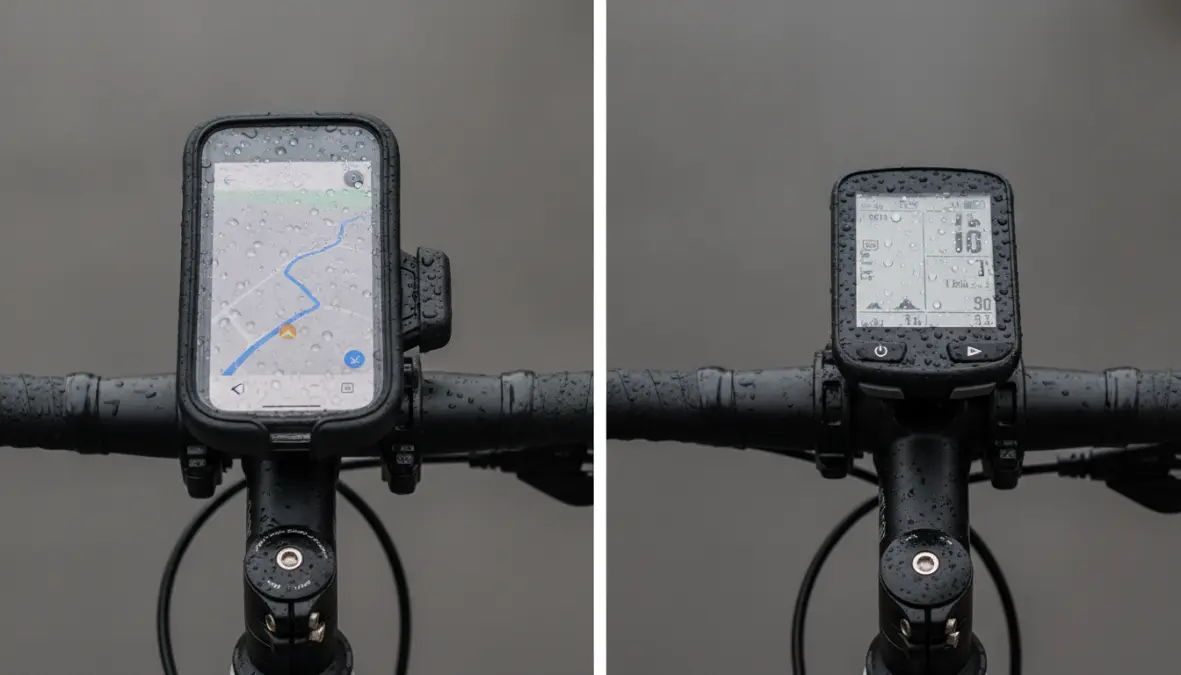
Then there’s weather resistance. Most smartphones claim water resistance, but “splash-proof” doesn’t mean “torrential downpour on a Scottish Highland ride.” Cycling computers are built to handle rain, mud, sweat, and the occasional stream crossing. Your $1,000 smartphone? Not so much. Plus, trying to operate a touchscreen with wet hands or touchscreen gloves ranges from frustrating to impossible, while cycling computers typically feature physical buttons that work in any condition.
Performance Comparison: GPS Accuracy, Battery Life, and Real-World Usability
When evaluating a GPS cycling computer against a smartphone, performance differences become apparent on actual rides. Modern smartphones have excellent GPS chips, but they’re optimized for urban navigation and battery conservation, not continuous tracking during athletic performance.
A quality bike navigation system typically connects to multiple satellite networks (GPS, GLONASS, Galileo) simultaneously, providing superior accuracy in challenging environments like dense forests or urban canyons. This matters when you’re following turn-by-turn directions on unfamiliar gravel roads where a 20-meter error could send you down the wrong path.
The cycling GPS comparison reveals distinct advantages for dedicated devices:
- Battery endurance: 15-40 hours vs. 4-6 hours for smartphones with continuous GPS
- Sensor integration: Native support for cadence sensor, heart rate monitor, and power meters without draining extra battery
- Offline maps: No data consumption or signal dependency in remote areas
- Ride-specific metrics: Elevation gain, gradient, training load calculated automatically
- Handlebar security: Designed to stay mounted through rough terrain and vibrations
However, smartphones aren’t without merit. Their larger, color touchscreens excel at detailed map visualization during route planning. The integration with apps like Strava, Komoot, and RideWithGPS is often smoother, and you’re carrying your phone anyway for emergencies and photos. If you’re training indoors occasionally, you might also appreciate how indoor cycling apps work seamlessly with your smartphone ecosystem.
For competitive cyclists focused on performance metrics, the cycling computer benefits extend beyond navigation. Data accuracy matters when you’re analyzing your cadence training or fine-tuning nutrition strategies with carb cycling protocols.
Cost Analysis: Initial Investment vs Long-Term Value
Here’s where the cycling computer vs smartphone equation gets interesting. A decent smartphone bike mount costs $20-40, making it tempting to skip the $200-600 investment in a dedicated GPS unit. But is a cycling computer better than a phone when you factor in long-term costs?
Consider the hidden expenses: accelerated phone battery degradation from constant GPS use, potential water damage not covered by warranty, screen cracks from crashes, and mobile data consumption if you’re not using offline maps. Over two years of regular riding, these can exceed $200.
Meanwhile, a mid-range cycling computer (around $250-350) offers durability that outlasts phone upgrade cycles. The advantages of dedicated cycling computer devices include crash replacement programs, longer product lifecycles, and no need to replace them when you upgrade your phone.
For casual riders doing occasional urban spins, a quality smartphone mount makes financial sense. But if you’re logging 3,000+ miles annually or tackling challenging terrain, the cycling computer worth it over phone calculation tilts toward the dedicated device—especially when you consider the peace of mind of having your phone fully charged for emergencies.
Which Navigation Solution Should You Choose?
So, should I buy a cycling computer or use my phone? The answer depends entirely on your riding style and priorities.
Use your smartphone if: You’re a casual urban cyclist doing rides under 90 minutes, mostly in good weather, on familiar routes where navigation is occasional rather than constant. A reliable smartphone bike mount and a good waterproof case will serve you well. Just carry a portable battery pack for longer adventures.
Invest in a cycling computer if: You’re a serious road cyclist, endurance rider, or bikepacker tackling long distances where battery life and reliability matter. If you’re exploring new routes regularly, riding in variable weather, or need precise performance metrics with external sensors, a dedicated cycling navigation device is the smarter choice. This is especially true for those transitioning from indoor to outdoor cycling who want consistent data tracking.
Mountain bikers face unique considerations. The combination of rough terrain, remote locations, and longer ride times makes dedicated computers nearly essential. When you’re navigating technical trails where glancing at your navigation for even two seconds matters, button-operated devices win every time.
Gravel riders and bikepackers doing multi-day adventures where cycling computer vs smartphone battery life becomes critical should definitely lean toward dedicated units with extended battery modes. If you’re already investing in your setup—perhaps choosing between a gravel bike vs road bike—don’t compromise on navigation reliability.
FAQ: Cycling Computer vs Smartphone Questions Answered
Can I use my phone as a bike computer?
Absolutely. Modern smartphones with bike navigation system apps like Strava, Komoot, or Wahoo Fitness can track rides, provide turn-by-turn navigation, and record performance data. You’ll need a secure mount and should be mindful of battery drain and weather exposure.
Do cycling computers work without a phone?
Yes, most GPS cycling computer units function completely independently. They have built-in GPS, can store maps offline, and record all ride data without any phone connection. Some offer Bluetooth connectivity for post-ride syncing, but it’s optional.
Is a cycling GPS worth it?
If you ride frequently (3+ times weekly), in varied conditions, or on routes longer than two hours, the investment pays off through better battery life, durability, and specialized features. The best navigation solution for cycling depends on whether convenience or performance is your priority.
Will using GPS drain my phone battery?
Yes, significantly. Continuous GPS tracking with the screen on can consume 15-20% battery per hour. On a four-hour ride, expect 60-80% drain, leaving little reserve for communication or emergencies.
Are bike computers more accurate than phones?
Generally yes, especially for cycling-specific metrics. Dedicated devices use multi-satellite systems optimized for continuous tracking and integrate more precisely with cadence sensor and heart rate monitor data. Can smartphone replace bike computer functionality? For basic tracking, yes—but precision suffers in challenging conditions.
The bike computer vs phone decision ultimately reflects your cycling ambitions. If you’re content with casual riding and occasional navigation, your smartphone handles the basics admirably. But as your rides become longer, more adventurous, and performance-focused—much like athletes optimizing their spring training or aerodynamic setup—a dedicated cycling computer becomes less luxury and more necessity. Choose based on where you are today, but consider where your cycling journey might take you tomorrow.