Cycling Skinsuit vs Jersey: Which Offers Better Aerodynamics and Comfort?
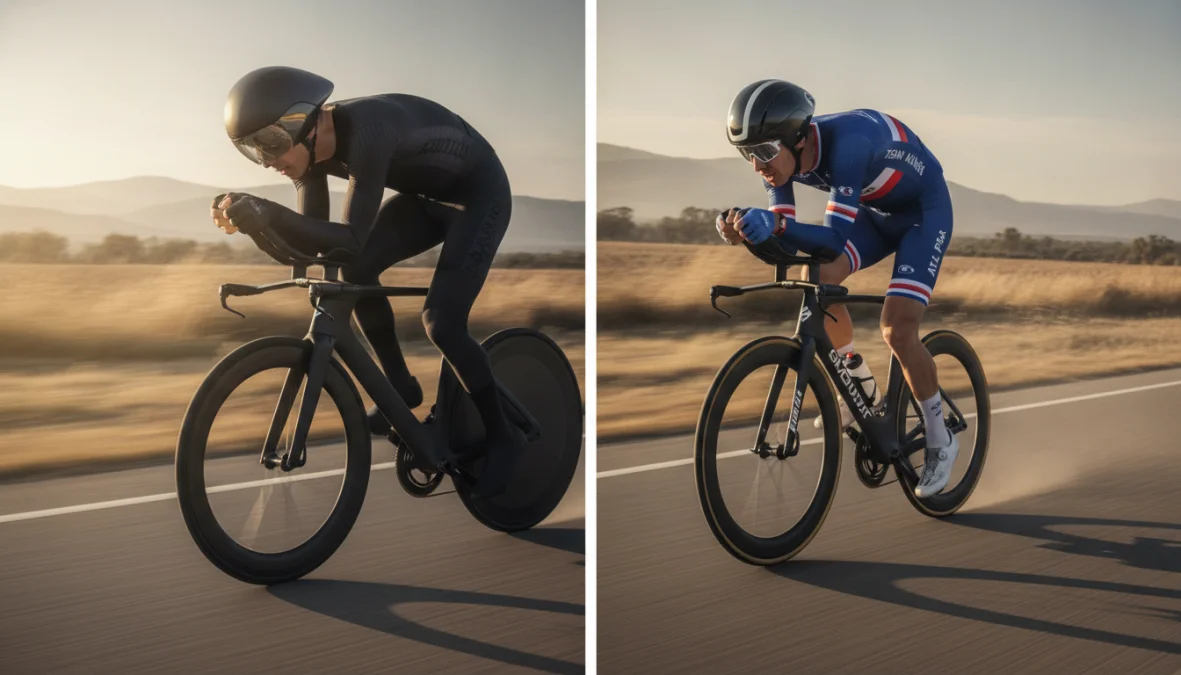
You’ve probably watched the Tour de France time trials and noticed riders clad head-to-toe in skin-tight suits, looking like they’ve been vacuum-sealed into their kits. Meanwhile, regular road stages show cyclists in traditional jerseys paired with bib shorts. This isn’t just a fashion statement—it’s a deliberate choice rooted in performance science. The cycling skinsuit vs jersey debate centers on two critical factors: aerodynamics and comfort. Understanding when each option shines can save you watts, time, and potentially discomfort on your next ride.
Understanding the Key Differences: Skinsuit vs Jersey
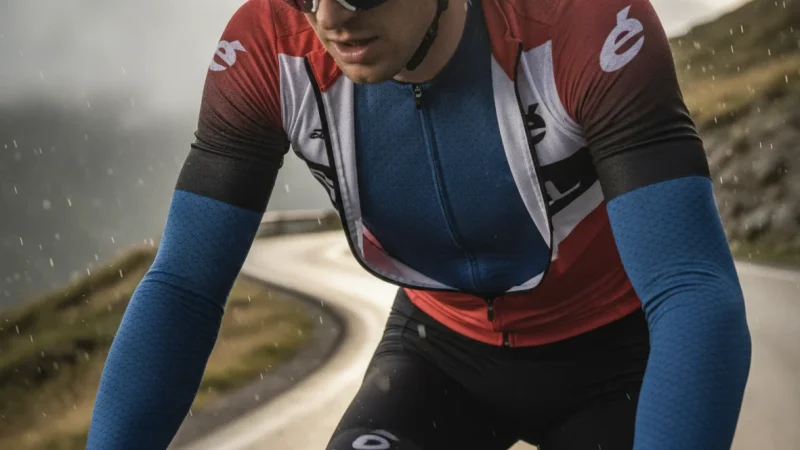
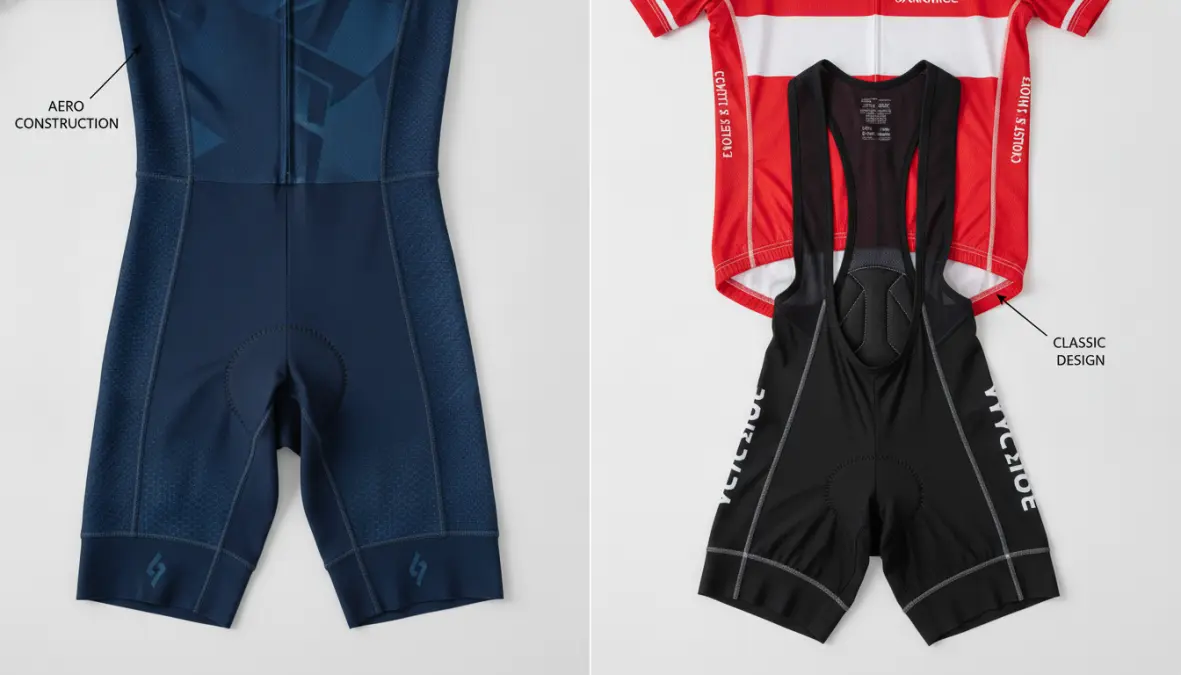
At first glance, the cycling skinsuit vs jersey comparison seems straightforward: one is a single piece, the other separates. But the engineering behind each reveals deeper differences. A cycling skinsuit combines top and bottom into one seamless garment, eliminating the waist seam entirely. Traditional jerseys pair with bib shorts as separate pieces, creating a small overlap around the midsection.
This seemingly minor distinction dramatically affects aerodynamic performance. The road cycling jersey comparison shows that traditional kits offer versatility—you can mix and match sizes, swap jerseys for weather changes, and access pockets easily. Skinsuits, designed primarily for time trials and track racing, prioritize speed over convenience. They feature minimal or rear-only pockets, ultra-tight fits, and fabrics engineered to manage airflow across your body.
| Feature | Skinsuit | Jersey + Bibs |
|---|---|---|
| Construction | One-piece design | Separate top/bottom |
| Primary Use | Time trials, track racing | Road racing, recreational |
| Aerodynamics | Maximum efficiency | Good, with slight drag |
| Pocket Access | Limited or difficult | Easy rear pockets |
| Bathroom Breaks | Challenging | Simple |
| Temperature Regulation | Less flexible | Highly adaptable |
The context determines the winner. Time trials demand every marginal gain, making skinsuits essential. For gran fondos or group rides, the practicality of separates typically outweighs the aero penalty.
Aerodynamics: How Skinsuits Reduce Drag and Improve Speed
Here’s where cycling skinsuit aerodynamics truly shine. Wind tunnel testing consistently demonstrates that skinsuits reduce aerodynamic drag reduction by eliminating fabric flutter and creating a smooth surface from shoulders to ankles. That waistband overlap on traditional kits? It creates turbulence, adding measurable drag at racing speeds.
The science behind aero skinsuit advantages involves both fit and fabric. Modern time trial skinsuits use dimpled or textured fabrics on certain body zones—similar to golf ball dimples—to manipulate airflow boundary layers. Smooth panels cover other areas, while fabric compression ensures the suit sits perfectly flush against your skin without wrinkles that disturb airflow.
Research from wind tunnel testing shows that a properly fitted skinsuit can save 10-30 watts at 40 km/h compared to standard jersey and bibs. For perspective, that’s roughly equivalent to upgrading to carbon wheels or adopting a more aggressive position. As detailed in our guide on cycling aerodynamics and equipment, these marginal gains compound when optimizing multiple factors simultaneously.
The time trial skinsuit benefits become exponential at higher speeds. At 30 km/h, the watt savings might be negligible. Push that to 45-50 km/h in a flat time trial, and those saved watts translate directly to seconds per kilometer. This explains why time trial equipment always includes skinsuits as standard.
Real-World Performance Gains: Time Trials vs Road Racing
Let’s talk numbers. How much time does a skinsuit save? In a 40km time trial at competitive speeds, a quality skinsuit typically saves 30-60 seconds compared to traditional kit—assuming identical rider positions and equipment otherwise. For shorter 20km efforts, expect 15-30 second improvements.
However, cycling kit performance advantages diminish in certain scenarios. During mass-start road races, you’re drafting in a peloton where individual aerodynamics matter less. On steep climbs where speeds drop below 20 km/h, weight and breathability trump aero. The skinsuit’s superpower activates when you’re alone against the wind, maintaining high sustained speeds—exactly the conditions of time trials, triathlons, and solo breakaways.
Body position aerodynamics remain more impactful than kit choice. A rider in an aggressive, well-practiced TT position wearing a standard jersey will beat someone upright in a skinsuit. Combined optimization delivers the best results, which is why serious time trialists focus on both position refinement and equipment selection.

Comfort and Practicality: When Jersey and Bib Shorts Win
Now for the reality check about skinsuit vs jersey comfort. Skinsuits are notoriously finicky. Finding the perfect fit requires trial and error—too loose negates aero benefits, too tight restricts breathing and movement. The one-piece design means sizing must accommodate your torso length, shoulder width, and leg length simultaneously. For many cyclists, this proves impossible with standard sizing.
Practical concerns extend beyond fit. Need a mid-ride nature break? With separates, you simply unzip. With a skinsuit, you’re practically undressing roadside. Those rear pockets on jerseys easily hold gels, tools, phone, and jacket. Skinsuit pockets—when present—offer minimal capacity and awkward access while riding.
Temperature regulation favors traditional kits decisively. Jersey and bibs allow layering strategies: arm warmers, gilets, jackets over your jersey. A skinsuit locks you into one thermal option. Start cold, and you’ll stay cold. Warm up mid-ride, and you can’t shed layers you don’t have. For variable weather during spring transition rides, separates win every time.
Ventilation design differs significantly too. Quality jerseys incorporate mesh panels, while skinsuits prioritize smooth surfaces over airflow. During hard efforts in hot conditions, this becomes uncomfortable quickly. For multi-hour gran fondos or training rides, the breathability and pocket access of traditional kits make them the smarter choice despite the aero penalty.
Fit Considerations and Body Types
The importance of proper sizing cannot be overstated for cycling speed optimization. A perfectly fitted skinsuit conforms to your body contours without excess fabric. Brands offer different sizing philosophies—some prioritize compression, others comfort. Athletes with longer torsos or shorter legs often struggle finding off-the-rack options that don’t compromise somewhere.
Traditional jersey and bib combinations offer flexibility here. You can size the jersey for shoulder and chest fit while choosing bibs based on leg and waist measurements independently. This modular approach accommodates more body types successfully, ensuring both comfort and reasonable aerodynamics without custom tailoring.
Making the Right Choice: Which Option Suits Your Cycling Goals?
The cycling skinsuit vs jersey decision ultimately depends on your specific cycling context. Here’s a practical framework for race kit selection:
Choose a skinsuit when:
- Competing in time trials, individual pursuits, or triathlon bike legs
- Every second matters and you’re racing alone against the clock
- Conditions are predictable (no dramatic weather changes expected)
- The course is flat to rolling where sustained high speeds are achievable
- You’ve tested the fit thoroughly and confirmed comfort for race duration
Choose jersey and bibs when:
- Riding mass-start road races where drafting reduces individual aero importance
- Tackling long gran fondos, centuries, or training rides requiring pocket access
- Weather varies or you need layering options
- Convenience matters—frequent stops, nutrition access, bathroom breaks
- Climbing steep gradients where low speeds minimize aero benefits
Budget considerations matter too. Quality skinsuits cost $150-400, and you’ll likely need multiple for training versus racing. Traditional kits offer better value through mix-and-match versatility. A recreational cyclist focused on fitness rather than podiums won’t justify skinsuit investment, while competitive time trialists consider them essential equipment.
For those building comprehensive fitness, optimizing equipment pairs well with smart training approaches like cadence optimization and proper fueling through carbohydrate timing strategies.
FAQ
How much faster is a skinsuit than jersey?
A properly fitted skinsuit typically saves 10-30 watts at 40 km/h compared to jersey and bibs, translating to roughly 30-60 seconds over a 40km time trial. The advantage increases with speed and decreases in drafting situations or on climbs.
Are skinsuits comfortable for long rides?
Skinsuits prioritize aerodynamics over comfort. Most riders find them acceptable for 1-2 hour time trials but uncomfortable for longer efforts due to limited breathability, restricted pocket access, and difficulty with bathroom breaks. Traditional kits work better for endurance events.
Can you wear a skinsuit for regular road cycling?
While technically possible, it’s impractical. Skinsuits lack the pocket capacity, temperature versatility, and convenience needed for typical rides. They’re designed for specific racing scenarios—time trials, track events, or triathlons—where maximum aerodynamics justify the compromises.
What are the disadvantages of cycling skinsuits?
Major drawbacks include difficult bathroom breaks, limited storage, challenging sizing (one piece must fit entire body), poor temperature regulation, higher cost, and reduced versatility. They also require near-perfect fit to deliver advertised aero benefits.
Do pro cyclists wear skinsuits in road races?
Rarely. Professional road racers use traditional jerseys and bibs for mass-start events because drafting negates individual aero advantages, and the practical benefits of pockets and comfort outweigh marginal gains. Skinsuits appear almost exclusively in time trial stages and individual pursuit track events.
Whether you’re chasing PRs in local time trials or enjoying weekend group rides, understanding the cycling skinsuit vs jersey trade-offs helps you make informed equipment choices. The fastest kit is ultimately the one that matches your racing discipline, body type, and performance priorities. Test both options in training before committing to race day decisions, and remember that sustainable power output and optimized position deliver far greater returns than kit choice alone.