
Race Day Nutrition Strategy: Complete Fueling Plan for Endurance Events

You’ve put in the miles, crushed those brutal training sessions, and now race day is approaching fast. But here’s the thing: all that hard work can go down the drain if you don’t nail your race day nutrition strategy. I’ve seen too many athletes bonk at mile 18 or spend half the race looking for the nearest porta-potty because they didn’t treat fueling with the respect it deserves. Whether you’re tackling your first 10K or planning how to fuel during an Ironman triathlon, getting your nutrition dialed in can be the difference between a PR and a DNF.
Pre-Race Nutrition: Setting the Foundation for Peak Performance
Your marathon nutrition plan doesn’t start when the gun goes off—it begins about a week before race day. This is where your carbohydrate loading strategy comes into play. Forget the old-school pasta parties the night before. Real carb loading is a more nuanced approach that starts 3-7 days out, depending on your race distance.
For marathons and longer events, aim for 7-12 grams of carbohydrates per kilogram of body weight daily during the loading phase. So if you weigh 70kg, that’s 490-840g of carbs per day. Focus on easily digestible sources like white rice, pasta, potatoes, bread, and bananas. This process maximizes your glycogen stores, giving you a fuller tank when you toe the start line.
Pre race meal timing is equally critical. Your main pre-race meal should land 3-4 hours before the start. This gives your body enough time to digest and absorb nutrients while clearing your GI tract. What to eat the night before a race? Think familiar, low-fiber, moderate protein options like grilled chicken with white rice and cooked vegetables. Avoid experimenting with spicy foods, excessive dairy, or anything that’s given you trouble before.
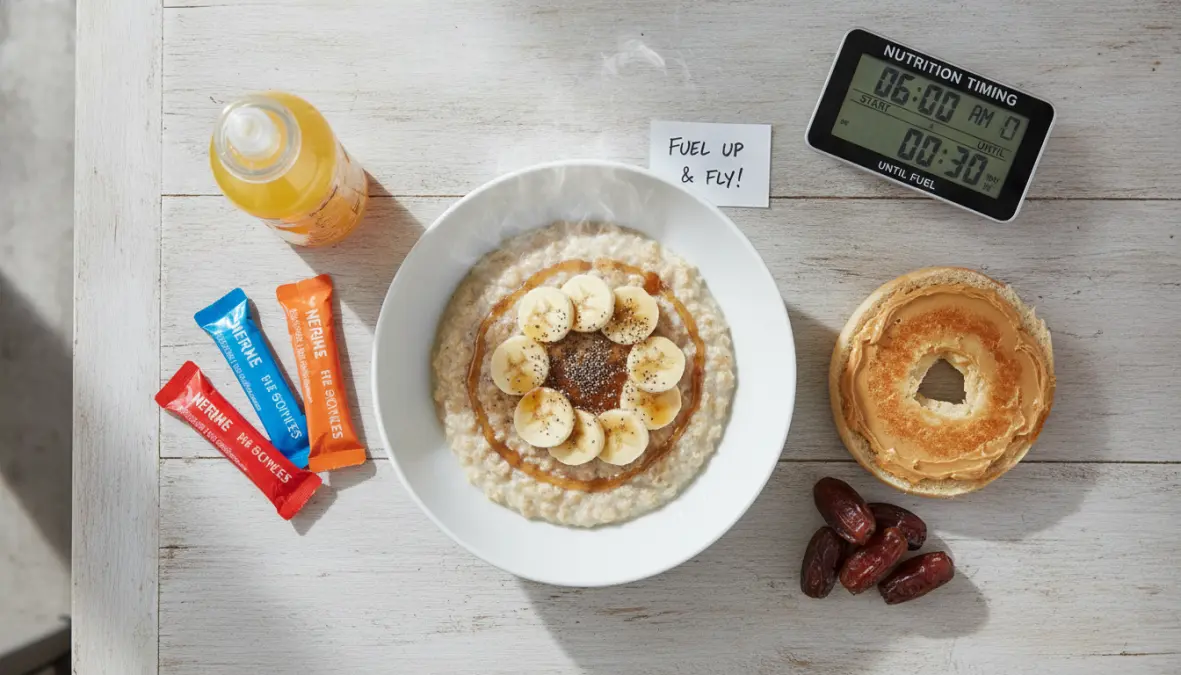
For your race day breakfast for endurance athletes, wake up early enough to eat 2-3 hours before start time. Classic options include oatmeal with banana and honey, white bagel with peanut butter and jam, or rice cakes with almond butter. Keep it simple, keep it tested. As outlined in our guide on pre-workout nutrition, familiar foods reduce the risk of gastrointestinal distress.
During-Race Fueling: Hydration and Energy Management
This is where your endurance race fueling strategy becomes mission-critical. The golden rule? Start fueling early and stay consistent. Waiting until you feel hungry or thirsty means you’re already behind. Your body can process approximately 30-90 grams of carbohydrates per hour, depending on intensity, duration, and individual tolerance.
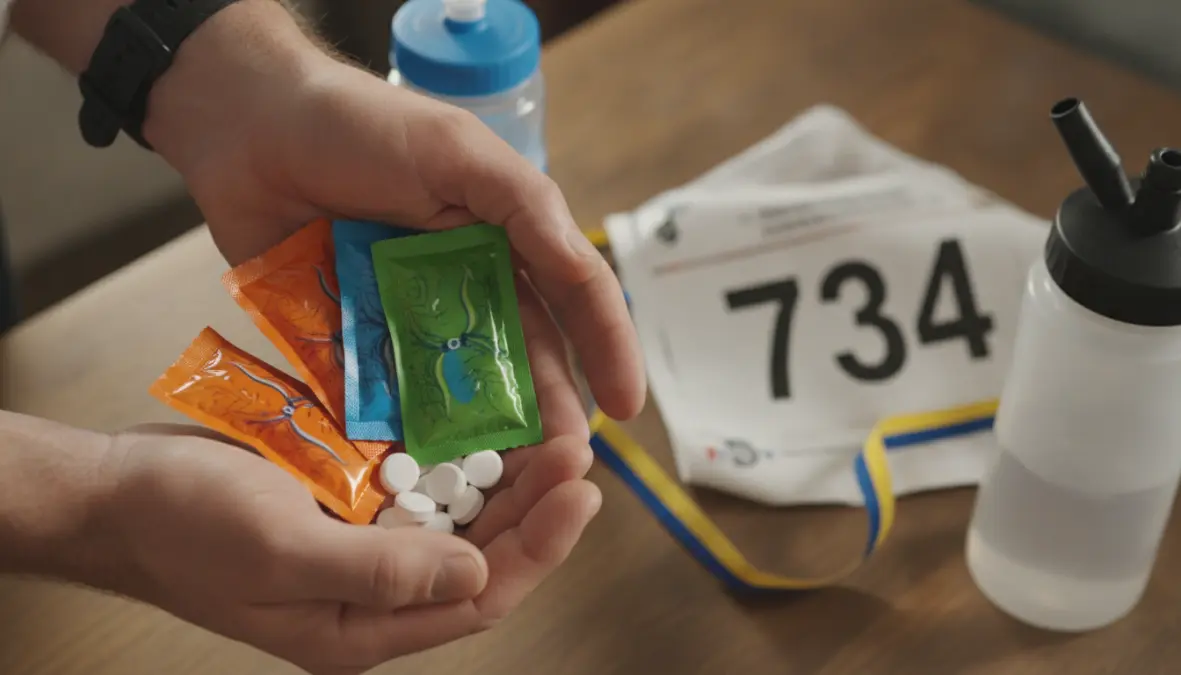
For during race hydration, aim to drink 400-800ml per hour, adjusted for temperature, humidity, and your individual sweat rate. Don’t just chug water—you need an electrolyte replacement plan too. Sodium is the most important electrolyte you’ll lose through sweat, with losses ranging from 500-2000mg per hour for most athletes. Sports drinks provide both fluids and electrolytes, but many athletes supplement with salt tablets or electrolyte capsules for longer events. For more detailed hydration guidance, check out our comprehensive article on hydration strategies for endurance athletes.
Here’s a practical breakdown for different race distances:
- 10K races: Water only at aid stations if needed; no carbs required
- Half marathon: 30-40g carbs per hour; start at mile 4-5
- Full marathon: 60-80g carbs per hour; begin at mile 3-4
- Ultra marathons: 60-90g carbs per hour; mix gels, chews, and real food
- Ironman/Long triathlon: 60-90g carbs per hour on bike; 40-60g per hour on run
When considering the best nutrition strategy for ultra marathon or how many gels to take during marathon, remember that energy gels typically contain 20-25g of carbs each. For a 4-hour marathon, you’d need roughly 12-16 gels total, consumed every 20-30 minutes after the first 3-4 miles. Mix in sports drinks, chews, or even real food to prevent flavor fatigue and reduce GI issues.
Calculating Your Personal Fueling Numbers
Everyone’s different, so you need to personalize your approach. A practical formula: consume 0.5-1g of carbohydrates per kilogram of body weight per hour. A 70kg runner would target 35-70g per hour. Start at the lower end for shorter, higher-intensity races and increase toward the upper range for longer, steadier efforts.
Factor in conditions too. Hot and humid weather increases both fluid and electrolyte needs. Higher intensity reduces your gut’s ability to process nutrition, so you might need to dial back slightly. The non-negotiable rule? Test everything during training. Your long runs and brick workouts are nutrition dress rehearsals—use them wisely.
Common Fueling Mistakes to Avoid
The biggest disaster? Trying new products on race day. That gel that your friend swears by might send you running for the bushes. Other critical mistakes include over-hydrating to the point of hyponatremia (dangerously low blood sodium), under-fueling in the early miles hoping to “save” your stomach, completely ignoring electrolytes, and relying solely on race nutrition stations without carrying backup supplies.
The solution is simple but requires discipline: practice your complete fueling plan for half Ironman or any race during your training buildup. Know exactly what you’ll consume, when, and how much. Carry your own supplies for critical nutrition windows, even if aid stations are available.
Post-Race Recovery Nutrition: Optimizing Your Comeback
Cross that finish line and the work isn’t done—your post race recovery nutrition starts immediately. The 30-60 minute window after finishing is prime time for nutrient absorption. Target a 3:1 or 4:1 ratio of carbohydrates to protein. This could be chocolate milk, a recovery shake, or a banana with Greek yogurt.
Rehydration is crucial too. You’ll need to replace approximately 150% of the fluids you lost (weigh yourself before and after if possible). Include sodium in your recovery drinks to enhance fluid retention. Within 2-4 hours post-race, consume a substantial meal with quality carbs, lean protein, and vegetables to fully replenish glycogen stores and support muscle repair. Our detailed guide on recovery nutrition offers additional strategies for optimal post-race comeback.
Continue prioritizing nutrition for 24-48 hours after your race. This isn’t the time to crash diet or celebrate with junk food exclusively. Your body is in a heightened state of adaptation—feed it well, and you’ll bounce back stronger. For athletes following specific dietary approaches, our plant-based protein guide can help ensure adequate recovery nutrition regardless of dietary preferences.
FAQ: Race Day Nutrition Strategy
What should I eat the morning of a race?
Eat a familiar, easily digestible breakfast 2-3 hours before start time containing 2-4g of carbs per kg body weight. Classic options include oatmeal with banana, bagels with nut butter, or rice cakes with honey. Avoid high-fiber, high-fat, or new foods that could cause GI issues during the race.
How much water should I drink during a marathon?
Aim for 400-800ml per hour, adjusted for conditions and your sweat rate. Don’t just drink water—include electrolytes to prevent hyponatremia. Drink to thirst and at regular intervals (every 15-20 minutes) rather than gulping large amounts at once, which can cause stomach sloshing.
When should I start carb loading?
Begin carb loading 3-7 days before race day, depending on event length. For marathons and longer, start a full week out with 7-12g carbs per kg body weight daily. For half marathons, 2-3 days is sufficient. Simultaneously taper training volume to allow glycogen supercompensation.
What are the best electrolytes for endurance racing?
Sodium is the most critical, with needs ranging from 500-2000mg per hour depending on sweat rate. Potassium, magnesium, and calcium play supporting roles. Look for sports drinks or electrolyte tablets containing at least 300-500mg sodium per serving. Test different products during training to find what works for your gut.
Can I rely on race nutrition stations?
Don’t rely exclusively on race stations. While they’re useful backups, stations may run out, offer unfamiliar products, or be spaced inconveniently for your fueling schedule. Carry your primary nutrition sources and use race stations as supplements. This approach prevents bonking prevention disasters if stations disappoint.
Nailing your race day nutrition strategy isn’t rocket science, but it does require attention, planning, and practice. The athletes who cross the finish line strong aren’t necessarily the ones who trained the hardest—they’re the ones who treated fueling as seriously as their training plan. Start implementing these strategies in your next long training session, refine based on how your body responds, and you’ll toe the start line with confidence knowing your nutrition is dialed in. Now get out there and fuel your way to that PR!