Heat Acclimatization Training: Complete Protocol for Summer Racing Performance

Racing in the scorching heat of summer is a different beast entirely. Your legs feel heavy, your heart pounds faster than usual, and every mile feels like a battle against your own thermoregulation system. But here’s the thing: your body is remarkably adaptable. With proper heat acclimatization training, you can transform from someone who wilts in the heat into an athlete who thrives when the temperature soars. This isn’t just about toughing it out—it’s about triggering specific physiological adaptations that genuinely improve your hot weather performance.
Understanding Heat Acclimatization: How Your Body Adapts to Hot Weather Performance
Let’s get clear on what we’re talking about. Heat adaptation for athletes involves systematic changes in your physiology that help you perform better in hot conditions. The technical term “acclimatization” refers to adaptation to natural outdoor heat, while “acclimation” happens in controlled environments like heated rooms or saunas—but both trigger similar beneficial responses.
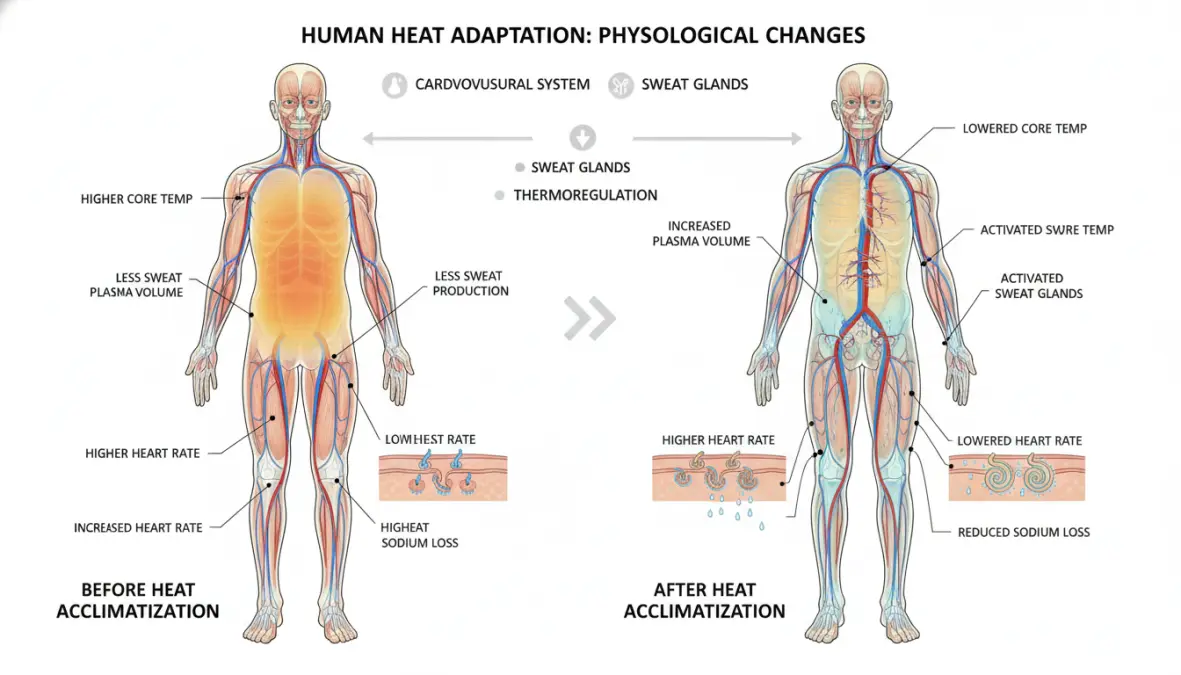
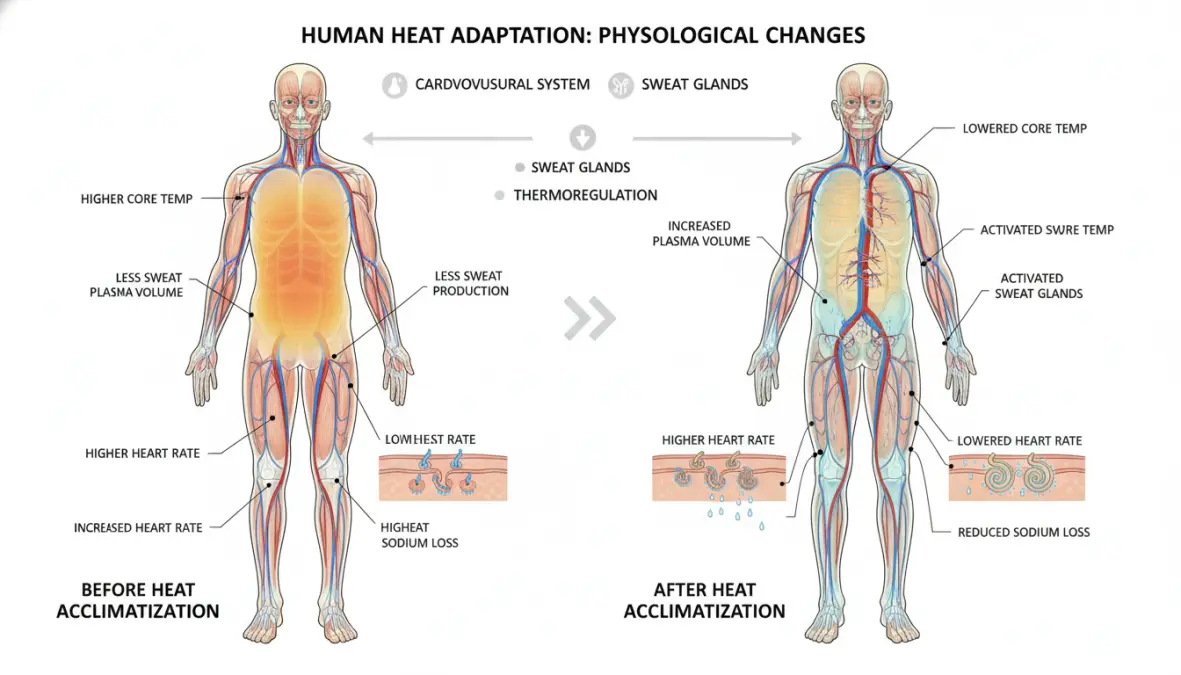
When you expose yourself to thermal adaptation training, your body undergoes remarkable changes. First, your plasma volume expands by 10-20%, meaning more blood flowing through your system. This increased blood volume helps shuttle heat away from working muscles to your skin surface for cooling. Your sweat rate adaptation kicks in too—you’ll start sweating earlier and more profusely, which sounds uncomfortable but is actually your body’s most effective cooling mechanism.
Your cardiovascular system becomes more efficient under heat stress adaptation. That racing heart rate you experience in hot conditions? It drops significantly after proper acclimatization, sometimes by 15-20 beats per minute at the same exercise intensity. Your core body temperature also becomes better regulated, staying lower during exercise. At the cellular level, you’re even producing more heat shock proteins, which protect your cells from heat damage.
The timeline for these adaptations is surprisingly consistent. You’ll notice initial changes within 5-7 days, with most adaptations complete within 10-14 days. This makes proper summer racing preparation entirely achievable, even if you’re not naturally living in hot climates. The benefits are scientifically proven: studies show 4-8% performance improvements in hot conditions after proper heat training, which can translate to significant time savings in your race.
The Complete Heat Training Protocol: Step-by-Step Implementation
Let’s get practical. An effective heat training protocol requires 10-14 days of consistent heat exposure before your goal race. The key word here is “consistent”—sporadic hot workouts won’t cut it. You need daily or near-daily exposure to trigger those adaptations we discussed.
Start conservatively. On days 1-3, aim for just 30-45 minutes of moderate-intensity exercise in the heat. If you’re wondering how to acclimate to heat for summer races, the answer is gradual progression. Days 4-7 should increase to 60-75 minutes, and days 8-14 can extend to 90+ minutes or match your typical training duration. The temperature sweet spot for training is 80-95°F (27-35°C), though higher humidity makes lower temperatures equally effective.
For endurance heat training, you have several practical options. Training outdoors during the hottest part of the day is most sport-specific. Indoor alternatives include using a heated room, overdressing during treadmill or bike trainer sessions, or even combining your workout with passive heat methods. If you’re following a heat adaptation training plan for cycling, consider indoor trainer sessions with minimal fans and extra layers—though nothing beats actual outdoor riding when preparing for a hot race.
Monitoring your adaptation is crucial. Track your morning resting heart rate (it should drop as you adapt), body weight before and after sessions (to gauge sweat losses), and perceived exertion at standard intensities. A quality fitness tracker can help monitor these metrics consistently. Many athletes also find that workouts feel noticeably easier after 7-10 days—that’s your adaptation kicking in.
Timing matters too. The best heat acclimatization protocol for runners and other endurance athletes places the final adaptation session 3-5 days before race day. This allows you to taper properly while maintaining the adaptations. Similar to altitude training adaptations, heat adaptations begin declining after about 7 days without exposure, so timing is critical.
Active vs Passive Heat Adaptation Methods
The debate between passive vs active heat acclimatization methods is worth understanding. Active methods involve exercising in the heat, while passive approaches use saunas, hot baths, or simply sitting in hot environments without exercise.
Research shows active methods produce more comprehensive adaptations because they combine cardiovascular strain with thermal stress. However, passive methods absolutely work and offer practical advantages. A sauna protocol of 20-30 minutes post-workout, 4-6 times weekly, produces measurable plasma volume expansion and improved temperature tolerance. Hot baths (104°F/40°C for 30-40 minutes) work similarly.
The smartest approach? Combine both. Do your primary training in heat when possible, then add 20-minute sauna sessions afterward. This accelerates adaptation without adding training stress. It’s particularly useful if you live somewhere cool but need to race somewhere hot—you can complete your base training normally, then add passive heat exposure.
Hydration and Nutrition Strategies During Heat Adaptation
Your fluid needs skyrocket during heat acclimatization training. As your sweat rate increases, so must your hydration. Conduct a simple sweat rate test: weigh yourself before and after a one-hour heat session. Each pound lost equals roughly 16 ounces of fluid that needs replacing.
Don’t just focus on water. Sodium and electrolyte needs increase proportionally. During the adaptation period, slightly increase dietary salt and consider electrolyte drinks during and after training sessions. Monitor your body weight daily—consistent drops suggest inadequate hydration, which will sabotage your adaptation.
Hydration timing matters. Pre-load with 16-20 ounces two hours before heat sessions, sip regularly during exercise (aim for 6-8 ounces every 15-20 minutes), and fully rehydrate afterward. Your urine should remain light yellow throughout the adaptation period. Combining proper hydration with anti-inflammatory nutrition strategies helps manage the additional stress of heat training.
Common Mistakes and Safety Considerations for Heat Acclimatization Training
The biggest mistake athletes make with thermal adaptation training is progressing too aggressively. Jumping into 90-minute sessions in peak heat on day one doesn’t speed adaptation—it just increases injury and illness risk. Remember, adaptation happens with consistent moderate exposure, not from crushing yourself.
Many athletes also ignore warning signs of heat illness. Recognize these red flags: excessive dizziness, confusion, nausea beyond typical exercise discomfort, cessation of sweating, or heart rate that won’t come down. If you experience any of these, stop immediately, cool down, and hydrate. The mental toughness required for endurance sports is important—mental training helps—but recognizing genuine danger is smarter than pushing through.
Insufficient recovery between heat sessions undermines adaptation. Your body needs rest to consolidate those physiological changes. If you’re also doing high-intensity training, consider making your heat sessions lower intensity to manage total stress.
Understand that heat adaptations are lost if you stop exposure. After 2-3 weeks without heat, adaptations begin declining. Plan your heat acclimatization protocol before competition so there’s minimal gap between final heat exposure and race day. For multi-sport athletes, this timing becomes even more critical given the complexity of race preparation.
Certain populations need extra caution. Athletes over 50, those with cardiovascular conditions, or anyone on medications affecting thermoregulation should consult medical professionals before beginning aggressive heat training. And remember, humidity training creates similar stress at lower temperatures—90°F with 80% humidity is more challenging than 100°F in dry conditions.
FAQ: Heat Acclimatization for Summer Racing
How long does heat acclimatization take?
Most athletes achieve significant heat adaptation within 10-14 days of consistent exposure. Initial adaptations begin appearing after just 5-7 days, including improved sweat response and reduced cardiovascular strain. However, complete adaptation including maximum plasma volume expansion typically requires the full two weeks. For optimal hot weather performance, plan accordingly before your race.
Can you heat train indoors?
Absolutely. Indoor heat training using saunas, hot baths, or heated exercise environments produces legitimate adaptations. While outdoor training in actual race conditions is ideal for specificity, combining indoor heated trainer sessions or post-workout sauna sessions (20-30 minutes, 4-6 times weekly) effectively triggers plasma volume expansion and improved thermoregulation when outdoor heat exposure isn’t practical.
How long does heat adaptation last?
Heat adaptations begin declining after about one week without exposure, with significant losses occurring after 2-3 weeks. This is why timing your protocol matters—you want minimal gap between final heat exposure and race day. If your race is delayed, maintain adaptations with 2-3 heat sessions weekly, whether through training or passive sauna exposure.
What temperature is best for heat training?
The optimal range for heat training strategies for marathon runners and endurance athletes is 80-95°F (27-35°C). Higher humidity makes lower temperatures equally effective—70°F with high humidity can provide sufficient heat stress. Core body temperature elevation matters more than ambient temperature, so focus on maintaining moderate intensity that elevates core temperature for 60-90 minutes.
Do you lose fitness during heat acclimatization?
Not if you approach it correctly. Heat adaptation should complement your training, not replace quality workouts. Make some sessions heat-focused at lower intensity, but maintain your key interval and tempo work. The slight reduction in intensity during some heat sessions is offset by the performance gains from adaptation. Think of it like periodization—temporary adjustments for long-term gains.
Summer racing doesn’t have to be a suffer-fest. With proper heat acclimatization training, you’re not just preparing to survive the heat—you’re positioning yourself to thrive when temperatures soar. Start your protocol 2-3 weeks before race day, progress gradually, stay vigilant about hydration, and trust the process. Your body’s adaptive capacity is remarkable; you just need to give it the right stimulus. When race day arrives and your competitors are wilting in the heat, you’ll be clicking off strong splits, benefiting from those smart weeks of preparation. The heat won’t be your enemy—it’ll be your advantage.