Best Bike Saddles for Long Distance Riding: Comfort and Fit Guide
If you’ve ever attempted a century ride or multi-day bike tour only to find yourself shifting uncomfortably in the saddle after mile 30, you already know the truth: finding the best bike saddles isn’t about aesthetics or brand hype—it’s about surviving (and actually enjoying) those long hours in the saddle. The difference between a miserable ride and a memorable adventure often comes down to those few square inches where your body meets the bike. Let’s dive into what makes a saddle truly comfortable for the long haul and how to find your perfect match.
Why the Right Saddle Matters for Long Distance Cycling
Your body’s contact points with the bike—hands, feet, and sit bones—bear the brunt of every mile, but none more critically than your saddle interface. When you’re logging long distance cycling seats for hours on end, even minor discomfort compounds exponentially. Numbness, saddle sores, chafing, and perineal pain aren’t just annoying—they can derail your training, ruin your tour, or even cause lasting nerve damage if ignored.
The anatomy of cycling comfort is straightforward: your ischial tuberosities (sit bones) should bear most of your weight, while soft tissue pressure should be minimized. Short recreational rides might forgive a poorly fitted saddle, but endurance bike saddles demand precision. A saddle that’s too narrow concentrates pressure painfully; too wide causes inner thigh chafing. Wrong shape? You’ll experience numbness as perineal arteries get compressed.
Performance suffers too. Studies show that discomfort leads to constant position shifting, wasting energy and disrupting pedaling efficiency. The wrong bicycle seat for long rides doesn’t just hurt—it makes you slower. Meanwhile, a well-fitted saddle disappears from your awareness, letting you focus on the road ahead. As with proper bike fitting, saddle choice is an investment in both comfort and performance that pays dividends on every ride.
Key Features to Look for in the Best Bike Saddles
Shopping for comfortable bike saddles can feel overwhelming given the sheer variety available. However, focusing on a few critical features will narrow your options significantly. The best saddles balance support, pressure relief, and durability—and the right combination depends entirely on your anatomy and riding style.
Saddle Width and Sit Bone Measurement
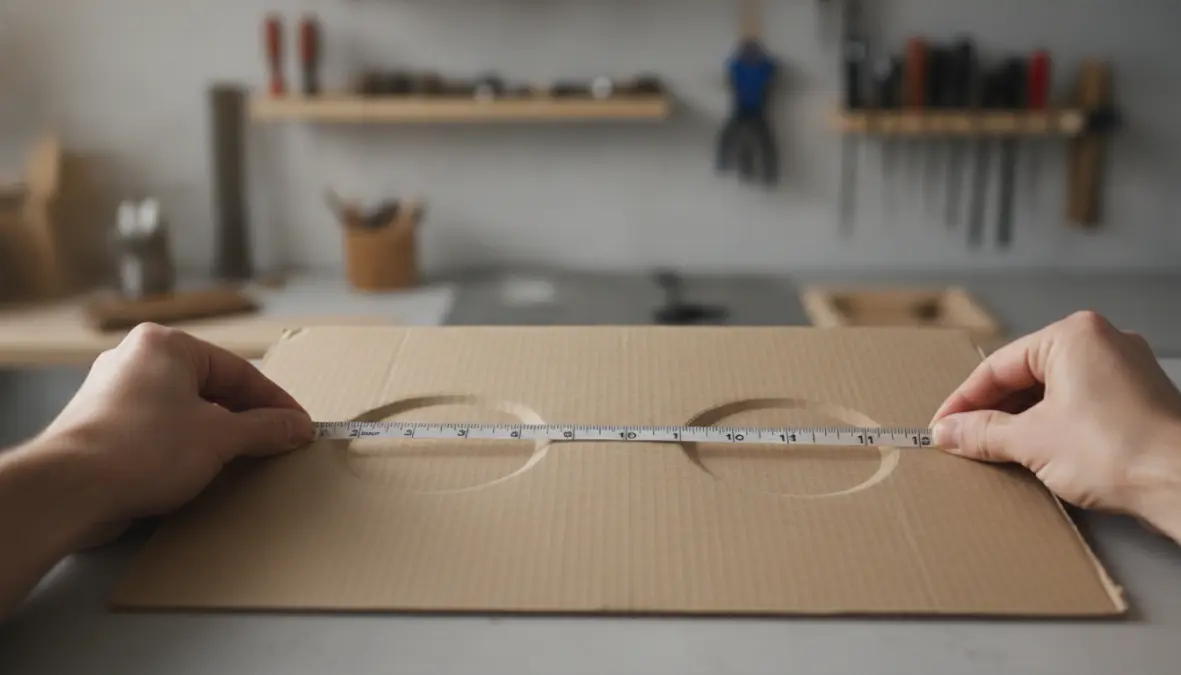
Width is non-negotiable. Your sit bone measurement determines the minimum saddle width you need for proper support. Measure by sitting on corrugated cardboard or specialized gel pads to leave impressions, then measure center-to-center of the indentations. Most riders fall between 90-140mm.
Add 20-30mm to your sit bone width for your ideal saddle width—more upright positions (touring) need wider saddles, while aggressive road positions can use narrower. Most manufacturers offer saddles in 2-4 width options. Common mistake? Choosing too narrow because it “looks faster.” This concentrates pressure on soft tissue instead of bones, leading to numbness and pain. For touring and endurance, err slightly wider. The saddle width fitting process takes 10 minutes but prevents months of discomfort.
Padding, Cutouts, and Pressure Relief Design
Contrary to intuition, more padding doesn’t equal more comfort for long rides. Padded bike saddles with thick gel or foam can feel plush initially but compress unevenly over hours, creating pressure points. Most experienced distance riders prefer firmer saddles with strategic, minimal padding that maintains consistent support.
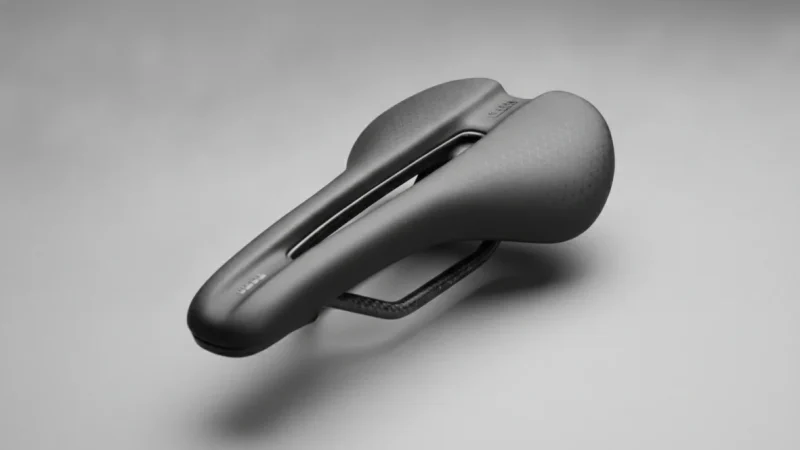
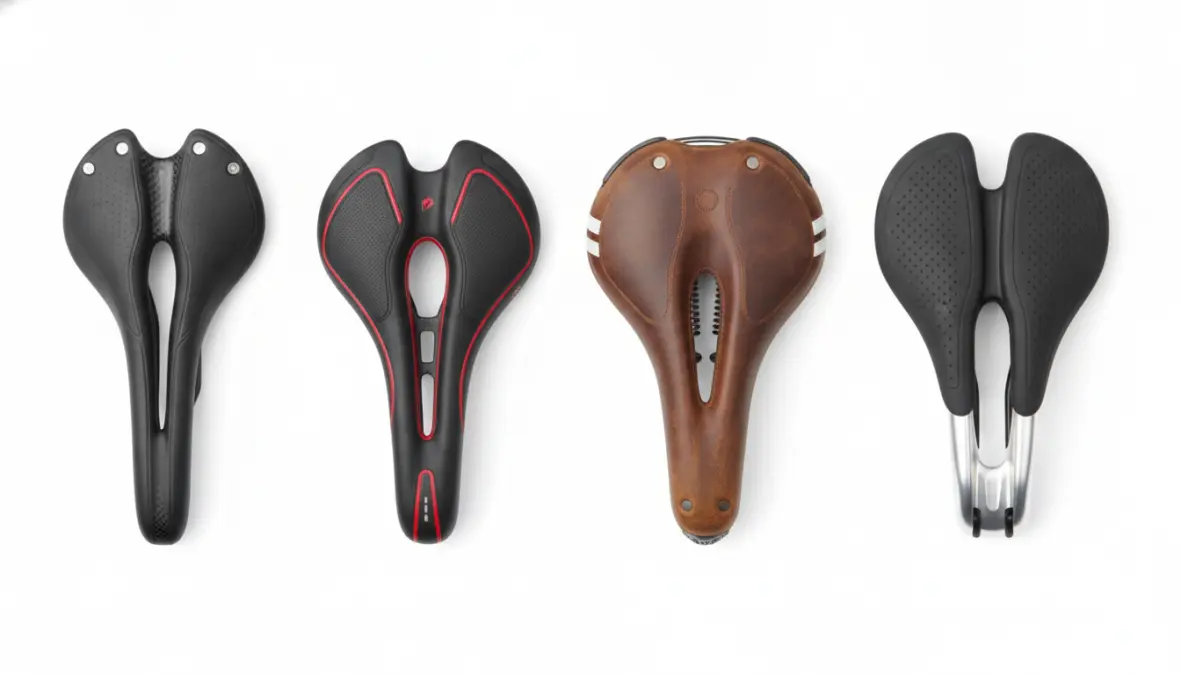
Cutout saddle design and center channels are crucial for perineal pressure relief. These features reduce soft tissue compression, improving blood flow and preventing numbness. Full cutouts work well for aggressive positions; partial cutouts or channels suit more upright riding. Women’s-specific saddles typically feature wider cutouts positioned further forward, addressing female anatomy.
Shape matters too: some riders need flatter profiles, others benefit from curved designs that cradle the sit bones. Anatomical saddles with different left-right zones address asymmetries. Chamois padding in your shorts works with saddle design—a minimalist saddle pairs with padded shorts better than doubling up padding. Test rides reveal what works; what feels comfortable after 10 miles might differ from 100-mile comfort. Consider your riding style whether you’re choosing between gravel or road configurations.
Top Recommendations: Best Touring Saddles and Endurance Options
The market offers excellent options across price points. Here are proven performers for long-distance comfort, organized by rider type and use case.
For Road Cyclists and Sportive Riders: The Fizik Antares R3 ($150-200) combines a wave-shaped profile with moderate flex for all-day comfort without sacrificing performance. Its Adaptive padding provides support where needed while the central channel relieves pressure. For those seeking the most comfortable bike saddle for long distance riding, the Specialized Power Expert ($180-220) features a short-nose design that reduces soft tissue interference—ideal for aggressive positions on century rides.
For Touring and Bikepacking: The Brooks B17 ($120-160) remains legendary among best touring saddles for good reason. Its leather construction requires break-in but molds perfectly to your anatomy, lasting decades. Pair it with proper bikepacking essentials for ultimate comfort. The Selle Anatomica X-Series ($150-180) offers similar leather benefits with a cutout design, answering “how to choose a saddle for touring” for riders wanting immediate pressure relief.
For Women’s-Specific Needs: The Liv Approach ($80-120) provides excellent value with a wider platform and forward cutout positioning. For premium comfort, the Specialized Power Expert with Mimic ($200-250) incorporates foam technology that adapts to individual anatomy, making it arguably the best women’s saddle for long distance cycling.
Budget-Friendly Options: The Selle Italia Model X Green Superflow ($60-80) punches above its weight with effective pressure relief and durable construction. The Bontrager Montrose Comp ($70-90) offers multiple width options and a proven shape at accessible pricing—perfect for testing what works before investing in premium options.
Remember that saddle rail material affects durability and weight: steel rails are heavy but bomb-proof for touring, titanium balances weight and comfort, while carbon saves grams for racing. Saddle tilt adjustment fine-tunes comfort—start level and make micro-adjustments, as even 2-3 degrees changes pressure distribution significantly.
FAQ: Common Questions About Long Distance Bike Saddles
How do I know if my saddle is the right width?
Your sit bones should rest fully on the saddle’s widest part without hanging off the edges. If you feel pressure on soft tissue rather than bone, it’s too narrow. Inner thigh chafing indicates it’s too wide. Proper comfortable bike saddles support bones, not soft tissue. The cardboard measurement method provides objective data to guide selection.
Should I choose a padded or minimal saddle for touring?
For multi-day rides, firmer saddles with strategic padding typically outperform heavily cushioned options. Thick padding compresses unevenly over time, creating pressure points. A firmer bicycle seat for long rides maintains consistent support. Your padded cycling shorts provide cushioning; the saddle provides structure. Exception: very lightweight riders sometimes benefit from slightly more padding.
How long does it take to break in a new bike saddle?
Modern synthetic saddles require minimal break-in—expect 3-5 rides to adapt. Your sit bones may feel tender initially as soft tissue adjusts. Leather saddles need 500-1000 miles to fully mold. If pain worsens or numbness persists after two weeks, the saddle likely doesn’t fit. Don’t confuse adaptation with poor fit. Proper cycling technique also reduces unnecessary pressure.
Can saddle choice prevent numbness on long rides?
Absolutely. A bike saddle for preventing numbness on long rides requires proper width, effective cutout design, and correct positioning. Numbness indicates compressed nerves and restricted blood flow. Ergonomic bike saddles for endurance riders with central relief channels significantly reduce perineal pressure. Combined with proper tilt and height adjustment, the right saddle eliminates numbness for most riders. Persistent issues may indicate fit problems elsewhere—check your overall bike position.
Finding the best bike saddle for 100 mile rides is deeply personal—what works for your riding buddy might torture you. Invest time in proper measurement, take advantage of demo programs when available, and remember that cycling comfort optimization extends beyond the saddle to shorts, position, and technique. The perfect saddle exists for every rider; it just takes some detective work to find it. Your backside will thank you when you’re still comfortable at mile 80, and that century or tour becomes the adventure you dreamed about rather than an endurance test of discomfort.