Adaptogens for Athletes: Natural Performance Enhancement and Stress Management

If you’re an athlete constantly pushing your limits, you know the drill: intense training sessions, recovery challenges, mental fatigue, and that nagging stress that comes from balancing performance goals with everyday life. While conventional supplements flood the market with promises of instant gains, there’s a category of natural compounds that works differently—adaptogens for athletes offer a smarter, more holistic approach to performance enhancement and stress management. These ancient botanicals don’t just mask symptoms; they help your body adapt to physical stressors, regulate cortisol levels, and optimize your natural capacity for endurance, strength, and recovery.
Understanding Adaptogens and Their Role in Athletic Performance
So, what exactly are adaptogens for athletes? In simple terms, adaptogens are natural substances—primarily herbs and mushrooms—that help your body maintain homeostasis when facing various stressors. Unlike stimulants that give you a quick jolt followed by a crash, natural performance enhancers like adaptogens work on a deeper physiological level, primarily through the hypothalamic-pituitary-adrenal (HPA) axis.
Here’s the science: when you train hard, your body releases cortisol and other stress hormones. While acute cortisol spikes are normal and even beneficial, chronic elevation from overtraining can sabotage recovery, suppress immune function, and impair performance. Adaptogens modulate this stress response, helping maintain cortisol regulation and preventing the burnout that derails so many training programs.
Athletes face unique challenges—not just the physical stress of training, but the mental pressure of competition, the demands of strict nutrition protocols, and the constant need for optimal recovery. Athletic performance adaptogens address these multifaceted stressors by supporting hormonal balance, enhancing cellular energy production, and improving your body’s resilience. Whether you’re dealing with overtraining syndrome or simply want to maximize your training adaptations, adaptogens provide a foundation for sustainable performance gains. For comprehensive recovery strategies, check out our guide on sleep optimization for athletes.
Best Adaptogens for Athletes: Top Choices for Performance and Recovery
Not all adaptogens serve the same purpose, so let’s break down the best adaptogens for athletes based on your specific training goals.
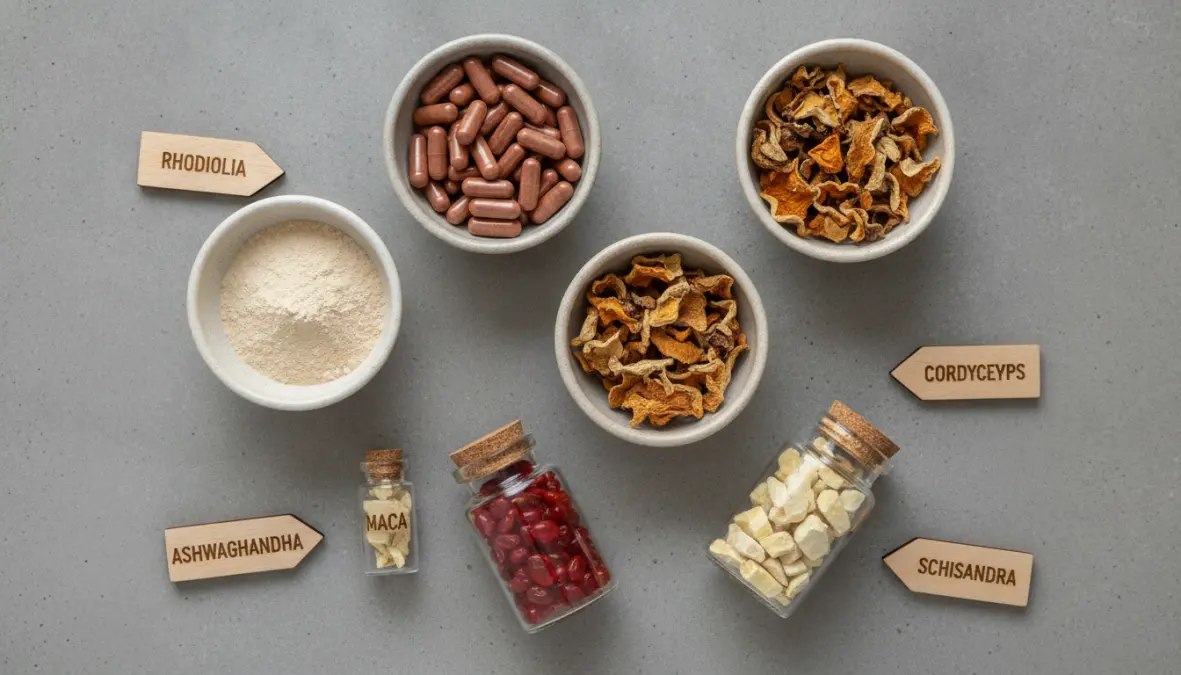
Rhodiola Rosea stands out as perhaps the most research-backed adaptogen for endurance athletes. This herb enhances athletic endurance by reducing perceived exertion and improving oxygen utilization. Studies suggest rhodiola rosea can enhance time to exhaustion and support mental clarity during long training sessions. Typical dosing ranges from 200-600mg daily, ideally taken 30-60 minutes before training. The active compounds—rosavins and salidrosides—work synergistically to combat fatigue and support recovery.
Ashwagandha has become a favorite among strength athletes for good reason. The ashwagandha benefits include improved muscle recovery, increased strength gains, and significant cortisol reduction. Research shows athletes taking 300-500mg twice daily experienced enhanced muscle mass and strength compared to placebo groups. It’s particularly effective when taken post-workout or before bed, supporting muscle recovery during sleep cycles when growth hormone peaks.
Cordyceps mushroom deserves special attention for endurance sports. This unique fungus improves cellular ATP production and oxygen utilization, potentially supporting VO2 max improvement. Athletes often report enhanced stamina and better performance at high intensities. The recommended dose typically ranges from 1-3 grams daily. If you’re interested in tracking these performance metrics, explore our article on sports performance testing.
Eleuthero (Siberian Ginseng) excels at building baseline stamina and resilience over time. It’s not a quick fix but rather a foundational adaptogen that enhances overall work capacity. Doses around 300-1200mg daily support sustained energy without the jitters. Many athletes use eleuthero during base-building phases or high-volume training blocks.
Maca root offers dual benefits: sustained energy and hormonal support, including testosterone optimization in both men and women. This makes it valuable for athletes concerned with maintaining hormonal balance during intensive training. Typical doses range from 1.5-3 grams daily, often blended into pre-workout smoothies.
Schisandra berry shines for mental endurance and liver protection—crucial for athletes taking multiple supplements or dealing with oxidative stress from high-intensity training. It supports focus during long training sessions and competitions, with doses around 500-2000mg daily showing benefits for cognitive performance under pressure. For mental performance strategies, our guide on mental training for athletes offers complementary approaches.
How to Choose the Right Adaptogen for Your Training Goals
Wondering which adaptogens are best for athletic performance in your specific sport? Here’s a practical framework: endurance athletes (runners, cyclists, triathletes) typically benefit most from rhodiola, cordyceps, and eleuthero—these adaptogens for endurance support oxygen utilization and sustained effort. Strength and power athletes (weightlifters, CrossFitters, sprinters) often prefer ashwagandha and maca for their effects on muscle recovery and hormonal optimization.
For those asking how do adaptogens help athletes manage stress, the answer lies in combining stress-focused adaptogens (ashwagandha, rhodiola) with recovery-oriented ones. Many athletes successfully stack 2-3 adaptogens—for example, rhodiola before training, ashwagandha post-workout, and cordyceps for both. However, if you’re a competitive athlete, research anti-doping regulations; while most adaptogens are allowed, some formulations may contain prohibited substances.
Dosage, Timing, and Safety Considerations for Athletic Use
Timing matters when using athlete supplement adaptogens. Energizing adaptogens like rhodiola and cordyceps work best pre-workout (30-60 minutes before training). Calming, recovery-focused options like ashwagandha are more effective post-workout or before bed. For adaptogens for post workout recovery athletes, ashwagandha combined with proper nutrition creates a powerful recovery stack—consider pairing with strategies from our gut health optimization guide.
Most adaptogens require consistent use for 2-4 weeks before full effects manifest, though some athletes notice improvements within days. Cycling protocols (8-12 weeks on, 2-4 weeks off) help maintain sensitivity and prevent tolerance. Quality matters enormously—look for third-party tested products with standardized extracts and, if you’re a professional athlete, NSF Certified for Sport or Informed-Sport certification.
When exploring are adaptogens safe for competitive athletes, the answer is generally yes, but individual responses vary. Start with lower doses, monitor your response, and consider working with a sports nutritionist. Adaptogens generally have excellent safety profiles with minimal side effects, but potential interactions exist with certain medications. Support your adaptogen protocol with comprehensive strategies like proper micronutrient intake and mobility training for holistic performance optimization.

Frequently Asked Questions About Adaptogens for Athletes
Do adaptogens really improve athletic performance?
Yes, research supports specific benefits, particularly for endurance, recovery, and stress management. However, adaptogens aren’t magic pills—they work best when combined with proper training, nutrition, and recovery protocols. Studies show measurable improvements in VO2 max, time to exhaustion, strength gains, and cortisol regulation, but individual responses vary.
How long before adaptogens work for athletes?
Some effects appear quickly (within 3-7 days for energy and focus), but optimal benefits typically emerge after 2-4 weeks of consistent use. Adaptogens build resilience over time rather than providing immediate stimulation. Patience and consistency are key.
Can adaptogens replace pre-workout supplements?
Not exactly—they serve different purposes. Traditional pre-workouts provide acute stimulation through caffeine and other compounds, while adaptogens for athletes support sustainable energy, stress adaptation, and recovery. Many athletes successfully combine both, using adaptogens as a foundation and reserving high-stim pre-workouts for key sessions.
Are adaptogens safe for competitive athletes?
Most pure adaptogenic herbs are permitted by WADA (World Anti-Doping Agency). However, always choose products with third-party testing and sport certifications, as contaminated or mislabeled supplements pose risks. When in doubt, consult your sport’s governing body or anti-doping organization.
What’s the difference between adaptogens and stimulants?
Stimulants (like caffeine) activate your nervous system acutely, increasing alertness and energy but potentially leading to crashes and dependency. Stress relief for athletes through adaptogens works differently—they modulate your stress response, supporting balance rather than pushing you into overdrive. Adaptogens won’t give you an immediate rush but build long-term resilience.
Incorporating adaptogens into your training regimen represents a shift toward smarter, more sustainable performance enhancement. Rather than constantly pushing harder with stimulants and risking burnout, you’re supporting your body’s natural capacity to adapt, recover, and perform. Whether you’re chasing a new PR, managing training stress, or simply looking for natural adaptogens to improve endurance and stamina, these powerful botanicals offer evidence-based benefits that complement your hard work in training. Start with one adaptogen that matches your primary goal, track your response, and adjust from there—your body’s resilience will thank you.