Sled Push and Pull Workouts: Build Power and Conditioning Fast

Want to build explosive power, torch calories, and improve your conditioning without beating up your joints? The sled push workout might be exactly what your training program is missing. These brutally effective exercises have been a secret weapon for football players, sprinters, and CrossFit athletes for years—and for good reason. Sled work develops functional strength that translates directly to real-world performance, whether you’re accelerating on the field, powering through a cycling sprint, or simply wanting to move better in daily life.
Unlike traditional strength training that can be hard on joints and connective tissue, weighted sled training offers something unique: concentric-only loading. That means no eccentric (lowering) phase, which reduces muscle soreness while still delivering serious gains in power and conditioning. Plus, you can push or pull sleds multiple times per week without the recovery demands of heavy squats or deadlifts.
What Are Sled Push and Pull Workouts?
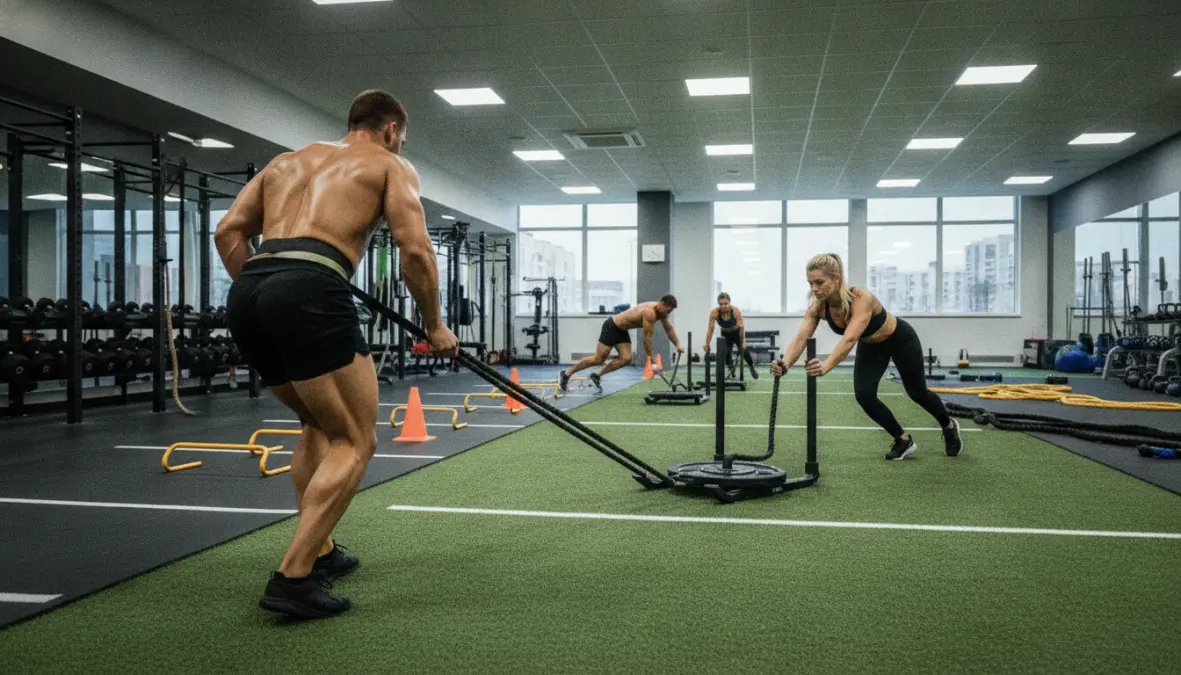
A sled push workout involves driving a weighted sled forward by pressing against vertical handles or posts, using your legs, core, and upper body to generate force. Think of it as a moving plank combined with a powerful leg drive—you’re in a forward lean position, generating horizontal force to overcome resistance.
The sled pull workout takes the opposite approach: you attach a rope or harness to the sled and pull it toward you, either walking backward or using a hand-over-hand rowing motion. Some athletes also perform sled drag workouts, where the sled is attached to a belt and dragged behind while walking or running forward.
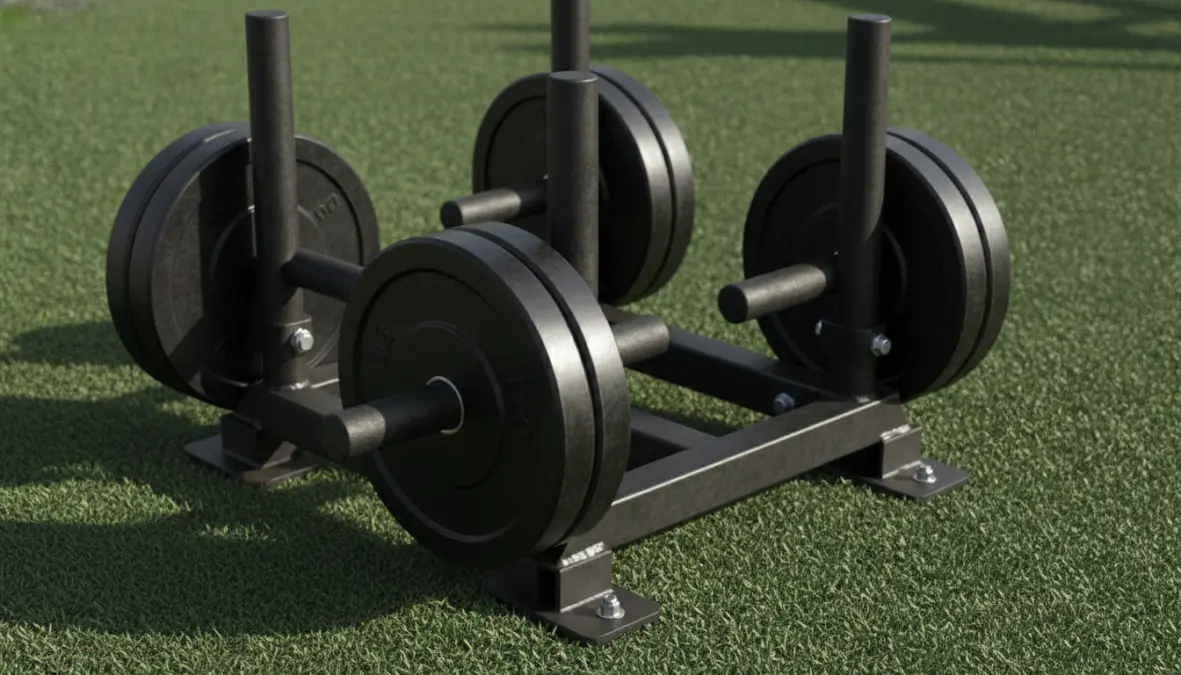
The equipment is straightforward. A prowler sled (the most popular brand name) features vertical posts for pushing and pegs for loading weight plates. Some sleds have turf-friendly skis, while others use metal runners for various surfaces. You’ll need weight plates to load onto the sled—starting weights vary dramatically based on fitness level and training goal.
These exercises engage virtually every muscle group. The push emphasizes quadriceps, glutes, calves, chest, shoulders, and core stabilizers. The pull targets hamstrings, glutes, back muscles, biceps, and rear deltoids. Both variations demand serious cardiovascular work, making them exceptional tools for metabolic conditioning and lower body power development.
Benefits and Why Sled Training Works
The sled push benefits extend far beyond simple leg strength. First and foremost, sled work develops explosive power without the joint stress of jumping or heavy lifting. Because there’s no eccentric phase (no lowering or landing), your muscles don’t experience the same microtrauma that causes delayed onset muscle soreness. This means faster recovery and the ability to train more frequently—a huge advantage for athletes juggling multiple training modalities.
For athletic performance training, sleds are unmatched for developing the horizontal force production needed for sprinting and acceleration. The forward lean and driving leg action mimic the mechanics of the first few steps of a sprint, making sled pushes ideal for developing speed off the line. This transfers beautifully to sports requiring quick acceleration, and even to cycling power as discussed in our guide on strength training for cyclists.
Sled conditioning workouts deliver cardiovascular benefits that rival traditional cardio while simultaneously building strength. The metabolic demand is enormous—push a heavy sled for 30 seconds and your heart rate will skyrocket. This makes sled work perfect for high intensity interval training protocols that improve both aerobic and anaerobic capacity.
The low-impact nature makes weighted sled training accessible to a wide range of athletes, including those recovering from injury or dealing with joint issues. Unlike running or plyometrics, sled work doesn’t involve impact forces, making it a safer option for building conditioning without aggravating knees, ankles, or hips. Push work particularly emphasizes anterior chain development (quads, hip flexors), while pull variations balance this by targeting the posterior chain (hamstrings, glutes, back). This push-pull balance makes sled training an excellent addition to any well-rounded program, complementing work like plyometric training or core strength exercises.
Essential Sled Exercises and Training Routines
Building an effective push pull sled routine starts with mastering the fundamental movements. Here are the essential prowler sled exercises every athlete should know:
Forward Sled Push: The cornerstone movement. Place hands on the vertical posts at chest or shoulder height, lean forward at approximately 45 degrees, and drive through your legs with powerful strides. Keep your core tight and maintain the forward lean throughout. For proper leg drive mechanics, think about pushing the ground away behind you rather than just moving forward.
Backward Sled Drag: Face the sled, attach a rope to your waist or hold straps in your hands, and walk backward. This variation hammers the hamstrings and glutes while improving proprioception and posterior chain strength. It’s particularly effective for sled pull exercises for strength.
Lateral Sled Drag: Attach the sled to your side via a belt and shuffle laterally. This targets hip abductors and adductors while building lateral strength—crucial for changing direction in sports.
Rope Pull: Attach a 20-30 foot rope to the sled, walk away until the rope is taut, then pull the sled toward you hand-over-hand. This builds serious upper body and grip strength while conditioning the entire posterior chain.
Bear Crawl Push: Get on all fours behind the sled and push it forward while crawling. This advanced variation absolutely torches your core and shoulders while building functional strength exercises capacity.
Now let’s look at practical training programs for different goals:
Strength Focus Routine (2x per week):
– Heavy forward push: 6 sets x 20 yards, 3 minutes rest
– Heavy backward drag: 4 sets x 30 yards, 3 minutes rest
– Use 70-90% of maximum load you can move with good form
– Pair with lower body strength days
Conditioning Circuit (1-2x per week):
– Forward push: 40 yards
– Backward drag: 40 yards
– Lateral drag right: 20 yards
– Lateral drag left: 20 yards
– Rest 2 minutes, repeat 4-6 rounds
– Use moderate load (50-60% max)
– Excellent for explosive power training and metabolic conditioning
Speed Development Protocol (2x per week):
– Light sled push: 8 sets x 15 yards, 90 seconds rest
– Use 30-40% bodyweight or less
– Focus on maximum velocity and perfect form
– Ideal sled push workout for speed
For sled push workout for beginners, start with bodyweight only or minimal loading (one 25-pound plate). Master the movement pattern over 2-3 weeks before adding significant resistance. A beginner should start with 2 sessions per week, doing 4-6 sets of 20-yard pushes with full recovery between sets.
How to progress: Add weight in small increments (5-10 pounds), increase distance gradually, or reduce rest periods. Never sacrifice form for load. These workouts integrate beautifully into existing programs—use them as finishers after strength work, as standalone conditioning sessions, or as part of active recovery workouts with lighter loads. Fuel properly beforehand as discussed in our nutrition guide, and consider timing with caffeine for maximum performance.
Frequently Asked Questions
How heavy should a sled push be?
It depends on your goal. For speed work, use 30-40% of bodyweight. For conditioning, 50-70% bodyweight works well. For maximum strength, load up to 90% of what you can move with proper form. A general starting point: if you can’t maintain good posture and consistent pace, it’s too heavy.
How often should I do sled workouts?
Most athletes benefit from 2-3 sled sessions per week. Because there’s minimal muscle damage, you can train more frequently than with traditional strength work. Space sessions at least 48 hours apart initially, and listen to your body regarding systemic fatigue.
Can beginners do sled training?
Absolutely! Sleds are actually ideal for beginners because the movement is intuitive and the concentric-only loading is forgiving. Start with just the sled weight or one light plate, focus on form, and progress gradually. The learning curve is much shorter than complex lifts like Olympic weightlifting movements.
What’s better for fat loss: sled push or pull?
Both are excellent, but pushes typically allow for higher intensity and greater metabolic demand because you can load them heavier and move faster. The best approach combines both in a circuit format for maximum calorie burn and comprehensive muscle engagement.
Do I need special shoes for sled work?
Not necessarily, but footwear matters. Avoid cushioned running shoes that compress under load. Flat-soled shoes, CrossFit shoes, or wrestling shoes provide better stability and power transfer. Some athletes even prefer training in minimal shoes or going barefoot on turf for maximum ground contact and proprioception.
Sled push and pull workouts represent one of the most versatile tools in resistance training equipment arsenal. Whether you’re an athlete chasing performance gains, a fitness enthusiast looking to break through plateaus, or someone seeking joint-friendly conditioning options, incorporating weighted sled training delivers results that few other modalities can match. The beauty lies in the simplicity—just load it up, lean in, and push. Your legs, lungs, and athletic performance will thank you.