
Zone 2 Training for Cyclists: Build Your Aerobic Base Effectively

If you’ve ever felt like you’re constantly grinding hard on the bike but not seeing the endurance gains you’d expect, you’re not alone. Many cyclists fall into the trap of training too hard, too often—missing out on the magic that happens when you slow down. That magic is called zone 2 training cycling, and it’s the secret sauce behind building an unshakeable aerobic base that’ll make you faster, stronger, and more resilient on every ride.
Zone 2 isn’t flashy. It won’t leave you gasping for air or posting impressive average speeds on Strava. But it’s the foundation upon which all your cycling performance is built. Let’s dive into what makes this low intensity cycling training so powerful and how you can use it to transform your riding.
What Is Zone 2 Training and Why It Matters for Cyclists
At its core, zone 2 training cycling is all about riding at a controlled, sustainable intensity—typically between 60-70% of your Functional Threshold Power (FTP) or at a pace where you can comfortably hold a conversation. This is zone 2 cardio cycling territory: not too easy, not too hard, but right in that sweet spot where your body learns to become incredibly efficient.
The physiological benefits are remarkable. When you train in Zone 2, you’re primarily teaching your body to oxidize fat as fuel, sparing precious glycogen stores for when you really need them. You’re also increasing mitochondrial density—essentially building more cellular powerhouses that produce energy aerobically. This improves your aerobic capacity and makes you more efficient at using oxygen, which translates directly to better endurance and the ability to sustain higher efforts for longer.
Unlike high-intensity intervals that stress your body and require substantial recovery, aerobic base training builds your foundation without excessive fatigue. It strengthens your cardiovascular system, improves capillary density, and enhances your body’s ability to clear lactate. While Zone 5 efforts might feel more “productive,” the adaptations from steady Zone 2 work are what separate weekend warriors from riders who can tackle century rides or multi-day tours with confidence.
For a comprehensive understanding of how Zone 2 fits into the broader picture of heart rate-based training, check out our complete guide to heart rate zones training.

How to Find and Monitor Your Zone 2 Intensity
Understanding Zone 2 conceptually is one thing—actually nailing the right intensity on your rides is another. The good news? There are multiple ways to determine and monitor your zone 2 heart rate cycling and power ranges.
Using Heart Rate to Define Zone 2
Heart rate is the most accessible metric for most cyclists. To calculate zone 2 for cycling, you’ll typically aim for 60-70% of your maximum heart rate, or about 70-80% if you’re using a lactate threshold-based calculation. A simple field test involves a 20-minute all-out effort to estimate your threshold, then calculating zones from there.
The beauty of heart rate? The “talk test” gives you immediate feedback. If you can speak in complete sentences without gasping, you’re likely in Zone 2. If you can only manage a few words at a time, you’ve drifted too high. The limitation? Cardiac drift can cause your heart rate to creep up during long rides even if your power output stays constant, and daily variables like stress, hydration, and sleep affect heart rate reliability.
Power-Based Zone 2 Training
If you have a power meter, you’ve got the gold standard for cycling zone 2 power precision. Zone 2 typically falls between 55-75% of your FTP—so if your FTP is 250 watts, you’d target roughly 138-188 watts. Power doesn’t lie or drift like heart rate can, making it perfect for maintaining consistent intensity, especially on varied terrain.
The winning combination? Use both metrics together. Start your ride targeting the power range, but monitor heart rate to ensure your cardiovascular system is responding appropriately. If your heart rate is unusually high or low for your typical power output, that’s valuable feedback about your recovery status or training adaptation.
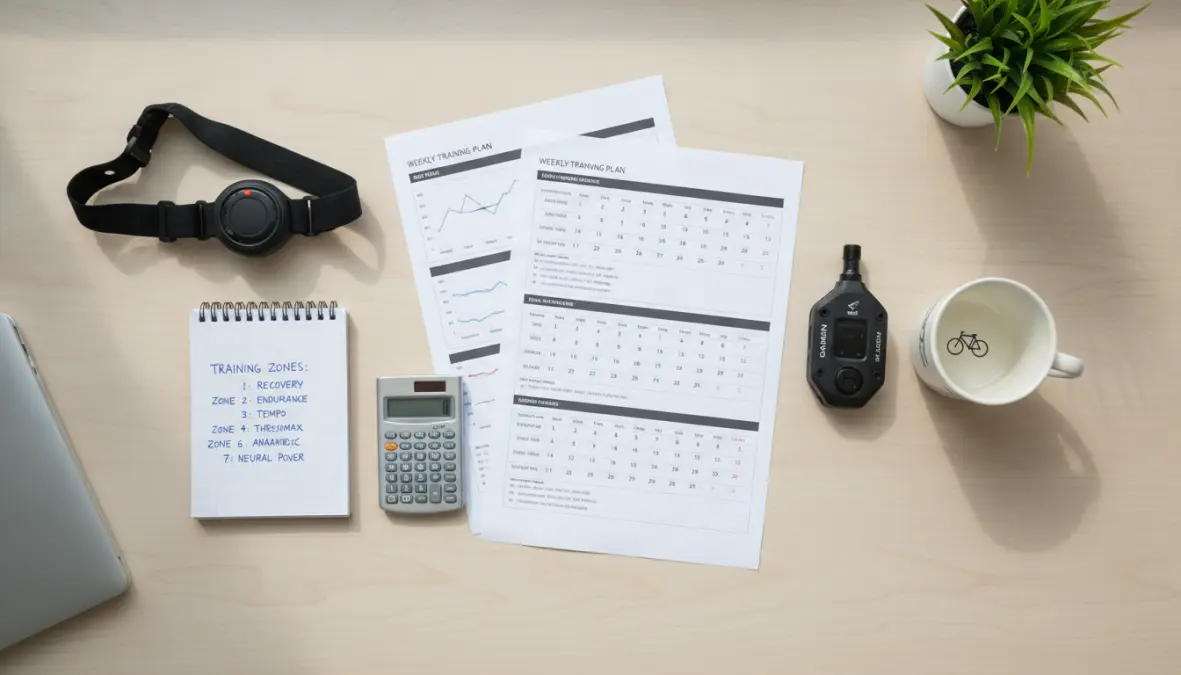
Building Your Aerobic Base: Training Plans and Best Practices
Knowing your zones is step one. Building a sustainable, effective training plan around endurance base building cycling is where the real work begins. This is especially important during spring cycling training when you’re laying the foundation for peak performance later in the season.
How Much Zone 2 Training Do You Need?
The question of how long should zone 2 rides be depends on your experience and goals, but general guidelines suggest individual sessions should last 2-4 hours for maximum adaptation. As for weekly volume, the polarized training cycling model—where roughly 80% of training time is spent at low intensity (Zone 1-2) and 20% at high intensity (Zone 4-5+)—has strong scientific backing.
For beginners wondering how to improve aerobic base cycling, start with 3-4 Zone 2 rides per week, gradually building duration before adding intensity. Experienced cyclists might accumulate 8-15 hours weekly of Zone 2 work during base phases. The key is consistency over weeks and months—base miles are called that for a reason.
Common mistakes? Going too hard (drifting into Zone 3, the “gray zone” that’s too hard to build base but too easy to drive adaptation), insufficient volume, or abandoning Zone 2 work too quickly in favor of intervals. Patience pays dividends here.
Combining Zone 2 with High-Intensity Training
Zone 2 training shouldn’t exist in isolation. The polarized approach pairs extensive low-intensity work with targeted high-intensity sessions that push your VO2 max and raise your lactate threshold. This combination is more effective than constantly riding at moderate intensity.
During base-building phases, you might do 4-5 Zone 2 rides and one interval session weekly. As you move into race-specific training phases, the ratio might shift to 70/30 or even 60/40, but that low-intensity foundation remains crucial. Monitor for signs of overtraining: persistent fatigue, elevated resting heart rate, decreased performance, or motivation loss. Complement your cycling training with strength training to build overall resilience.
FAQ: Common Questions About Zone 2 Cycling
How long does it take to build an aerobic base?
Significant adaptations typically require 8-12 weeks of consistent Zone 2 training, though you’ll notice improvements within 4-6 weeks. Mitochondrial and capillary development happens gradually, so patience is essential.
Can I do Zone 2 training indoors?
Absolutely! Indoor trainers are actually ideal because you can maintain consistent power output without interruptions from traffic or terrain. Just ensure proper ventilation since heat stress can artificially elevate heart rate.
Is Zone 2 too easy to improve fitness?
Not at all. While it feels easy moment-to-moment, the cumulative training stress and physiological adaptations are profound. Elite athletes spend the majority of their training time here for good reason.
What if my heart rate drifts during long rides?
This is normal cardiac drift. If you’re using power, maintain your wattage target. If using heart rate alone, accept some upward drift (5-10 bpm) as normal, or slightly reduce intensity to keep heart rate stable.
Should beginners focus only on Zone 2?
For the first 8-12 weeks, zone 2 training plan for beginners cycling programs emphasize almost exclusively low-intensity work to build foundational fitness safely. Check out our beginner’s guide to endurance training for more structured approaches.
How do I know if my Zone 2 training is working?
Track your power output at a given heart rate over time. If you can sustain higher watts at the same heart rate after several weeks, or maintain the same watts at a lower heart rate, you’re improving. Also watch for better fat oxidation (feeling energized on longer rides without constant fueling).
Zone 2 training might not be the most exciting part of cycling, but it’s undeniably the most important for long-term development. By building your aerobic engine through consistent, controlled efforts, you’re creating the foundation for every other aspect of your performance. Whether you’re chasing KOMs, preparing for centuries, or simply want to ride stronger and longer, those steady, conversational-pace miles are your ticket to becoming the cyclist you want to be. And remember, the mental discipline required for Zone 2 work—resisting the urge to push harder—is valuable training in itself. For more on developing that mental strength, explore our guide on mental training for athletes.