Cycling Shoe Fit Guide: How Tight Should Your Bike Shoes Be?
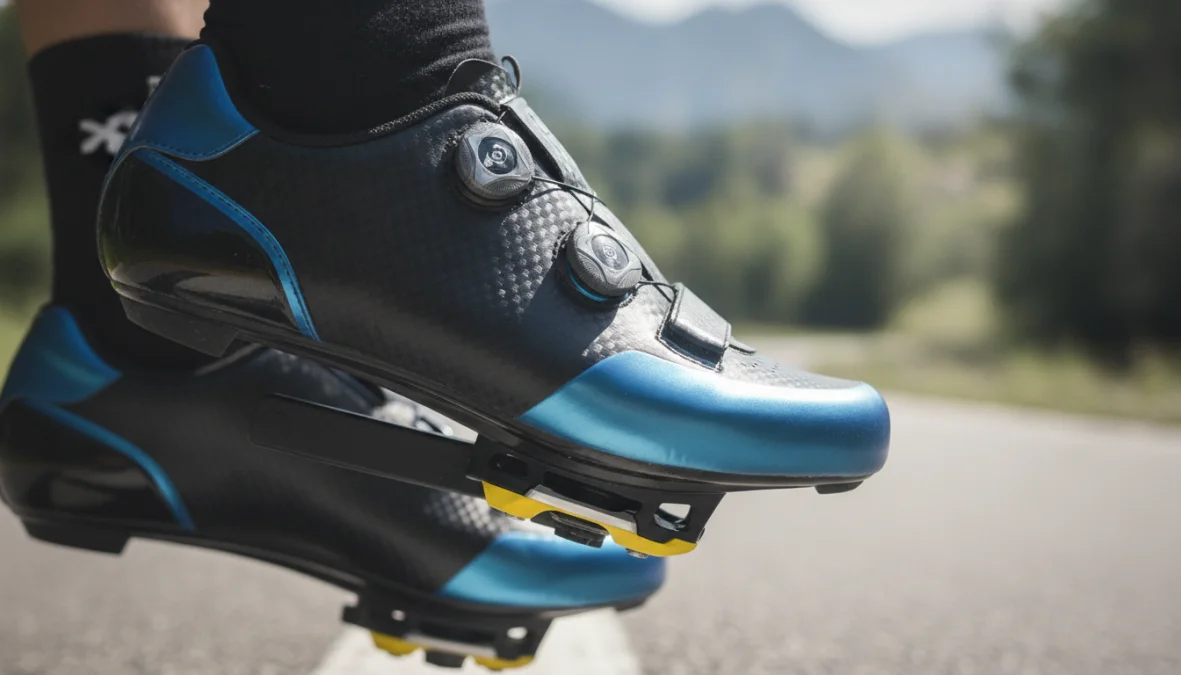
You’ve just invested in a sleek new pair of cycling shoes, but the moment you clip in, something feels… off. Too tight across the toe box? Heel sliding around? Or maybe your feet are going numb halfway through your ride. Here’s the thing: cycling shoe fit isn’t just about comfort—it’s the foundation of efficient power transfer and injury prevention. Unlike running shoes that need wiggle room, cycling shoes demand a precise, snug fit that can feel counterintuitive at first. Let’s break down exactly how tight your bike shoes should be and how to dial in that perfect fit.
How Should Cycling Shoes Fit? Understanding Proper Cycling Shoe Fit
The proper cycling shoe fit walks a fine line between supportive and restrictive. Unlike everyday sneakers, cycling footwear fit needs to be considerably snugger because your foot isn’t flexing through a heel-to-toe motion—it’s locked in a fixed position, transferring force directly through the pedal stroke. Every millimeter of movement inside the shoe wastes energy and can create friction points.
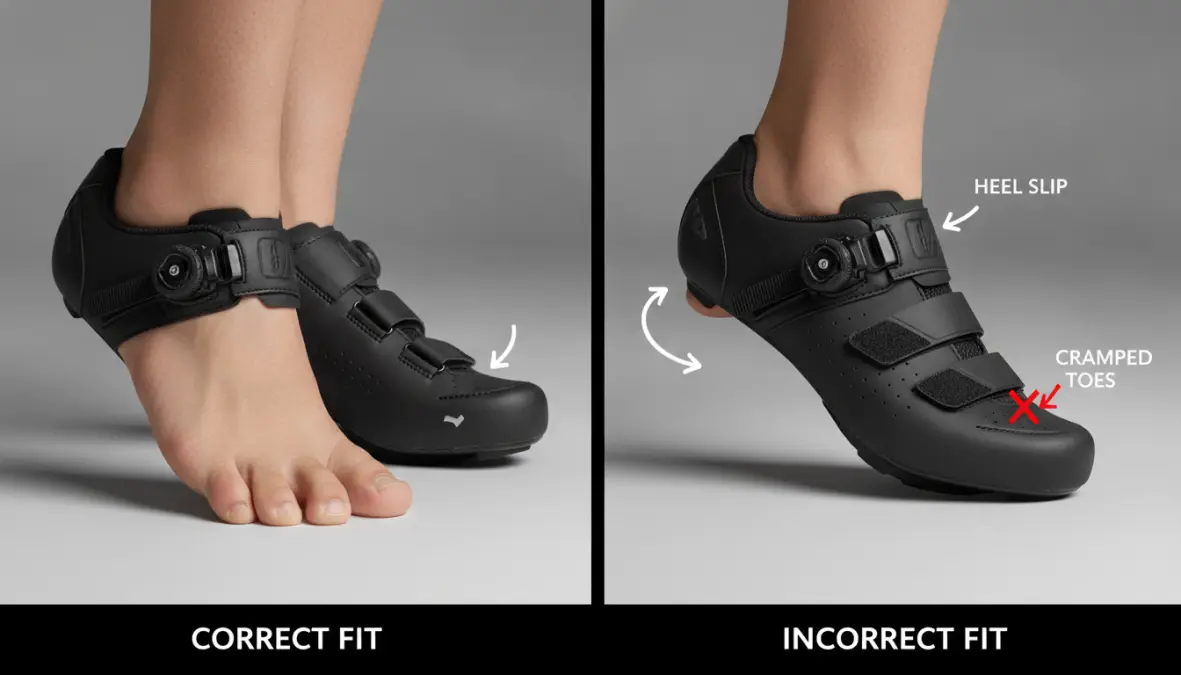
So how should cycling shoes fit exactly? Think “firm handshake” rather than “vice grip.” Your heel should be locked in place with zero lift when you pull up on the pedals. The arch support should match your foot’s natural contour without creating pressure points. The toe box width should accommodate your forefoot without squeezing, but there shouldn’t be side-to-side sliding either.
Signs of a good fit:
- Heel stays planted when simulating a pedal stroke
- No heel slip when pulling up
- Toes can wiggle slightly but not freely move
- Arch feels supported without excessive pressure
- No immediate hot spots or pinch points
- Even pressure distribution across the foot
Red flags indicating poor fit:
- Toes jammed against the front (causes numbness in feet cycling)
- Heel lifting more than 5mm during pedal stroke
- Burning sensation on ball of foot after 10 minutes
- Visible gaps between foot and shoe upper
- Need to over-tighten straps to prevent movement
Remember that how tight should cycling shoes be also depends on your closure system. A BOA dial system allows micro-adjustments mid-ride, while velcro straps offer broader zones of adjustment. Proper bike fitting includes optimizing your shoe fit as part of the overall position equation.
Getting Your Bike Shoe Sizing Right: Fit Tips for Different Cycling Disciplines
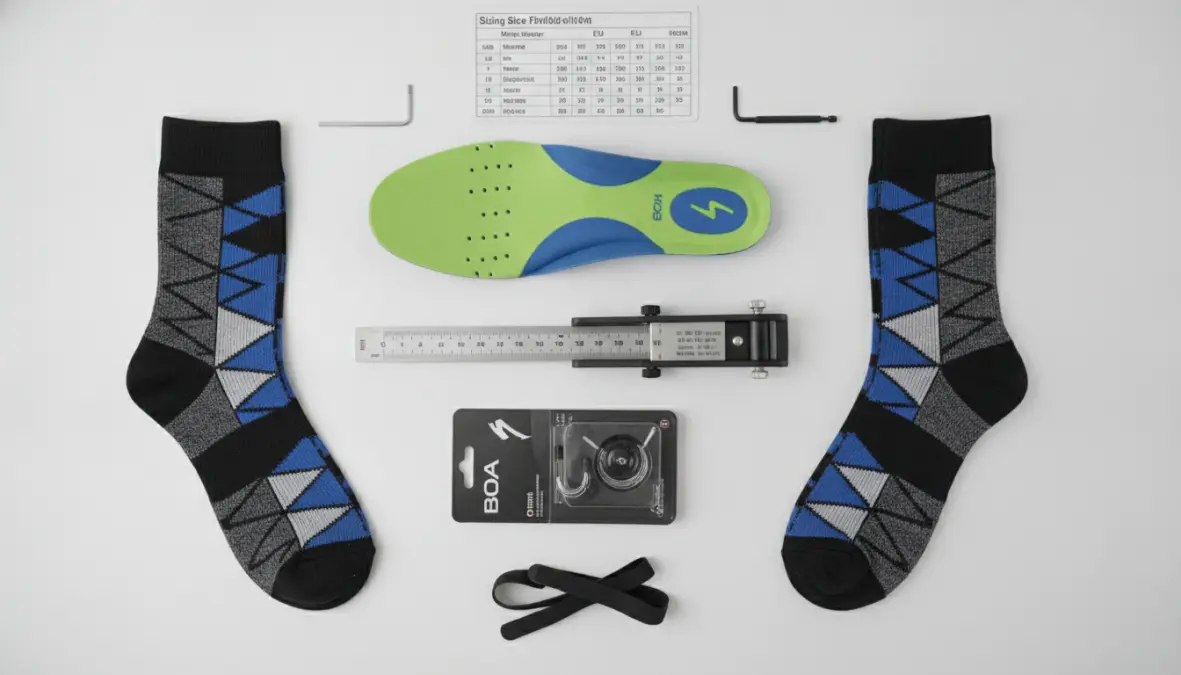
Bike shoe sizing varies wildly between brands—sometimes by a full size or more. Always check manufacturer-specific sizing charts and measure both feet in the afternoon when they’re slightly swollen from daily activity. Trace your foot on paper while standing, then measure from heel to longest toe in millimeters for the most accurate reference.
The road bike shoe fit typically runs narrower and tighter than mountain bike shoes, which need more walkability. Indoor cycling shoes often split the difference. When testing fit, wear the same thickness cycling socks you’ll use on rides—thicker winter socks versus thin summer ones can affect fit significantly.
Practical fitting checklist:
- Measure both feet (use the larger one for sizing)
- Try shoes in the afternoon when feet are naturally swollen
- Wear your actual cycling socks during fitting
- Simulate pedaling motion while standing
- Check for heel slip by lifting your heel deliberately
- Walk around for mountain bike shoes to test flex points
- Adjust all closure systems to understand their range
Should cycling shoes be tight or loose? The answer is “snug but not constricting.” If you’re between sizes, consider whether you have wide or narrow feet, whether you’ll use thick insoles for additional arch support, and which discipline you’re riding. Road cyclists often size down for maximum power transfer, while mountain bikers might size up slightly for comfort during long gravel adventures like those covered in our bike packing guide.
How much room in cycling shoes is ideal? You should have roughly 5-7mm of space beyond your longest toe when standing. Should toes touch end of cycling shoes? Not quite—touching indicates too-small sizing that’ll cause numbness once your feet swell during exertion.
Common hot spots to watch for include the ball of the foot (often caused by improper cleat position), outside edge of the little toe (too-narrow toe box), and top of the foot (over-tightened straps). Adjust your closure system progressively—start loose and tighten gradually during your first few rides to find the sweet spot.
Breaking In Your Cycling Shoes: What to Expect
How to know if cycling shoes fit properly during break-in? Quality shoes mold to your feet over 5-10 rides, but the fundamental fit shouldn’t change dramatically. Synthetic uppers offer minimal stretch, while leather or microfiber materials may give 2-3mm over time. If you’re experiencing pain that increases rather than decreases after three rides, that’s a sizing problem, not a break-in issue.
During break-in, wear shoes around the house for 30-minute sessions before your first ride. This identifies pressure points before they become ride-ending problems. Start with shorter indoor sessions on a trainer where you can adjust fit mid-ride without stopping. Once comfortable indoors, test them during an easy outdoor spin before attempting longer efforts or interval work like high-cadence training.
When to Replace or Resize Your Cycling Shoes
Feet change over time due to age, weight fluctuations, and even years of cycling itself. Persistent numbness in feet cycling that wasn’t present before often indicates your shoes no longer fit properly. Other signs include worn-through BOA cables that can’t achieve proper tightness, compressed footbeds that no longer provide arch support, or cracked uppers that allow excessive foot movement.
If adjusting cleat position, changing socks, and experimenting with aftermarket insoles doesn’t resolve fit issues, it’s time to reassess sizing. Most quality cycling shoes last 3,000-5,000 miles or 2-4 years of regular use before the structural integrity degrades enough to affect fit and performance.
FAQ: Common Cycling Shoe Fit Questions
Should cycling shoes be tight or loose?
Cycling shoes should be snug but not painfully tight. Your heel shouldn’t lift, toes should have 5-7mm clearance, and there shouldn’t be side-to-side movement. Over-tightening causes numbness; too loose wastes power and causes blisters.
How much room should be in the toe of a cycling shoe?
Aim for 5-7mm (roughly the thickness of your thumb) between your longest toe and the shoe’s end when standing. This prevents toe jamming when your feet swell during rides but maintains efficient power transfer.
Should your toes touch the end of cycling shoes?
No. Toes touching indicates the shoes are too small. As your feet swell during exertion and warm up in hot weather (check our summer cycling gear guide), this will cause painful compression and numbness.
Why do my feet go numb in cycling shoes?
Common causes include over-tightening straps (especially across the forefoot), shoes that are too small, cleats positioned too far forward, or insufficient arch support. Try loosening your BOA or velcro gradually during rides and check your cleat position first.
Can cycling shoes stretch?
Minimally. Leather and microfiber uppers may give 2-3mm over time, but synthetic materials barely stretch. Never buy shoes expecting significant break-in stretching—they should fit properly from day one with only minor comfort improvements over initial rides.
Do you wear socks with cycling shoes?
Yes, almost always. Cycling-specific socks manage moisture, reduce friction, and provide a consistent fit reference. Some triathletes go sockless for transitions, but for regular cycling, proper socks prevent blisters and improve comfort.
Getting your cycling shoe fit dialed in perfectly transforms your riding experience. Whether you’re transitioning from indoor to outdoor cycling or chasing new performance gains with power meter training, your shoes are the critical interface between body and bike. Take the time to get it right—your feet (and your watts) will thank you.