How to Fix Common Bike Mechanical Issues on the Road: Essential Guide for Cyclists
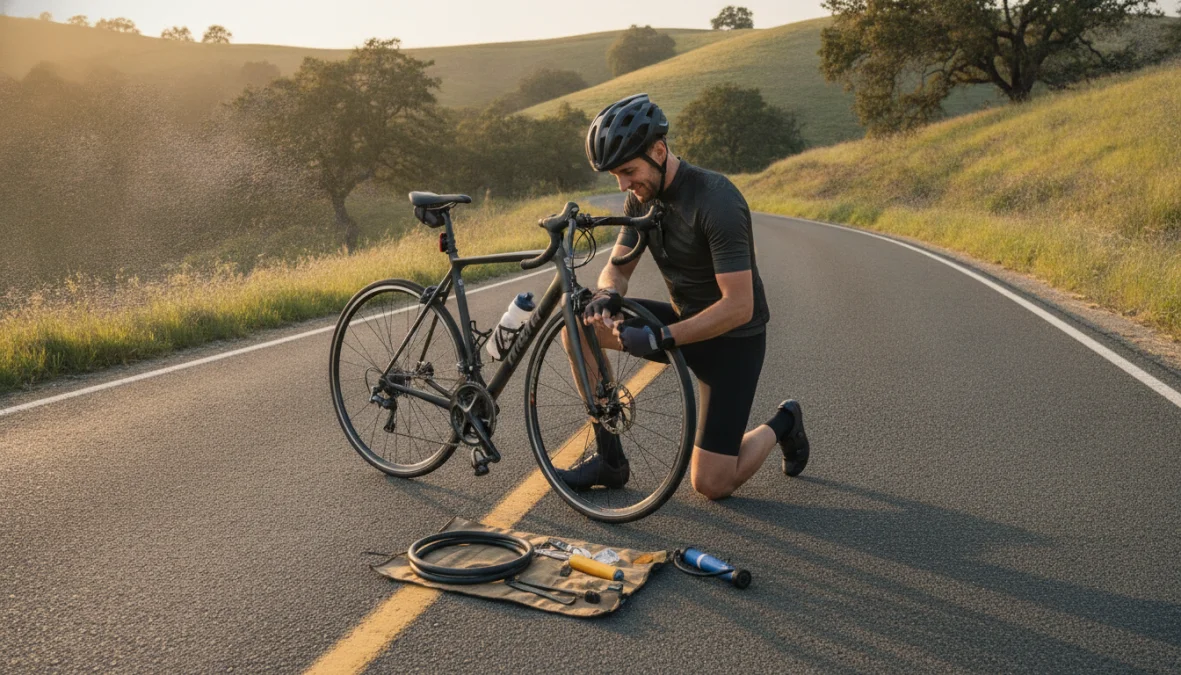
Picture this: you’re twenty miles from home, crushing a perfect ride, when suddenly your bike starts acting up. Whether it’s a flat tire, a slipping chain, or brakes that won’t bite, bike mechanical issues have a knack for striking at the worst possible moment. But here’s the good news—most common bicycle problems can be fixed right there on the roadside with just a few basic tools and a little know-how. Let’s dive into the essential skills every cyclist needs to get back on the road quickly and safely.
Essential Tools and Preparation for Roadside Bike Repairs
Before you even think about heading out on a ride, especially longer ones, you need to pack the right gear for emergency bike repair. Your bike emergency toolkit doesn’t need to be massive—it just needs to be smart.
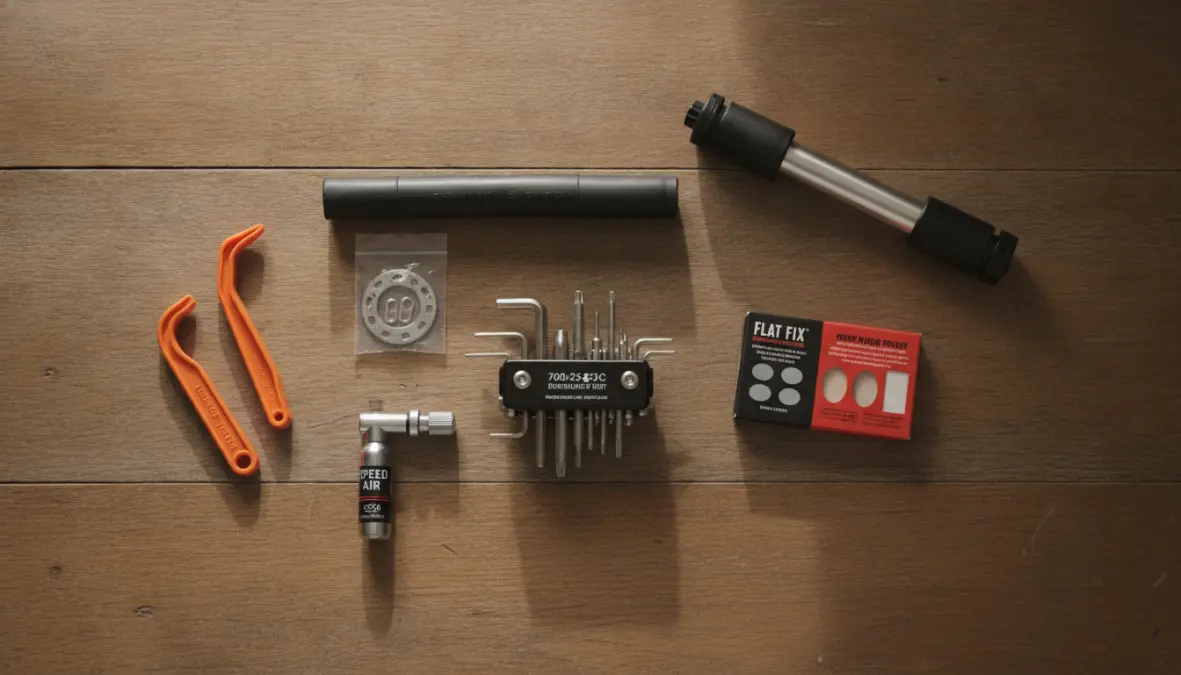
At a minimum, every cyclist should carry a quality bike multi-tool with hex keys, screwdrivers, and a chain link master (also called a quick link). Add a puncture repair kit or spare tube, tire levers, and a portable pump or CO2 inflator. For longer rides, throw in a spoke wrench, extra brake pads if you’re touring, and even a small roll of duct tape—it’s saved more rides than you’d think.
The key difference between short and long rides? Scale your kit accordingly. A quick 30-minute spin around town? Just the basics. Planning a century or gravel adventure like those covered in our gravel bike vs road bike guide? Pack redundancy—two tubes, extra CO2 cartridges, and more comprehensive tools.
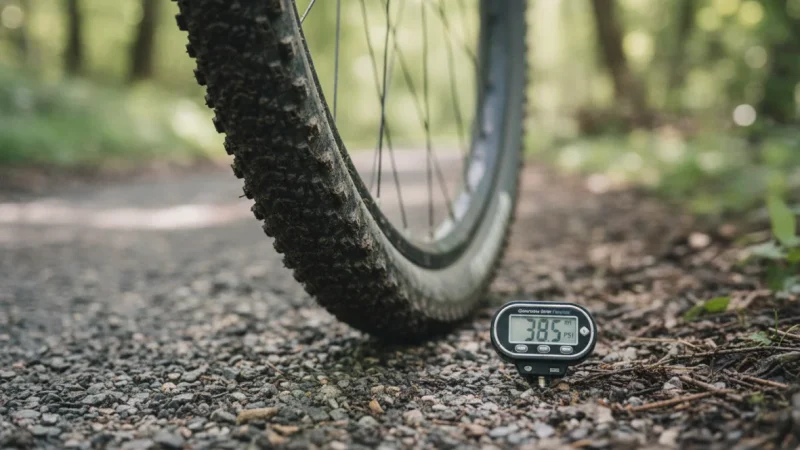
Don’t forget preventive bike maintenance tips: check your tire pressure gauge reading before every ride, inspect your chain for wear, and ensure your brakes engage smoothly. An ounce of prevention beats an hour of roadside frustration every time.
Most Common Bike Mechanical Issues and Step-by-Step Fixes
Let’s tackle the big four cycling mechanical failures you’re most likely to encounter and exactly how to fix a flat tire while cycling or handle other urgent problems.
Flat Tires: The Classic Roadside Challenge
Diagnosis: You’ll feel the ride get mushy, hear a hissing sound, or notice your wheel wobbling. This is hands-down the most common issue cyclists face.
Step-by-step fix:
- Release your brake (if rim brakes) and flip the bike upside down or use the kickstand
- Open the quick release or unscrew the axle nuts to remove the wheel
- Use tire levers to pry one side of the tire off the rim—start opposite the valve
- Remove the punctured tube and inspect the tire interior for thorns or glass
- Insert your new tube, starting at the valve, and carefully reseat the tire bead
- Inflate to proper pressure (check sidewall markings) and reinstall the wheel
Pro tip: Always carry a spare tube rather than relying only on patches for roadside bike fixes. Patches work great, but tube replacement is way faster when you’re miles from home.
Chain Problems: Drops and Breaks
Diagnosis: Your chain falls off the chainring, skips under power, or worse—snaps completely. These are among the most frustrating common bicycle problems.
Quick fixes for bike chain problems:
- Dropped chain: Simply lift it back onto the chainring or cassette—shift to smallest cog first for easier handling
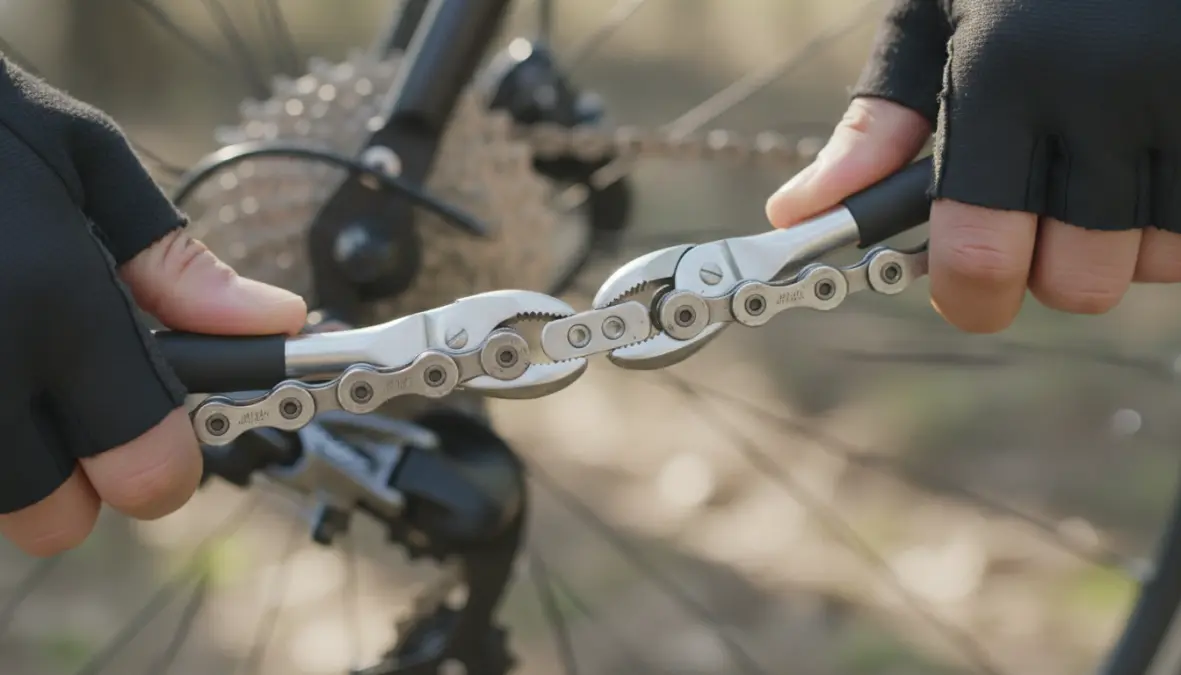
- Broken chain: Use your multi-tool’s chain breaker to remove the damaged link, then reconnect using a master link (this is why you always carry one!)
- Persistent dropping: Check your front derailleur limit screws—the chain shouldn’t be able to overshift beyond the big or small ring
If you’re experiencing chronic chain issues, it might be related to bike fit problems affecting your pedaling mechanics—check out our bike fitting guide for alignment tips.
Brake Issues: When Stopping Power Fails
Diagnosis: Brakes rub constantly, feel spongy, or provide inadequate stopping power—all serious safety concerns requiring immediate attention.
Fixing bike brakes during a ride:
- Rubbing brakes: Check brake pad alignment—pads should hit the rim squarely, not touch the tire. Loosen mounting bolt, realign, retighten
- Weak braking: Tighten cable tension using the barrel adjuster (turn counterclockwise to increase tension)
- One-sided pull: Center your caliper by loosening the mounting bolt slightly, squeezing the brake lever, then retightening
Gear Shifting Problems
Diagnosis: Gears won’t shift, skip under load, or the chain rubs on the front derailleur cage.
How to adjust bike gears on the road:
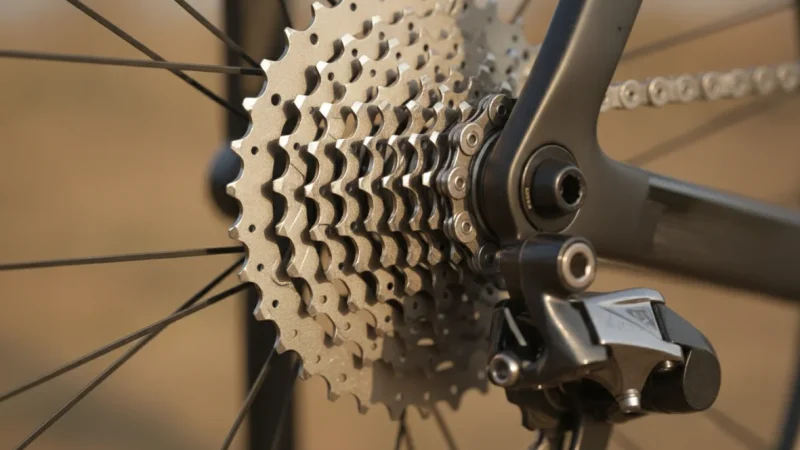
- Rear derailleur: Use barrel adjusters—if the chain won’t shift to larger cogs, turn counterclockwise; if it won’t drop to smaller cogs, turn clockwise
- Front derailleur: Adjust cable tension similarly, and check that the cage is parallel to chainrings and 1-2mm above the big ring
- Broken cable: This requires repairing broken bike cables on the go—you can manually position the derailleur in a usable gear and secure it, then ride single-speed until you reach help
Understanding proper pedaling mechanics helps reduce drivetrain stress—our guide on cycling cadence training can help you shift more smoothly.
When to Attempt Repairs vs. Call for Help
Not every mechanical issue should be tackled roadside. Knowing what to do when your bike breaks down includes recognizing when a problem exceeds safe DIY limits.
Safe roadside repairs include: flat tires, minor brake adjustments, chain issues, basic derailleur adjustment, and spoke tightening (if you have a spoke wrench).
Call for help when you encounter: cracked or bent frame tubes, completely severed brake cables (front brake especially), sheared axles, severely bent wheels that won’t spin, or stripped threads on critical components. These aren’t just inconveniences—they’re safety hazards.
If you’re stuck with an unfixable issue, secure your bike as best you can and find alternative transport. Many cyclists keep a rideshare app handy or have roadside assistance through cycling organizations. For regular commuters following our bike commuting guide, having a backup plan is essential.
Remember: limping home on a sketchy repair beats risking injury. If brakes aren’t working properly or the frame integrity is questionable, don’t ride—period.
FAQ: Common Questions About Bike Mechanical Issues
What is the most common bike mechanical problem?
Flat tires win this dubious honor by a landslide. Punctures from glass, thorns, or pinch flats account for roughly 60% of all roadside mechanical issues cyclists face. That’s why essential tools for roadside bike repair always start with a spare tube and tire levers. Regular tire pressure checks significantly reduce flat frequency.
How do you fix a bike chain that keeps falling off?
Persistent chain drops usually indicate derailleur adjustment problems or worn components. First, check your front derailleur’s limit screws—adjust the low limit if it drops to the inside, high limit if it falls outboard. Also inspect chain wear with a checker tool; chains beyond 0.75% stretch should be replaced. Finally, ensure your chainline is straight and the derailleur cage sits parallel to chainrings.
Can you ride a bike with a broken spoke?
Yes, but with caution. One broken spoke won’t immediately destroy your wheel, but you should wrap the loose spoke around adjacent ones to prevent it catching. The wheel may wobble slightly—true it minimally using your spoke wrench if possible. Avoid hard efforts and get it properly repaired soon. Multiple broken spokes? Stop riding—the wheel could collapse.
What should be in an emergency bike repair kit?
Your bike emergency toolkit should include: multi-tool with hex keys (4mm, 5mm, 6mm minimum), tire levers, spare tube or patch kit, portable pump or CO2 inflator with cartridges, chain quick link, and a small rag. For longer rides, add spoke wrench, extra master links, duct tape, and zip ties. Keep everything in a compact saddle bag—weight matters less than being prepared.
How do you prevent common bike mechanical failures?
Prevention beats roadside fixes every time. Follow a regular maintenance schedule as outlined in our cycling maintenance guide: clean and lube your chain weekly, check tire pressure before every ride, inspect brake pads monthly, and replace cables annually. Also replace consumables proactively—worn chains, stretched cables, and thin brake pads cause 80% of preventable mechanical issues on the road.
Mastering bicycle troubleshooting transforms you from a stranded rider into a confident cyclist who can handle whatever the road throws your way. The secret isn’t being a master mechanic—it’s carrying the right tools, knowing the basics, and staying calm when things go sideways. Pack smart, practice these repairs at home first, and you’ll never be caught unprepared. Now get out there and ride with confidence—you’ve got this!