L-Carnitine for Endurance Athletes: Science-Backed Benefits for Fat Burning and Recovery

If you’ve ever hit the wall during a long run or felt your legs turn to concrete halfway through a century ride, you know the struggle is real. Endurance athletes are constantly searching for that edge—something to help burn fat more efficiently, recover faster, and push performance to the next level. Enter l carnitine endurance supplementation, a compound that’s been making waves in sports nutrition for its role in energy metabolism and recovery. But does it actually work, or is it just another overhyped supplement? Let’s dig into the science and see how L-carnitine can benefit runners, cyclists, triathletes, and anyone pushing their aerobic limits.
What Is L-Carnitine and Why Do Endurance Athletes Need It?
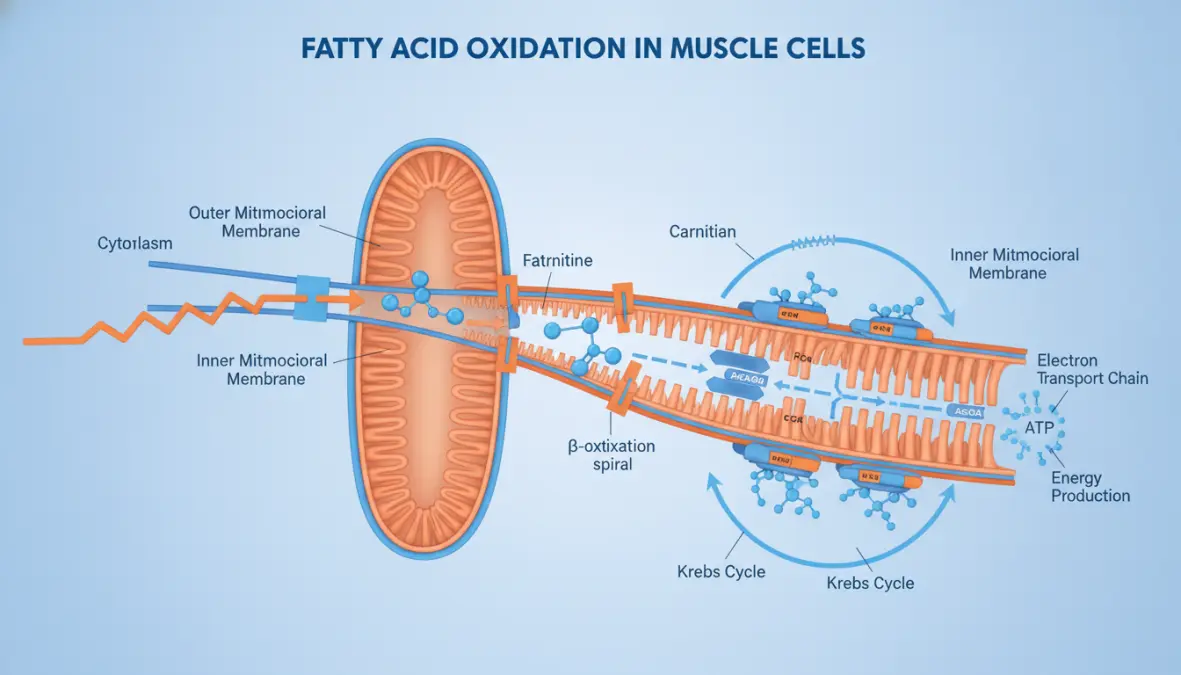
L-carnitine is a naturally occurring compound synthesized in your body from amino acids lysine and methionine. Its primary job? Shuttling long-chain fatty acids into the mitochondria—the powerhouse of your cells—where they’re burned for energy through fatty acid oxidation. Think of it as the delivery truck that hauls fat to the cellular furnace, especially important when you’re grinding through aerobic activities that demand sustained energy output.
For l carnitine for athletes, particularly those focused on endurance sports like marathon running, cycling, or triathlon, this becomes crucial. During prolonged exercise, your body relies heavily on fat oxidation to preserve precious muscle glycogen stores. The more efficiently you burn fat, the longer you can maintain intensity before bonking. While your body produces L-carnitine and you get some from diet (mainly meat and dairy), supplementation may enhance these natural levels, potentially optimizing mitochondrial function and supporting better aerobic capacity.
You’ll find L-carnitine in several forms: L-carnitine L-tartrate (most studied for exercise), acetyl l carnitine (crosses the blood-brain barrier more easily), and propionyl-L-carnitine (cardiovascular focus). For endurance performance, L-carnitine L-tartrate is typically the go-to choice due to its rapid absorption and research backing in athletic populations. Understanding proper training zones alongside smart supplementation creates a powerful combination for performance gains.
Performance and Recovery Benefits of L-Carnitine for Endurance Training
Enhanced Fat Burning and Energy Utilization
So, how does l carnitine help with fat burning? By increasing the rate at which fatty acids are transported into mitochondria, L-carnitine supplementation can enhance your body’s ability to use fat as fuel during exercise. This is particularly valuable during longer, steady-state efforts where fat oxidation becomes the dominant energy pathway.
Research on carnitine endurance performance shows promising results. Studies with trained athletes have demonstrated that L-carnitine supplementation (typically 2-4g daily for several weeks) can increase fatty acid oxidation during submaximal exercise, effectively sparing muscle glycogen. This glycogen-sparing effect means you can maintain higher intensities for longer before depleting your carbohydrate stores—a game-changer for marathon runners and long-distance cyclists.
For l carnitine running and carnitine cycling performance, this translates to real-world benefits: better endurance during the final miles of a marathon, improved power output in the closing kilometers of a gran fondo, or simply feeling stronger during training blocks. Some research even suggests potential improvements in vo2 max improvement and lactate threshold, though these effects may be more modest and require consistent supplementation over time. Understanding your performance metrics helps track these improvements.
Faster Recovery and Reduced Muscle Damage
Beyond performance during exercise, carnitine recovery benefits might be where this supplement truly shines. L-carnitine has demonstrated anti-inflammatory and antioxidant properties that can help reduce exercise-induced muscle damage and accelerate post exercise recovery.
Multiple studies have shown that L-carnitine supplementation can decrease markers of muscle damage (like creatine kinase) and reduce delayed onset muscle soreness (DOMS) following intense training sessions. For endurance athletes stacking high-mileage weeks or following demanding training plans, this means potentially bouncing back faster between workouts and maintaining training quality throughout the week.
The mechanism involves reducing oxidative stress and inflammation at the cellular level, which helps preserve muscle tissue integrity during and after prolonged exercise. For l carnitine running enthusiasts tackling back-to-back long runs or cyclists doing multi-day stage events, these l carnitine benefits for muscle recovery after exercise can make the difference between productive training and overtraining. Combining L-carnitine with other recovery strategies like optimal sleep and anti-inflammatory nutrition creates a comprehensive recovery protocol.

How to Use L-Carnitine: Dosage, Timing, and Best Practices for Athletes
Okay, so you’re convinced L-carnitine is worth trying. But what’s the best l carnitine dosage for endurance athletes, and when to take l carnitine for endurance training?
Most research supports a dosage range of 2-4 grams daily, typically split into two doses. L-carnitine L-tartrate is generally recommended for endurance applications due to its rapid absorption and strong research backing. Here’s the catch: L-carnitine isn’t a pre-workout stimulant that kicks in immediately. Building meaningful tissue levels requires consistent supplementation over several weeks—think 8-12 weeks minimum to see substantial performance and recovery benefits.
Regarding l carnitine before or after cardio: timing matters less than consistency, but taking it with carbohydrates can enhance absorption through insulin-mediated uptake. Many athletes take one dose with breakfast and another pre-workout with a carb-containing snack. Some prefer taking it daily regardless of training schedule to maintain stable levels, while others cycle it during high-volume training blocks.
For l carnitine for athletes following plant-based diets, supplementation may be particularly beneficial since dietary sources are primarily animal-based, and vegetarian/vegan athletes often have lower baseline carnitine levels. This group may experience more noticeable benefits from supplementation.
Side effects are generally mild but can include gastrointestinal discomfort at higher doses. Start at the lower end (2g daily) and assess tolerance before increasing. Avoid mega-dosing—more isn’t better here, and excessive amounts won’t enhance results. L-carnitine is also safe to combine with most other supplements, though as always, consult with a healthcare provider if you have underlying health conditions or take medications.
Consider pairing L-carnitine supplementation with proper hydration strategies and smart training programming that balances endurance and strength work. Even core stability work benefits when recovery is optimized.
FAQ: L-Carnitine for Endurance Athletes
How long does it take for L-carnitine to work for endurance?
Unlike stimulant-based supplements, l carnitine endurance benefits require time to build. Most research shows meaningful improvements after 8-12 weeks of consistent supplementation at 2-4g daily. Some recovery benefits may appear sooner, but performance gains in fat oxidation and glycogen sparing typically require longer-term use to optimize tissue carnitine levels.
Does l carnitine improve endurance performance?
Yes, research supports that L-carnitine can enhance carnitine endurance performance through improved fat oxidation, glycogen sparing, and reduced muscle damage. Benefits are most pronounced during prolonged, submaximal efforts (marathon pace, long rides) rather than short, high-intensity work. Individual responses vary, with some athletes experiencing more noticeable improvements than others.
Can L-carnitine improve marathon performance?
Absolutely. L carnitine benefits for marathon runners include enhanced fat burning during long runs, better glycogen preservation for the final miles, and faster recovery between high-mileage weeks. Combined with proper pacing and nutrition strategies, L-carnitine supplementation can contribute to improved marathon times and reduced post-race recovery time.
Should I take L-carnitine every day or only on training days?
Daily supplementation is recommended, even on rest days. Maintaining consistent tissue levels of l carnitine for athletes requires regular intake rather than sporadic dosing. Think of it as building a reservoir in your system that supports both training adaptations and recovery processes continuously, not just during workouts.
L-carnitine isn’t a magic bullet, but for endurance athletes willing to invest in consistent supplementation alongside solid training and recovery practices, the science-backed benefits for fat burning, stamina, and recovery are worth considering. Whether you’re chasing a PR or simply want to feel stronger during your long training sessions, optimizing your body’s ability to use fat as fuel and recover efficiently can make those miles feel just a bit easier.