Aqua Jogging for Runners: The Complete Guide to Water Running Benefits and Technique
Getting sidelined by an injury is every runner’s nightmare. But what if there was a way to keep training, maintain your cardiovascular fitness, and even improve your running form—all while giving your joints a complete break? That’s exactly what aqua jogging for runners delivers. Whether you’re recovering from shin splints, training for a marathon, or simply looking for smart cross-training options, water running might just become your secret weapon.
What Is Aqua Jogging and Why Runners Should Care
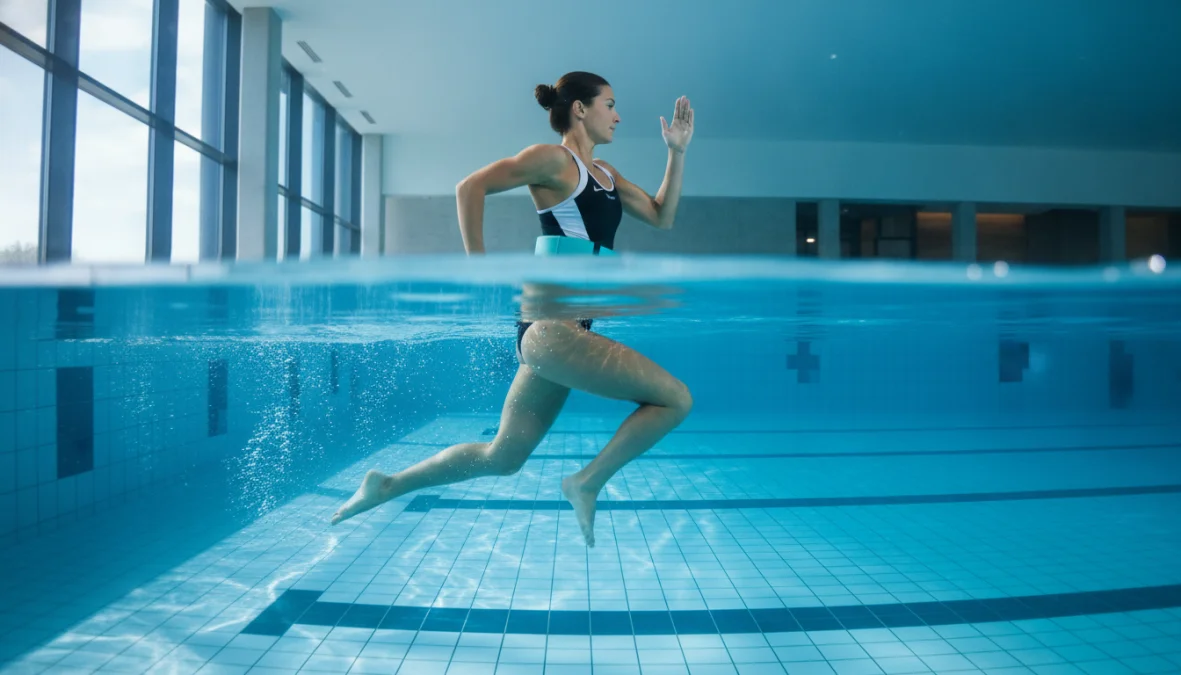
Aqua jogging runners are discovering what rehabilitation specialists have known for decades: running in water provides all the cardiovascular benefits of land running without the pounding. Also known as deep water running, this water running for runners technique involves simulating your running gait while suspended in water, typically wearing a flotation belt to maintain an upright position.
There are two main approaches: deep water running (where your feet don’t touch the pool bottom) and shallow water running (standing in waist-to-chest-deep water). Deep water running is generally preferred for injury recovery since it’s completely non weight bearing, while shallow water adds some resistance and ground contact.
Who benefits? Practically every runner. Injured athletes use it for aqua jogging for injury recovery, maintaining fitness during downtime from stress fractures, plantar fasciitis, or IT band syndrome. Healthy runners incorporate it as cross-training to reduce overall impact load. Studies show that runners experience injuries at rates between 37-56% annually, largely due to repetitive stress. Aqua jogging provides a practical solution—the buoyancy of water reduces impact forces by approximately 90% compared to land running, while the resistance creates an effective cardiovascular workout.
Aqua Jogging Benefits: From Injury Prevention to Performance Enhancement
The aqua jogging benefits extend far beyond simple injury management. Research published in the Journal of Strength and Conditioning Research found that runners who substituted aqua jogging for some land miles maintained their VO2 max—the gold standard for aerobic fitness—over a six-week period. This makes it invaluable for water running for marathon training when you need to preserve fitness while reducing impact.
Let’s break down the key advantages. First, pool running workout sessions provide exceptional cardiovascular conditioning. The water’s resistance forces your heart to work harder to circulate blood, delivering an intensity comparable to tempo runs without joint stress. Second, it’s genuinely zero-impact—perfect for runners dealing with shin splints, stress fractures, or knee issues. If you’re managing knee pain, combining aqua jogging with targeted exercises from our knee pain prevention guide creates a comprehensive recovery strategy.
The resistance provided by water strengthens muscles through a fuller range of motion than land running. Your core works overtime to maintain stability—studies show aqua jogging activates abdominal muscles 15-20% more than regular running. This core activation helps prevent injuries, and you can further enhance this by incorporating exercises from our core strength guide for endurance athletes.
Water’s natural resistance also improves running form. The slow-motion effect helps you focus on proper mechanics—high knees, controlled arm swing, and upright posture. Many runners report improved land running efficiency after consistent aqua jogging. Additionally, it’s excellent for active recovery after hard workouts or races, promoting circulation without adding stress. Pregnant runners often use aqua jogging to maintain fitness safely throughout pregnancy.
Aqua Jogging Technique and Workout Structure
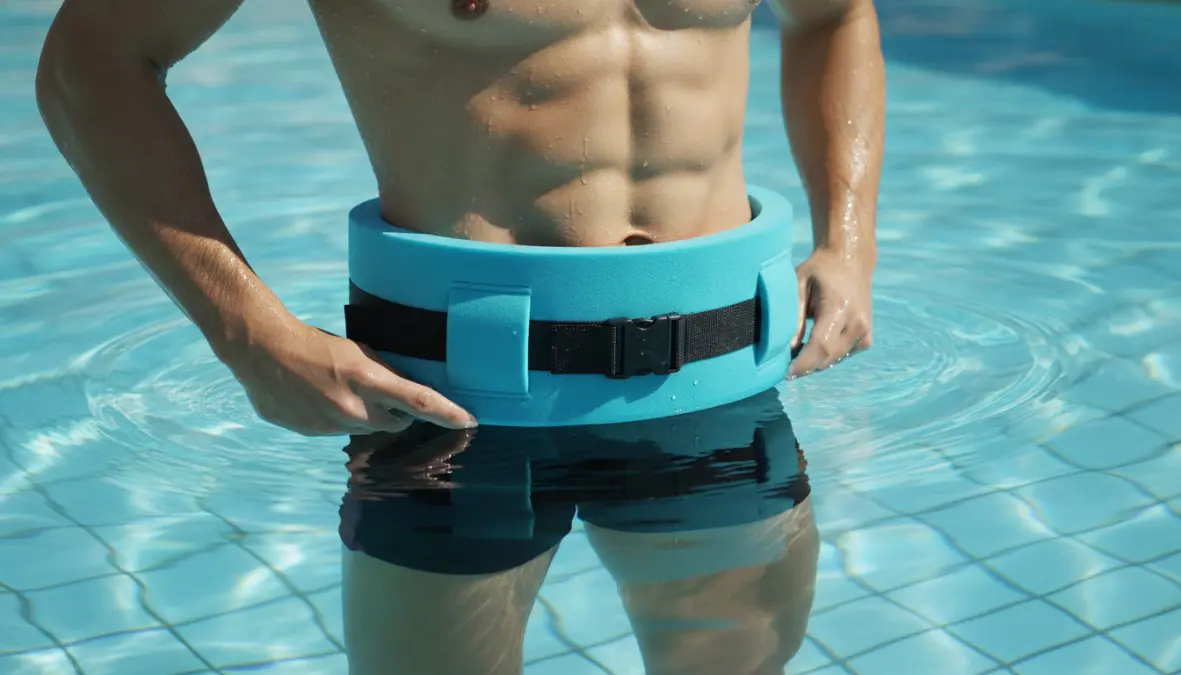
Proper aqua jogging technique makes the difference between an effective workout and just splashing around. Start with equipment: an aqua jogging belt (also called flotation belt) is essential for deep water running. Position it around your waist or slightly higher, snug but comfortable. Some runners use aqua jogger vests for additional support, but a quality belt usually suffices.
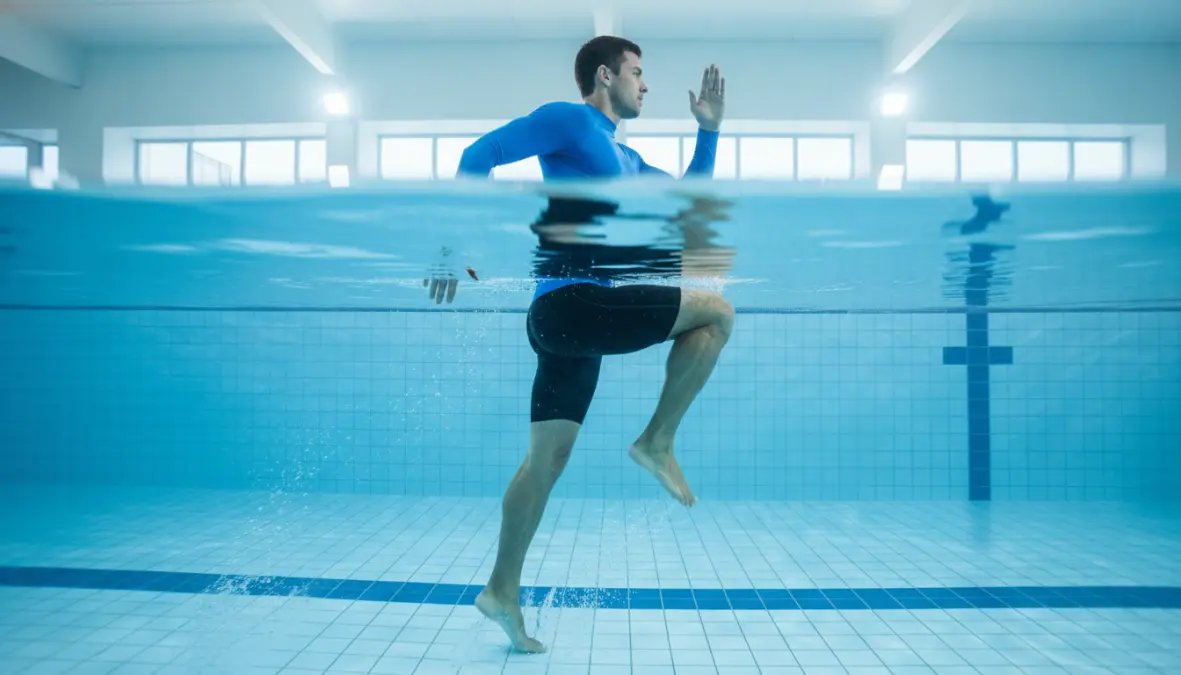
For correct form, maintain an upright posture with a slight forward lean from the ankles, not the waist. Your head should be up, eyes forward, shoulders relaxed. Drive your knees forward and up (aim for 60-70 degrees of hip flexion), then extend backward. Avoid excessive forward or backward lean—you should feel like you’re running upright. Your arms should swing naturally, bent at roughly 90 degrees, just as they would during land running. Maintain a cadence of 160-180 steps per minute.
Common mistakes include leaning too far forward (which engages hip flexors excessively), cycling motion instead of running gait, and insufficient knee lift. Learning how to do aqua jogging correctly takes practice—spend your first sessions focusing purely on form before worrying about intensity.
For workout structure, start with a 5-10 minute warm-up at easy effort. Then choose your focus: for recovery, maintain steady moderate effort for 20-40 minutes. For speed work, try intervals—8-10 repetitions of 2-3 minutes hard effort with 1-2 minutes easy recovery. For endurance, go 45-60 minutes at conversational pace. Cool down for 5 minutes at very easy effort.
Measuring intensity without GPS requires perceived exertion or heart rate monitors (waterproof, of course). Your heart rate will typically be 10-15 beats lower in water than land running at equivalent effort due to hydrostatic pressure and cooling effects, so adjust expectations accordingly. The best aqua jogging exercises for runners include high-knee intervals, bounding drills, and tempo efforts—all adaptable to your training phase.
FAQ: Common Questions About Water Running for Runners
Is aqua jogging as effective as regular running?
For cardiovascular fitness maintenance, absolutely. Research shows properly executed aqua jogging runners maintain VO2 max and endurance capacity comparable to land running. However, it doesn’t provide bone-loading stimulus or running-specific eccentric muscle actions, so it shouldn’t completely replace running long-term unless injury requires it. The aqua jogging vs regular running debate isn’t about superiority—it’s about strategic use.
How often should runners do aqua jogging?
This depends on your goals. For injury recovery, daily sessions are fine and often beneficial. For cross-training, 1-2 sessions weekly can reduce injury risk while maintaining fitness. Many elite runners substitute one easy run weekly with aqua jogging to reduce cumulative impact.
Can you lose fitness with aqua jogging?
You won’t lose cardiovascular fitness if you maintain intensity and volume. However, running-specific neuromuscular patterns and eccentric strength may decline if you only aqua jog for extended periods. For short-term injury recovery (2-6 weeks), fitness loss is minimal.
What equipment do you need for deep water running?
Minimally, you need an aqua jogging belt and access to a pool with deep water (typically 6+ feet). Optional equipment includes waterproof heart rate monitors, aqua shoes for traction during shallow water running, and goggles if you’re sensitive to chlorine.
How long should an aqua jogging session last?
Match your typical running duration. If you normally run 45 minutes, aqua jog for 45 minutes. Beginners can start with 20-30 minutes and build up. The time-equivalent principle works well, though some coaches recommend adding 10-15% to account for reduced eccentric loading.
Whether you’re dealing with an injury or simply looking to diversify your training, aqua jogging offers a scientifically-backed method to maintain and even enhance your running fitness. The water provides a forgiving yet challenging environment where you can push hard without the consequences of pavement pounding. Combined with smart injury prevention strategies, aqua jogging becomes part of a comprehensive approach to long-term running success. Ready to take the plunge? Your joints will thank you.