Battle Ropes Workout: Complete Guide to High-Intensity Rope Training for Athletes

If you’ve ever watched athletes whipping thick ropes up and down in waves of raw power, you’ve witnessed one of the most brutally effective conditioning tools in modern fitness: the battle ropes workout. These heavy ropes aren’t just for show—they deliver a full-body assault that builds cardiovascular endurance, explosive power, and mental toughness all at once. Whether you’re a competitive athlete looking to enhance performance or just someone who wants to break through training plateaus, battle rope training offers a unique combination of intensity and versatility that few other tools can match.
What Are Battle Ropes and Why Athletes Use Them
Battle ropes, also known as conditioning ropes or heavy rope workout tools, are thick, weighted ropes typically ranging from 30 to 50 feet in length and 1.5 to 2 inches in diameter. Originally used in military and combat training programs, these ropes gained mainstream popularity in the early 2000s when strength coaches recognized their potential for metabolic conditioning and athletic development.
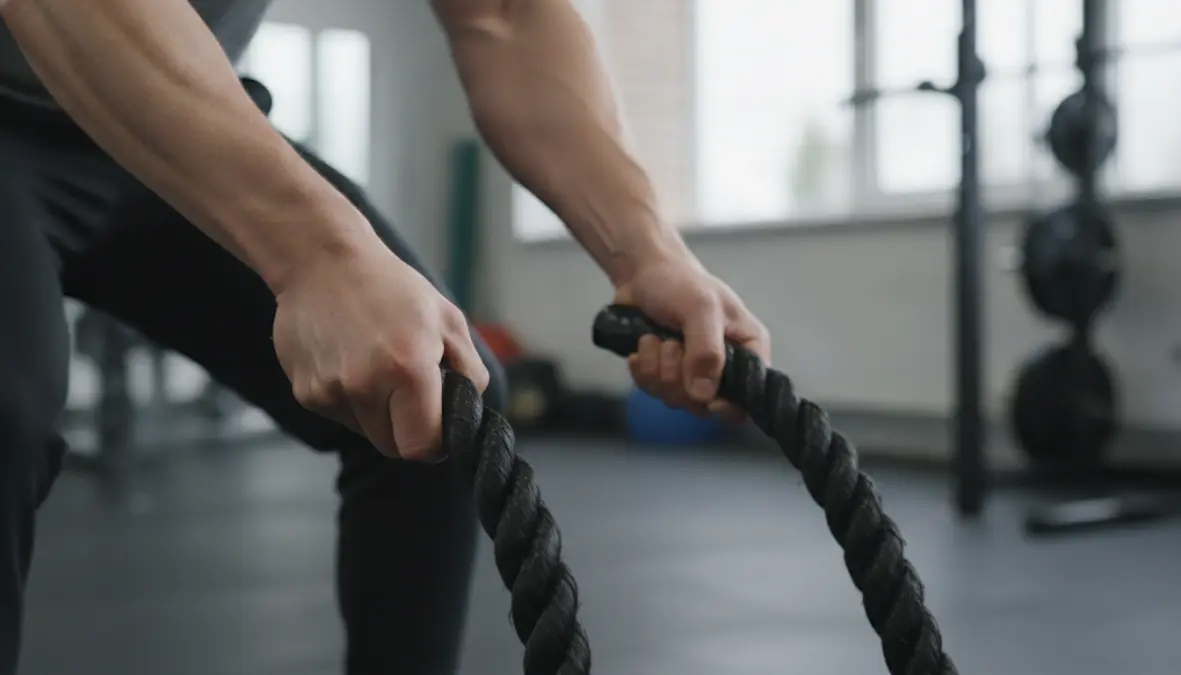
The beauty of a battle ropes workout lies in its simplicity: you anchor one end of the rope to a solid object, grip both ends, and create various wave patterns through explosive movements. The resistance comes from the rope’s weight combined with gravity and momentum, creating a unique form of variable resistance that challenges your muscles throughout the entire range of motion.
Athletes gravitate toward conditioning ropes because they deliver simultaneous cardiovascular and strength benefits without the joint impact of running or jumping. The ropes come in various materials—polypropylene, manila, or poly-dacron blends—each offering different grip textures and durability. Heavier ropes (50+ pounds) provide greater resistance for strength development, while lighter versions allow for faster wave patterns and cardiovascular conditioning. This versatility makes them essential equipment for functional training programs focused on real-world athletic performance.
Battle Rope Benefits: Full-Body Conditioning and Athletic Performance
The battle rope benefits extend far beyond just getting your heart rate up. Research shows that a 10-minute battle rope training session can burn between 112-150 calories while simultaneously engaging over 15 major muscle groups. Unlike isolated exercises, battle ropes demand coordinated effort from your entire kinetic chain, making them exceptional for athletic development.
From a cardiovascular standpoint, HIIT battle ropes protocols can elevate your heart rate to 85-95% of maximum within seconds, creating profound metabolic conditioning effects. This anaerobic capacity translates directly to improved performance in sports requiring repeated explosive efforts—think basketball, soccer, MMA, or CrossFit competitions.
Muscularly, battle ropes primarily target your shoulders, arms, and core, but when performed with proper technique involving hip and leg engagement, they become a true full-body exercise. Your core stabilizers work overtime to maintain posture against the dynamic forces created by the rope movements, building core stability that transfers to virtually every athletic movement. The grip strength demands alone make battle ropes valuable for athletes in grappling sports or anyone needing upper body endurance.
Perhaps most importantly, battle ropes offer high-intensity training with remarkably low joint impact. Unlike running or plyometrics, the fluid nature of rope movements minimizes eccentric loading and joint stress while still delivering intense metabolic conditioning. This makes them ideal for athletes recovering from lower body injuries or those managing joint issues while maintaining cardiovascular fitness. Proper nutrition supports this intense training—consider optimizing your recovery with anti-inflammatory foods to manage the muscular demands of regular rope sessions.
Essential Battle Rope Exercises and Training Protocols
Mastering battle rope exercises starts with understanding fundamental wave patterns and progressively building toward complex movements. Here are the essential rope training exercises every athlete should know:
Alternating Waves: The foundational battle rope movement. Stand with feet shoulder-width apart, knees slightly bent, and create alternating waves by raising and lowering each arm in opposition. This targets shoulders and arms while demanding rhythmic core engagement. Focus on speed and consistent wave height. Beginners should master 20-30 seconds of continuous waves before progressing.
Double Waves: Raise and lower both arms simultaneously to create synchronized waves. This variation increases power demands and explosive power development compared to alternating waves. Keep your core braced and use hip extension to drive the movement—this isn’t just an arm exercise. Advanced athletes can add squat jumps between waves for enhanced lower body integration.
Power Slams: Lift both rope ends overhead and explosively slam them down, engaging your entire body from toes to fingertips. This exercise builds vertical power and mimics the explosive patterns needed in jumping and throwing sports. Perform 8-12 aggressive slams, focusing on maximum force production.
Side-to-Side Waves: Create lateral waves by moving both arms together from side to side. This rotational movement pattern strengthens obliques and hip stabilizers while improving lateral power—crucial for change-of-direction sports. Maintain athletic stance and drive movement from your hips, not just your arms.
Circles: Move both rope ends in synchronized circles (clockwise or counterclockwise). This challenges shoulder stability from multiple angles and builds rotator cuff strength. Alternate circle directions every 15-20 seconds to ensure balanced development.
Jumping Jacks with Ropes: Perform jumping jacks while simultaneously creating outward and inward rope waves. This full-body integration exercise elevates heart rate rapidly while demanding coordination and conditioning.
For HIIT battle ropes protocols, the classic approach is 30 seconds of maximum effort followed by 15-30 seconds of rest, repeated for 8-12 rounds. This interval training format maximizes both aerobic and anaerobic adaptations. A best battle ropes workout for athletes might include:
- Round 1-2: Alternating waves (30 sec on/20 sec off)
- Round 3-4: Power slams (30 sec on/20 sec off)
- Round 5-6: Side-to-side waves (30 sec on/20 sec off)
- Round 7-8: Double waves (30 sec on/20 sec off)
Beginners should start with 2-3 sessions per week, focusing on proper technique before intensity. Each session can be 10-15 minutes initially, progressing to 20-30 minutes as conditioning improves. Always prioritize proper pre-workout nutrition to fuel these demanding sessions, and be mindful of overtraining symptoms if combining battle ropes with other high-intensity training.
FAQ
How long should a battle ropes workout be?
For most athletes, an effective battle ropes workout lasts 10-20 minutes when performed at high intensity. HIIT protocols with 30-second work intervals and 15-20 second rest periods for 8-12 rounds provide excellent conditioning benefits. Beginners should start with 5-10 minute sessions and gradually increase duration as endurance improves.
What muscles do battle ropes work?
Battle rope training primarily targets shoulders (deltoids), arms (biceps, triceps, forearms), and core muscles (rectus abdominis, obliques). When performed with proper technique involving lower body engagement, they also activate glutes, quadriceps, hamstrings, and calves, making them a comprehensive full-body conditioning tool.
Are battle ropes good for weight loss?
Absolutely. A heavy rope workout can burn 10-12 calories per minute during high-intensity intervals, making it highly effective for fat loss. The combination of cardiovascular demand and muscle engagement creates significant metabolic conditioning effects that support weight loss when combined with proper nutrition like adequate protein intake.
How heavy should battle ropes be for beginners?
Beginners should start with 1.5-inch diameter ropes at 30-40 feet length, typically weighing 15-25 pounds. This allows you to learn proper wave patterns and build foundational endurance without excessive grip or shoulder fatigue. As strength improves, progress to 2-inch diameter or 50-foot ropes for increased resistance.
Can you do battle ropes every day?
While technically possible, daily battle rope exercises aren’t recommended for most athletes. The high muscular and metabolic demands require adequate recovery—2-4 sessions per week allows optimal adaptation. Daily use risks overtraining, especially in shoulders and grip muscles. Balance rope training with other modalities and prioritize recovery strategies including proper hydration.
Battle ropes deliver unmatched training efficiency—few tools can simultaneously build cardiovascular endurance, explosive power, and muscular stamina in such short sessions. Whether you’re implementing a full body battle rope workout as a standalone session or integrating ropes into circuit training, their versatility makes them valuable for any athlete serious about performance. Start with the fundamentals, respect the learning curve, and watch as these simple ropes transform your conditioning. And remember, the mental toughness developed pushing through those final brutal seconds of waves? That translates directly to competition when your body wants to quit but your trained mind pushes you forward.