Iron Deficiency in Endurance Athletes: Detection, Treatment, and Performance Impact

You’ve been crushing your training miles, hitting every workout on schedule, but something feels off. Your legs feel heavy, your pace is slowing, and no amount of rest seems to help. Before you blame overtraining or poor sleep, there’s another culprit you should investigate: iron deficiency endurance athletes face more often than most realize. This hidden performance killer affects nearly half of female endurance athletes and up to 30% of men, yet it often goes undetected until it seriously impacts your racing and training capacity.
Understanding Iron Deficiency in Endurance Athletes: Why It Matters
Iron deficiency in endurance athletes isn’t just about feeling tired—it’s a progressive condition that can devastate your athletic performance iron levels control directly. Iron plays a critical role in producing hemoglobin, the protein in red blood cells responsible for oxygen transport to working muscles. Without adequate iron stores, your body can’t deliver oxygen efficiently, crushing your aerobic capacity and VO2max.
The prevalence is staggering: research shows 40-50% of female endurance athletes and 15-30% of male athletes experience some degree of iron deficiency. But here’s what gets confusing—sports anemia, iron deficiency without anemia, and true iron deficiency anemia are three distinct conditions. Sports anemia is actually a dilutional effect from increased plasma volume (a positive adaptation), while iron deficiency without anemia means depleted stores (low ferritin) but normal hemoglobin. True iron deficiency anemia involves both depleted stores and reduced hemoglobin levels.
Why are endurance athletes so vulnerable? Several mechanisms conspire against you: foot strike hemolysis destroys red blood cells with every running stride, inflammatory responses to hard training trigger hepcidin (a hormone that blocks iron absorption), you lose iron through sweat and gastrointestinal bleeding during long efforts, and your increased red blood cell production demands more iron than sedentary individuals need. The performance impact is real—studies show even non-anemic iron deficiency can reduce VO2max by 5-10%, impair lactate clearance, and significantly slow recovery between sessions. If you’re serious about performance testing metrics like those explained in our VO2 max and lactate threshold guide, iron status should be on your radar.
Detecting Iron Deficiency: Symptoms, Testing, and Ferritin Levels
Recognizing iron deficiency early can save you months of subpar training. The challenge? Initial symptoms are often subtle and easily blamed on hard training blocks.
Common Symptoms in Athletes
Watch for these red flags: unexplained fatigue endurance training can’t explain, performance declining despite consistent training, legs feeling unusually heavy during runs or rides, difficulty reaching higher heart rate zones even with hard efforts, slower-than-normal recovery between workouts, dramatically increased perceived exertion at your usual paces, unusual irritability or mood changes, getting sick more frequently than normal, and pale skin or pale conjunctiva (inner eyelids). These iron deficiency symptoms athletes experience often develop gradually, making them easy to dismiss. Many athletes don’t connect the dots until their iron gets tested for another reason. The key is recognizing when fatigue feels different from normal training stress—when rest doesn’t help and easy efforts feel impossibly hard.
Blood Tests and Optimal Ferritin Ranges
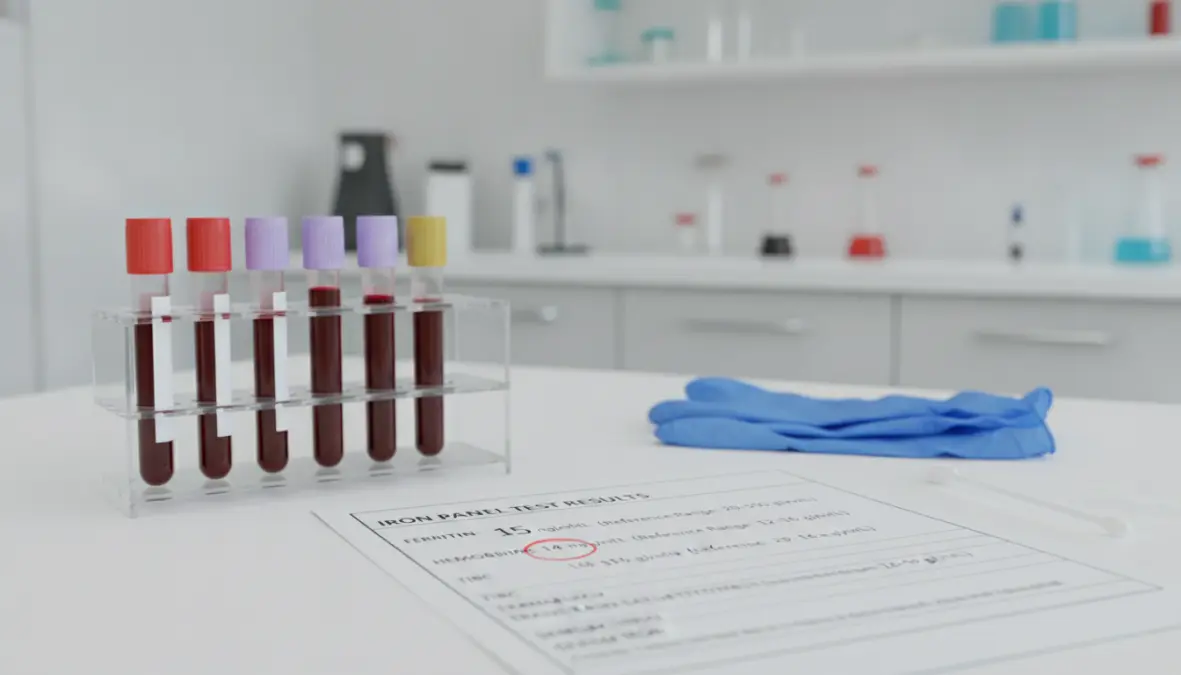
If you’re experiencing symptoms, getting the right blood tests is crucial for how to detect iron deficiency in endurance athletes. Don’t just ask for “iron levels”—request a complete iron panel including ferritin (the gold standard for measuring iron stores), serum iron, transferrin saturation, hemoglobin, and a complete blood count with hematocrit. Ferritin is most important because it drops first, long before hemoglobin falls.
Here’s where standard lab ranges fail athletes: while labs might flag ferritin below 15-20 ng/mL as deficient, ferritin levels endurance training requires are much higher. Research on low ferritin runners suggests optimal performance requires ferritin above 30-50 ng/mL minimum, with many studies indicating 50-100 ng/mL is ideal for endurance athletes. Women typically need higher levels than men for optimal performance. Timing matters too—avoid testing immediately after hard workouts or races, as inflammation artificially elevates ferritin, potentially masking deficiency. Test in a rested state for accurate results. These iron blood tests for athletes should become part of your regular monitoring, especially during heavy training blocks.
Treatment and Prevention Strategies for Athletes
Once you’ve identified iron deficiency, addressing it requires a strategic approach combining diet and potentially supplementation. Just like you wouldn’t neglect hydration strategies or carbohydrate timing, iron management deserves systematic attention.
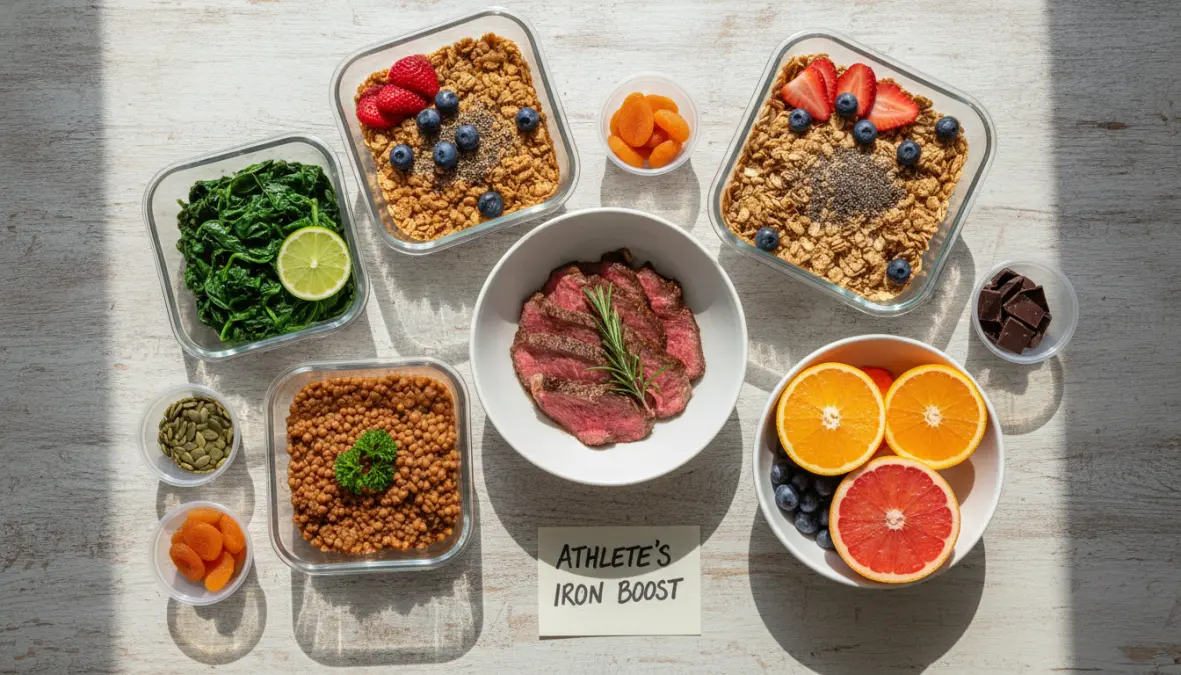
Dietary Sources and Optimization
Understanding how much iron do endurance athletes need starts with recognizing that not all dietary iron is equal. Heme iron from animal sources (red meat, liver, organ meats, poultry, fish) is absorbed at 15-35% efficiency, while non-heme iron from plant sources (lentils, beans, spinach, fortified cereals, tofu) is absorbed at only 2-20%. For athletes following plant-based diets, check our plant-based nutrition guide for comprehensive strategies.
Maximizing absorption is critical for preventing iron deficiency in distance runners. Combine iron-rich foods with vitamin C sources (citrus, peppers, tomatoes) to boost absorption. Conversely, avoid consuming iron with calcium supplements, coffee, tea (tannins), or high-phytate foods like whole grains during the same meal—these inhibitors can reduce absorption by 50% or more. Endurance athletes generally need 18-25mg daily for women and 10-15mg for men, roughly double the requirement of sedentary individuals. Strategic meal timing around training can optimize both iron absorption and overall nutrition.
Iron Supplementation Protocols
When ferritin drops below 30-50 ng/mL or symptoms appear, diet alone rarely corrects deficiency quickly enough for competitive athletes. This is where iron supplementation athletes use becomes necessary, but proper protocols matter enormously for both effectiveness and tolerability.
For best iron supplements for endurance athletes, options include ferrous sulfate (most common, least expensive), ferrous gluconate (gentler but lower iron content), chelated iron forms like iron bisglycinate (excellent absorption, minimal GI distress), and heme iron polypeptide (most bioavailable but pricier). The iron deficiency treatment for runners typically involves 50-100mg elemental iron daily (check labels—supplement weight differs from elemental iron content).
Recent research suggests alternate-day dosing may actually improve absorption better than daily dosing by avoiding hepcidin spikes. Take iron on an empty stomach if tolerated, or with a small amount of food if you experience nausea, constipation, or stomach upset—common side effects. Starting with lower doses and gradually increasing can minimize discomfort. In severe cases of endurance athletes anemia, especially when competition timelines are tight, physicians may recommend iron infusion for athletes with anemia via IV, which bypasses absorption issues and replenishes stores within weeks rather than months.
Critical monitoring: retest ferritin every 6-8 weeks during supplementation. Expect 3-6 months to fully restore depleted stores, though you may feel improvements within 4-6 weeks. Never self-supplement without testing—excessive iron is toxic and some conditions contraindicate supplementation. Working with a sports-informed physician ensures safe, effective treatment. Just as you’d approach mental training or core strength development systematically, iron management deserves the same methodical attention.
Iron deficiency doesn’t have to derail your training or racing goals. By understanding the unique demands endurance training places on your iron stores, recognizing symptoms early, testing appropriately, and implementing strategic dietary and supplementation protocols, you can maintain optimal ferritin levels and the performance they support. Monitor your status regularly, especially during heavy training blocks or at altitude (check our altitude training guide), and treat iron status as seriously as any other aspect of your training plan. Your oxygen-hungry muscles will thank you with every powerful stride.